

Assamese Woman Stranded in Bangladesh: A Year After Forced Displacement
In June of the previous year, a heart-wrenching incident unfolded when Jakia Begum, a resident of Dhaka, discovered an elderly woman sitting alone by the roadside. The woman, who was soaked from the...

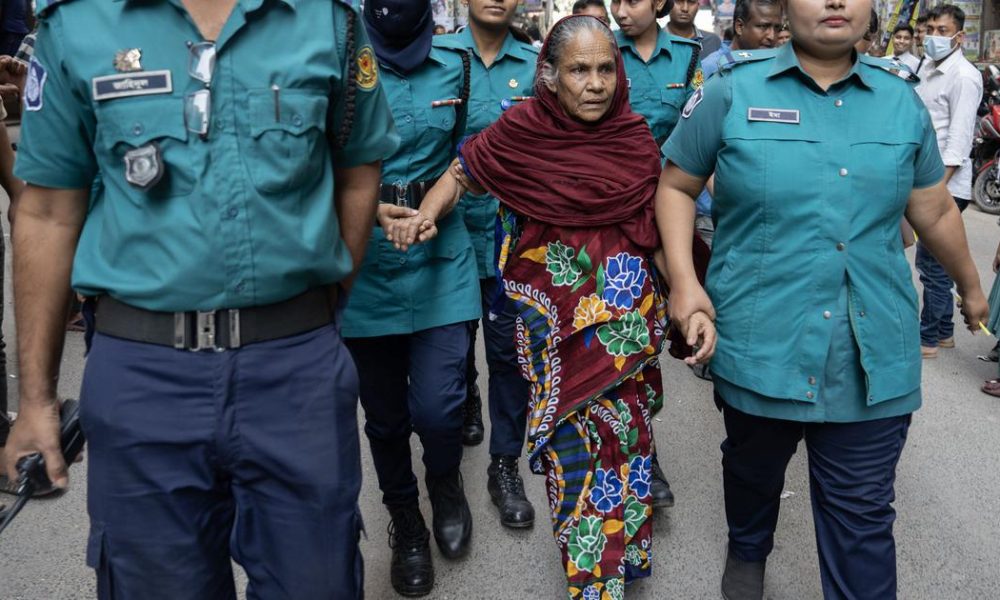
In June of the previous year, a heart-wrenching incident unfolded when Jakia Begum, a resident of Dhaka, discovered an elderly woman sitting alone by the roadside. The woman, who was soaked from the rain and visibly distressed, appeared to have injured her hand. Jakia’s daughter, Klanti Akhtar, recounted the moment: “She could not explain how she ended up here. When we asked her about her home, she mentioned Nalbari.”
Initially unfamiliar with Nalbari, Klanti assumed it to be a local area in Dhaka or somewhere in Bangladesh. However, after searching online, she realized that the woman, identified as Sakina Begum, was actually from Assam, India. This revelation only intensified their concern for Sakina, a 69-year-old woman who had faced an unimaginable ordeal.
Sakina’s journey began in Assam, where she was taken from a police station to India’s largest detention centre located in Matia. Following her detention, she was forcibly pushed across the border near Dhubri into Bangladesh. The details of the following days remain a blur for Sakina, who managed to board a bus, asking the conductor to take her to Nalbari, only to find herself in Dhaka, over 500 kilometers away from her home.
The situation reflects a broader issue of displacement faced by many individuals in the northeastern Indian states, especially among indigenous communities. The circumstances surrounding Sakina’s displacement raise serious questions about the treatment of Assamese citizens and the policies leading to such forced migrations. It underscores the vulnerability of marginalized populations, who often find themselves trapped in a cycle of statelessness and human rights violations.
Jakia and Klanti’s act of kindness in assisting Sakina highlights the importance of compassion amidst chaos. Despite the distance and cultural differences, their efforts to provide refuge reflect a profound human connection that transcends borders. As Sakina continues her search for a way back home, her story serves as a poignant reminder of the complexities surrounding identity and belonging in a region fraught with political tensions.
Source: scroll.in







No Comment! Be the first one.