

India’s Pollution Crisis Largely Ignored in Recent Union Budget: New Book Reveals
The ongoing pollution crisis in India has once again been overlooked in the Union Budget, as highlighted by a new book that scrutinizes the government’s environmental priorities. The Ministry...

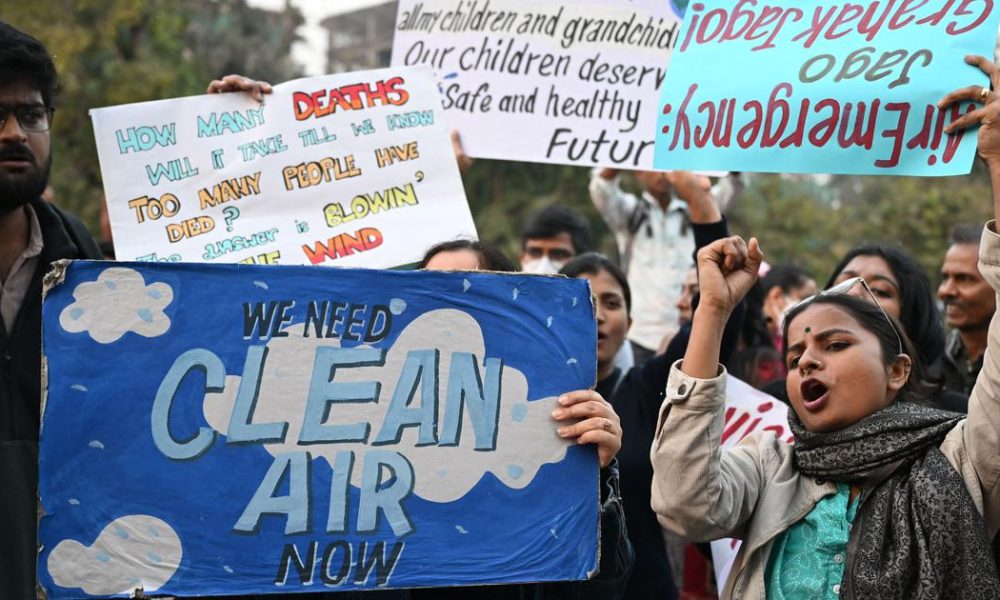
The ongoing pollution crisis in India has once again been overlooked in the Union Budget, as highlighted by a new book that scrutinizes the government’s environmental priorities. The Ministry of Environment, Forest and Climate Change (MoEF&CC) stands almost solitary in its efforts to combat pollution, often seen as a lone warrior grappling with an overwhelming challenge. Its key responsibilities include funding the Central Pollution Control Board (CPCB) and managing significant initiatives such as the Control of Pollution scheme, alongside financial support for the Commission on Air Quality Management (CAQM).
However, the ministry’s previous initiative, the Abatement of Pollution scheme, has been discontinued since the 2020-21 fiscal year, further spotlighting the lack of a comprehensive government strategy to address air and water pollution. Notably, no other ministries or governmental departments have established any new programs or schemes dedicated to fighting pollution, leaving the MoEF&CC to shoulder this monumental task.
Under the Modi administration, particularly during its second term, the CPCB has experienced stagnation in its funding. While the agency saw an increase in budget allocation during the first term—from Rs 0.69 billion in 2013-14 to Rs 1.14 billion in 2018-19—the subsequent years have reflected a worrying trend of financial neglect. The agency’s budget was essentially flat at Rs 1 billion for both 2019-20 and 2020-21, with slight fluctuations thereafter. The allocation dipped to Rs 0.97 billion in the 2022-23 budget and concluded at Rs 1.05 billion in the final year of the Modi 2.0 government, resulting in a budget lower than five years prior.
This decline raises critical questions about the government’s commitment to tackling the pressing environmental issues that plague the nation. With pollution levels wreaking havoc on public health and the environment, the urgency of robust funding and strategic initiatives has never been more pronounced. Critics argue that the static budget allocations reflect a broader apathy towards the environment, which can exacerbate the already dire conditions affecting air quality and water resources across India.
The book’s revelations serve as a stark reminder of the need for comprehensive action to address pollution in India. As communities continue to suffer from the adverse effects of deteriorating air quality and contaminated water supplies, it is imperative that the government re-evaluates its environmental priorities and invests more significantly in pollution control measures. Only through concerted efforts and adequate funding can India hope to tackle its pollution emergency effectively.
Source: scroll.in







No Comment! Be the first one.