

🌧️ Severe Storm Causes Widespread Damage Across South Bengal
Severe Storm Causes Widespread Damage Across South Bengal South Bengal witnessed one of its most intense weather events of the season as a powerful squall accompanied by heavy rainfall swept across...

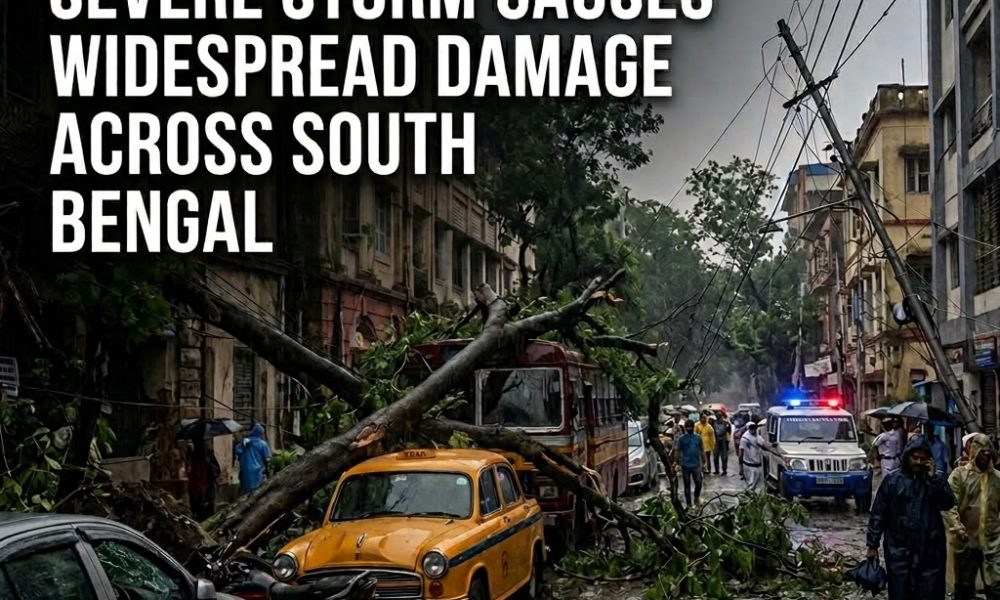
 Severe Storm Causes Widespread Damage Across South Bengal
South Bengal witnessed one of its most intense weather events of the season as a powerful squall accompanied by heavy rainfall swept across multiple districts, including Kolkata, North 24 Parganas, South 24 Parganas, Howrah, Hooghly, Nadia, East Midnapore, and West Midnapore. The severe storm left a trail of destruction, claiming lives, disrupting transportation networks, damaging public infrastructure, and affecting normal life across the region.
The sudden weather disturbance has once again highlighted the vulnerability of densely populated urban and rural areas to extreme weather events, particularly during the pre-monsoon period.
Sudden Change in Weather Conditions
Meteorological officials reported that a strong convective system developed rapidly over South Bengal, triggering thunderstorms, gusty winds, lightning, and heavy rainfall.
In Kolkata and surrounding districts, dark clouds gathered within a short span of time before powerful winds and intense rain lashed the region. Wind speeds reportedly touched nearly 88 kmph in some areas, causing widespread damage.
Residents described scenes of flying debris, uprooted trees, collapsed structures, and near-zero visibility due to heavy rain and dust.
Loss of Lives and Injuries
According to preliminary reports, at least eight people lost their lives during the storm-related incidents.
The fatalities were reportedly caused by:
* Falling trees.
* Electrocution from damaged power lines.
* Collapse of temporary structures.
* Lightning strikes in some areas.
Several others sustained injuries and were shifted to nearby hospitals for treatment.
Authorities have expressed concern over the human toll and are continuing assessments to determine the full extent of casualties and injuries.
Massive Damage to Infrastructure
The severe storm caused extensive damage to public and private property across multiple districts.
Uprooted Trees
Hundreds of trees were uprooted due to strong winds, blocking roads and disrupting traffic movement.
Municipal teams and disaster-response personnel were deployed immediately to clear major roads and restore connectivity.
Power Supply Disruptions
Electricity infrastructure suffered significant damage as trees and branches fell on power lines.
Thousands of households experienced power outages, with utility departments working around the clock to restore services.
Damage to Buildings
Several buildings reported:
* Broken windows.
* Damaged roofs.
* Waterlogging in residential complexes.
* Structural damage to temporary installations.
Markets, shops, and roadside establishments also reported losses due to strong winds and heavy rainfall.
Kolkata Faces Major Disruptions
The state capital, Kolkata, was among the worst-affected urban centers.
Heavy rainfall led to:
* Waterlogging in multiple neighborhoods.
* Traffic congestion on major roads.
* Delays in public transport services.
* Temporary disruptions in metro and bus operations.
Commuters faced significant difficulties as roads became flooded and visibility remained poor during the peak of the storm.
Emergency services received numerous calls related to fallen trees, damaged electrical infrastructure, and stranded vehicles.
Impact on Air Travel
Flight operations at Kolkata’s airport were significantly affected due to adverse weather conditions.
Several flights experienced:
* Delays.
* Diversions.
* Temporary suspension of operations.
Strong crosswinds and reduced visibility created challenges for aircraft movement, resulting in disruptions for passengers traveling to and from the city.
Airport authorities closely monitored weather conditions before gradually resuming normal operations.
Rural Areas Also Affected
Beyond Kolkata, rural districts experienced substantial agricultural and infrastructural damage.
Farmers reported concerns regarding:
* Crop losses.
* Damage to irrigation systems.
* Flooding of agricultural fields.
* Destruction of temporary farm structures.
Local administrations have begun collecting data on agricultural losses to assess compensation and relief requirements.
Emergency Response and Relief Operations
Government agencies, municipal authorities, disaster-management teams, police personnel, and fire services launched immediate response operations following the storm.
Relief measures include:
* Removal of fallen trees.
* Restoration of electricity supply.
* Clearing blocked roads.
* Emergency medical assistance.
* Assessment of damaged infrastructure.
Control rooms have been activated in several districts to monitor restoration efforts and respond to public complaints.
Officials have assured residents that all necessary resources are being deployed to restore normalcy as quickly as possible.
Weather Experts Warn of Continued Vigilance
Meteorologists have advised citizens to remain cautious as unstable atmospheric conditions may continue to generate thunderstorms and localized heavy rainfall in parts of West Bengal.
Experts recommend:
* Avoiding shelter under trees during storms.
* Staying indoors during lightning activity.
* Following official weather advisories.
* Reporting damaged power lines immediately.
* Exercising caution while traveling during adverse weather conditions.
Significance of the Event
The storm serves as a reminder of the increasing frequency and intensity of extreme weather events affecting eastern India.
Urban planners, disaster-management authorities, and climate experts have repeatedly emphasized the need for:
* Improved drainage systems.
* Stronger emergency preparedness.
* Better urban infrastructure resilience.
* Enhanced weather forecasting and warning systems.
As restoration work continues, authorities are focusing on minimizing further disruption while ensuring assistance reaches affected communities.
What Happens Next?
Officials are expected to continue damage assessments over the coming days, while restoration teams work to repair infrastructure and restore essential services.
The state government may also review compensation measures for affected families and farmers, depending on the extent of verified losses.
For now, South Bengal remains focused on recovery efforts as residents, businesses, and local administrations work together to overcome the aftermath of one of the region’s most severe recent storms.







No Comment! Be the first one.