

Calcutta High Court Deliberates TMC’s Challenge Against Centre’s Role in Bengal Poll Counting
The Calcutta High Court has reserved its verdict on a petition filed by the Trinamool Congress (TMC) contesting the Election Commission’s policy to employ Union government officials as counting...

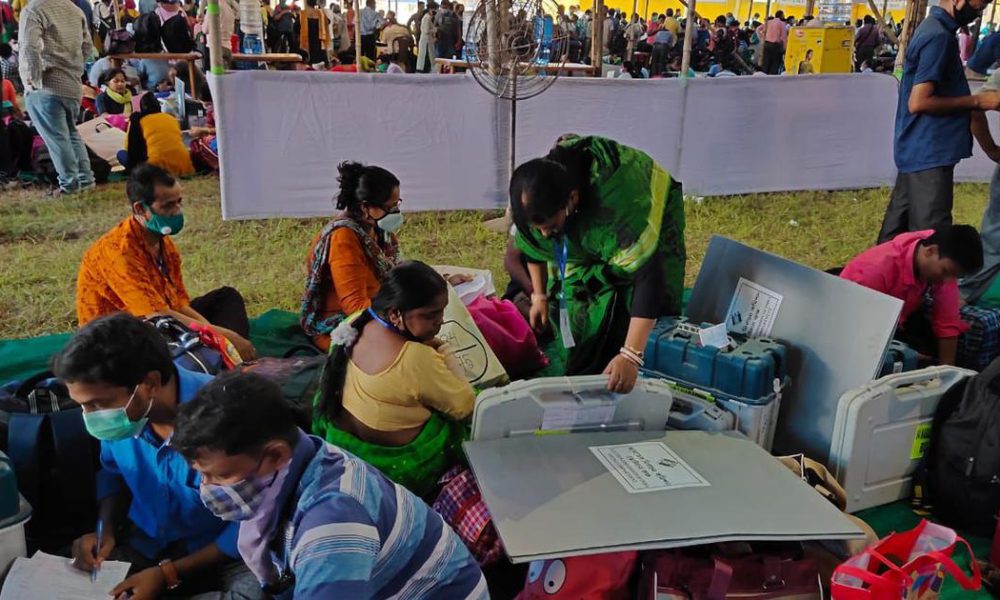
The Calcutta High Court has reserved its verdict on a petition filed by the Trinamool Congress (TMC) contesting the Election Commission’s policy to employ Union government officials as counting supervisors for the recent West Bengal elections. This decision has sparked a significant debate as the state prepares for the counting of votes scheduled for Monday.
Polling for the West Bengal elections took place in two distinct phases on April 23 and the following Wednesday, with the Election Commission reporting an impressive preliminary voter turnout of 92.4%. The TMC’s legal argument was presented before Justice Krishna Rao, who heard extensive discussions from both the ruling party and the Election Commission.
In a recent directive, the Chief Electoral Officer of West Bengal mandated that at least one Union government employee be present at every counting station. This stipulation has been met with criticism from TMC representatives, who argue that it falls outside the jurisdiction of the Chief Electoral Officer. Advocate Kalyan Bandopadhyay, representing the TMC, asserted that the Representation of the People Act does not empower state-level officials to make such decisions, as only the Chief Election Commissioner holds that authority.
Bandopadhyay further emphasized the inconsistency of involving Union officials at this stage of the electoral process, noting that state government employees had effectively managed all aspects of the polling. He questioned the necessity of introducing central government personnel for counting when the elections themselves were conducted seamlessly with the help of local officials. This move, he argued, could dilute the integrity of the counting process.
The TMC’s challenge reflects broader concerns regarding the role and influence of central authorities in state-level elections, particularly in a politically charged environment like West Bengal. As the court prepares to deliver its decision, all eyes remain on the implications it may have for future electoral procedures and the balance of power between state and central election oversight.
Source: scroll.in



No Comment! Be the first one.