

Stalemate in Myanmar: Military Struggles Amid Ongoing Civil Conflict
The ongoing civil war in Myanmar, now entering its sixth year, presents a paradox for the military junta that currently rules the nation. Despite their persistent aggression, which includes bombing...

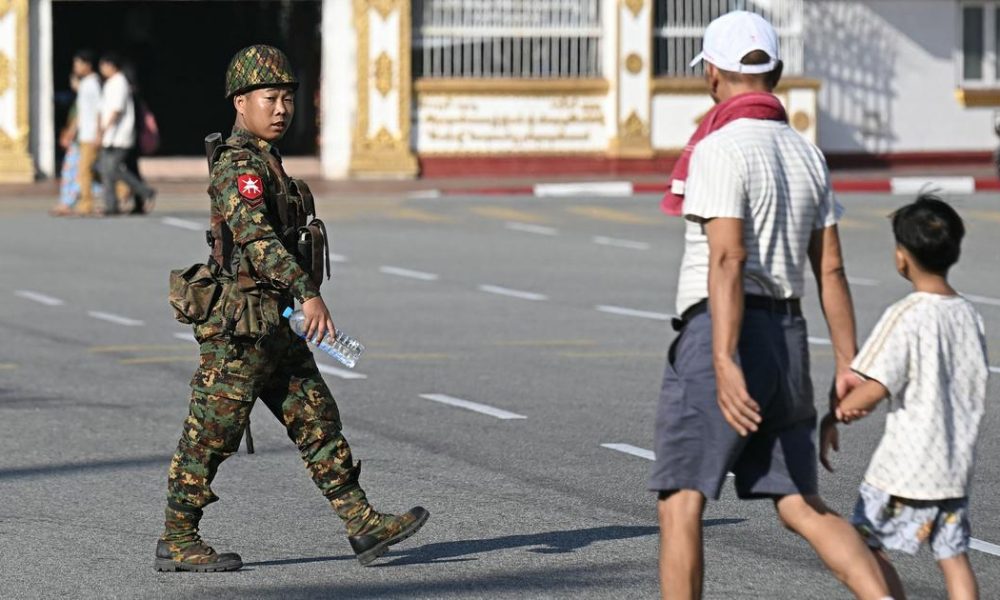
The ongoing civil war in Myanmar, now entering its sixth year, presents a paradox for the military junta that currently rules the nation. Despite their persistent aggression, which includes bombing their own captured soldiers, the armed forces find themselves in a precarious position. The junta’s desperate attempts to maintain control reflect a broader struggle for legitimacy and power, especially following elections that were widely deemed fraudulent.
The Myanmar civil war ignited in February 2021 after the military staged a coup against the democratically elected government led by Nobel Laureate Aung San Suu Kyi. This government had come to power in 2015, breaking a long-standing cycle of military dominance that had persisted for over five decades. The army justified its coup by alleging, without substantial evidence, that there were irregularities in the November 2020 elections, which they claimed undermined their authority. However, this narrative has not resonated well with the populace, leading to a fierce resistance from various civilian and ethnic armed groups.
In the wake of the coup, the National Unity Government’s People’s Defence Force emerged as a formidable opponent to the junta, gaining ground alongside various ethnic armies. Collectively, these forces have made notable strides against the military’s affiliated political party, the Union Solidarity and Development Party. Nevertheless, despite these advances, the conflict has reached a stalemate, with neither side able to secure a decisive victory. This prolonged deadlock raises significant questions about the future of governance and stability in Myanmar.
The military’s reluctance to engage in genuine democratic processes has only compounded the crisis. Initially, the army characterized the 2020 elections as a superficial measure to placate international observers while it fortified its own influence. However, this strategy has backfired, as the mass discontent among citizens has galvanized resistance efforts. The junta’s willingness to inflict severe measures, including violence against its own troops, underscores the lengths to which it will go to retain its grip on power, even as dissent mounts.
As the situation in Myanmar continues to evolve, it serves as a pointed reminder of the complexities of military rule and the resilience of civil society. For observers in India and beyond, the Myanmar conflict reflects broader regional dynamics, including the struggle for democratic governance and the enduring impact of military interventions. The outcome of this stalemate remains uncertain, but the stakes are undeniably high for the people of Myanmar.
Source: scroll.in






No Comment! Be the first one.