

Delhi High Court Calls for Responses on Sonam Wangchuk’s Hunger Strike Amid Growing Health Concerns
The Delhi High Court has requested responses from both the Central and Delhi governments regarding a petition aimed at ending the hunger strike of prominent activist Sonam Wangchuk. Wangchuk, known...

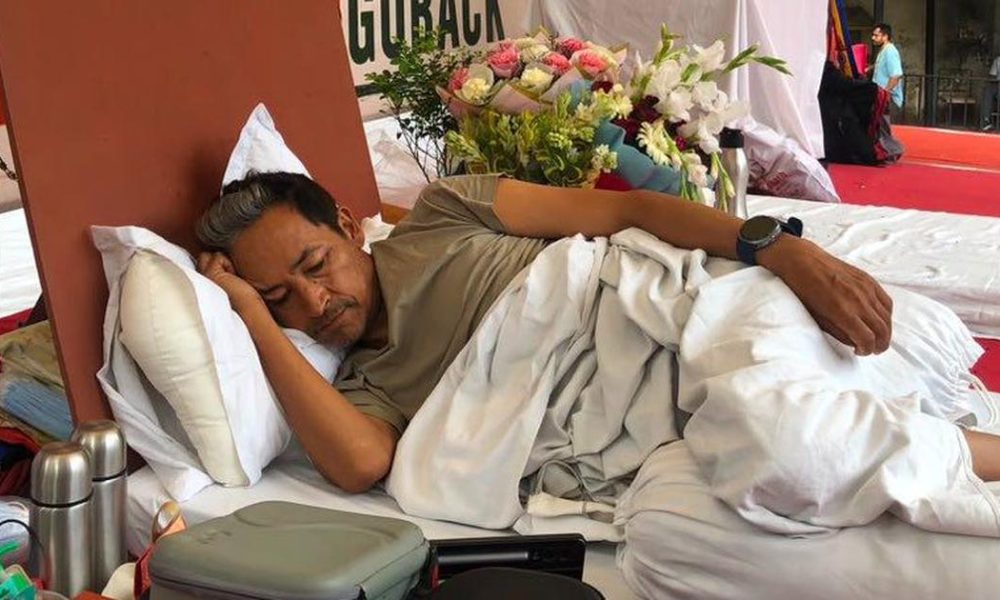
The Delhi High Court has requested responses from both the Central and Delhi governments regarding a petition aimed at ending the hunger strike of prominent activist Sonam Wangchuk. Wangchuk, known for his advocacy on environmental issues and education reform, has been fasting at Jantar Mantar since June 28, as part of a protest organized by the Cockroach Janta Party. This political campaign is demanding the resignation of Union Education Minister Dharmendra Pradhan, citing alleged mismanagement in conducting competitive examinations.
During a hearing on Wednesday, a bench comprising Chief Justice Devendra Kumar Upadhyaya and Justice Tejas Karia deemed the matter urgent and scheduled a hearing for Thursday. The court noted the absence of any representatives from the Union government, raising concerns about the administration’s response to the situation. The petition, submitted by lawyer and activist Rakesh Kumar Saini, highlighted the deteriorating health of Wangchuk, who has reportedly lost 8.5 kg since beginning his fast. Saini asserted that if Wangchuk continues his hunger strike, he could face life-threatening consequences within days.
Saini’s plea urges the court to mandate that both the Central and Delhi governments take immediate action to transfer Wangchuk to a medical facility for necessary treatment. The petition emphasizes that the activist’s potential death would reflect poorly on India, drawing global attention to the situation. Saini expressed that the implications of such an event would be profound, not just for the country but also for the activist community worldwide.
The urgency of the situation has resonated with many, as over 1,800 members of civil society released a statement on Tuesday, imploring Wangchuk to reconsider his hunger strike. The outpouring of support illustrates the significant public concern surrounding both Wangchuk’s health and the ongoing political demands associated with his protest. With the court now involved, the outcome of this case may have broader implications for political activism and the protection of civil rights in India.
As the hearing approaches, the attention shifts to how the government will respond to the court’s request and the mounting calls for Wangchuk’s welfare. The case symbolizes not just an individual struggle but highlights larger systemic issues within the education sector and the governance of competitive exams in India.
Source: scroll.in







No Comment! Be the first one.