

Calcutta High Court Orders TMC’s Abhishek Banerjee to Submit Voice Sample in Election Speech Controversy
The Calcutta High Court issued a directive on Friday requiring Abhishek Banerjee, a prominent leader of the Trinamool Congress (TMC), to provide a voice sample in connection with a case stemming from...

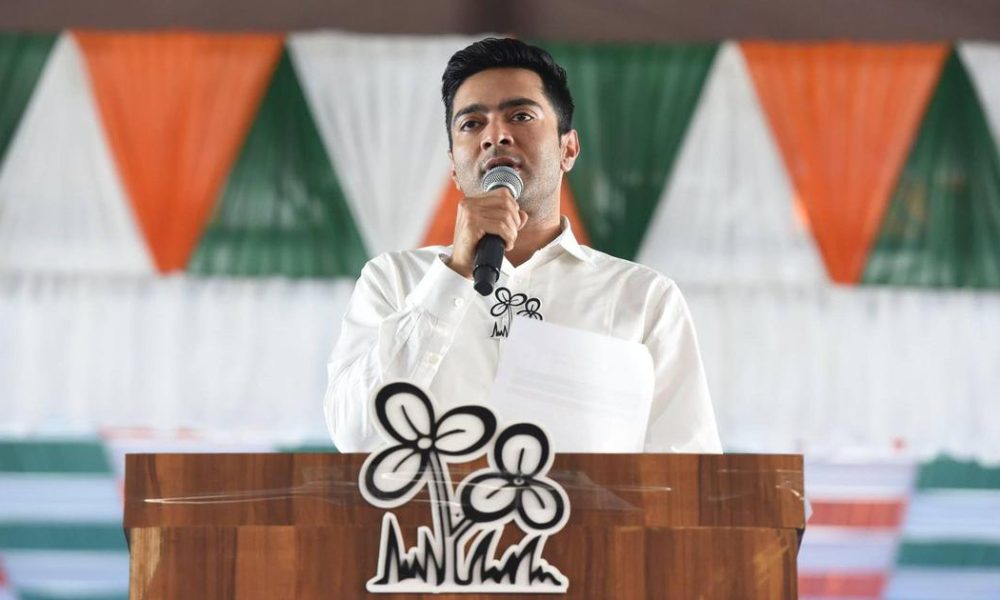
The Calcutta High Court issued a directive on Friday requiring Abhishek Banerjee, a prominent leader of the Trinamool Congress (TMC), to provide a voice sample in connection with a case stemming from his controversial remarks during the recent Assembly elections. This decision comes amidst allegations that Banerjee’s statements could be interpreted as provocative and intimidatory, particularly in the context of political tensions in West Bengal.
During his campaigning for the Assembly polls, Banerjee made a statement suggesting that after the votes were counted, DJs would play loud music that would leave people’s “ears ringing.” Many interpreted this remark as an insinuation of political violence, leading a voter to file a formal complaint against him. The complaint asserts that Banerjee’s comments were not merely rhetorical but rather an incitement that could lead to unrest.
In a prior ruling on May 21, the High Court had granted Banerjee temporary relief by preventing the police from taking coercive action against him until July 31. However, this protection was explicitly contingent upon Banerjee’s cooperation in the ongoing investigation. The West Bengal Criminal Investigation Department (CID) was subsequently authorized by a trial court to collect his voice sample as part of the inquiry into his statements.
Banerjee contested this order before the High Court, which has seen him already subjected to questioning by the CID regarding the case. During the latest hearing of his petition, Justice Saugata Bhattacharyya highlighted the importance of Banerjee’s compliance with the court’s earlier directive, openly criticizing him for not adhering to the conditions set forth. The judge characterized Banerjee’s attempt to seek exemption from providing a voice sample as “an abuse of due process.”
Legal representatives for Banerjee argued that he was not disputing the legitimacy of the investigation or the authenticity of the voice sample collection but were instead seeking to challenge the necessity of providing it under the circumstances. This case underscores the complex interplay of politics and law in West Bengal, highlighting the scrutiny leaders face in their public communications, especially in a politically charged environment.
Source: scroll.in







No Comment! Be the first one.