

SPECIAL FEATURE | Jagadish Chandra Bose: The Visionary Scientist Who Changed the Way the World Sees Nature
By Staff Correspondent: When the story of modern science is told, the names of great innovators from Europe and America often dominate the conversation. Yet, long before many scientific ideas became...

By Staff Correspondent:
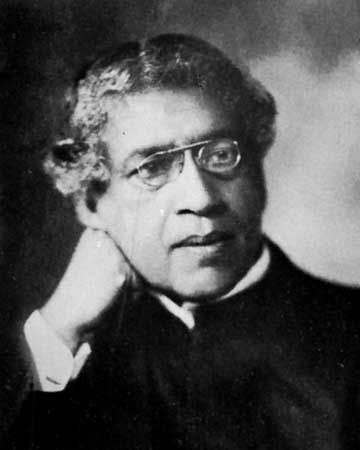
When the story of modern science is told, the names of great innovators from Europe and America often dominate the conversation. Yet, long before many scientific ideas became mainstream, an Indian scientist was quietly redefining humanity’s understanding of nature. That scientist was Acharya Jagadish Chandra Bose—a physicist, biologist, botanist, inventor, and one of India’s greatest scientific minds.
Born on 30 November 1858 in Mymensingh, then part of the Bengal Presidency under British India (now in Bangladesh), Bose grew up in an environment that valued education, equality, and cultural pride. His father, Bhagawan Chandra Bose, insisted that his son begin his education in a Bengali-medium school so that he would remain connected to his roots before pursuing higher education.
His academic journey eventually took him to England, where he studied at the University of London and Christ’s College, University of Cambridge. Although he initially enrolled in medicine, health complications forced him to change direction. That unexpected turn led him to physics—a decision that would alter the course of scientific history.
Returning to India, Bose joined Presidency College in Calcutta as a professor of physics. However, the colonial administration treated Indian professors unequally, offering them significantly lower salaries than their European counterparts. Refusing to accept discrimination, Bose declined to draw his salary for several years. His quiet protest ultimately succeeded, earning him equal pay and recognition.
Bose’s scientific achievements extended far beyond the classroom. At a time when wireless communication was still in its infancy, he conducted pioneering experiments with radio and microwave frequencies. His demonstrations of electromagnetic wave transmission and early semiconductor detectors laid foundations that would later contribute to the development of modern wireless communication technologies.
Yet, it was his work on plant physiology that transformed his global reputation.
Using an instrument of his own invention—the Crescograph—Bose demonstrated that plants respond to external stimuli such as heat, cold, chemicals, light, and touch. His experiments challenged long-held assumptions by revealing that plants possess measurable physiological responses. Although the popular phrase “plants have life” is often associated with his work, Bose’s true scientific contribution was proving that plants exhibit detectable responses to environmental stimuli through rigorous experimentation.
Behind every great scientist is often a strong support system. For Bose, that support came from his wife, Abala Bose, an eminent social reformer and pioneer of women’s education. While Bose expanded the frontiers of science, Abala dedicated her life to expanding educational opportunities for women, making them one of India’s most remarkable intellectual couples.
In 1917, Bose established the Bose Institute in Calcutta, one of Asia’s earliest interdisciplinary scientific research institutions. Unlike many research centres of his time, the institute reflected his belief that scientific knowledge should serve humanity rather than personal profit.
That philosophy was evident throughout his career. Bose showed little interest in patenting many of his inventions, believing that scientific discoveries should benefit society as a whole. This selfless approach earned him admiration across the international scientific community.
His contributions received worldwide recognition. He was knighted in 1917 and later elected a Fellow of the Royal Society (FRS), one of the highest honours in science. Today, his legacy continues through the Bose Institute and through generations of scientists inspired by his work.
Less widely known is that Bose was also among the pioneers of Bengali science fiction, combining scientific imagination with literary creativity long before science fiction became a popular genre in India.
More than a century after his groundbreaking discoveries, Jagadish Chandra Bose remains a symbol of intellectual courage, scientific curiosity, and unwavering integrity. He demonstrated that true science transcends borders, race, and language—and that groundbreaking discoveries can emerge from determination as much as from technology.
His life is not merely the biography of a scientist; it is the story of a visionary who taught the world to observe nature with deeper respect and greater curiosity.







No Comment! Be the first one.