

Madhya Pradesh Farmers Struggle as Land Records Disappear from Digital Portal
In the quiet village of Dagadkhedi in Madhya Pradesh’s Khargone district, 80-year-old Akla Chamar stands as a testament to the struggles faced by Adivasi farmers in India. For two decades, he...

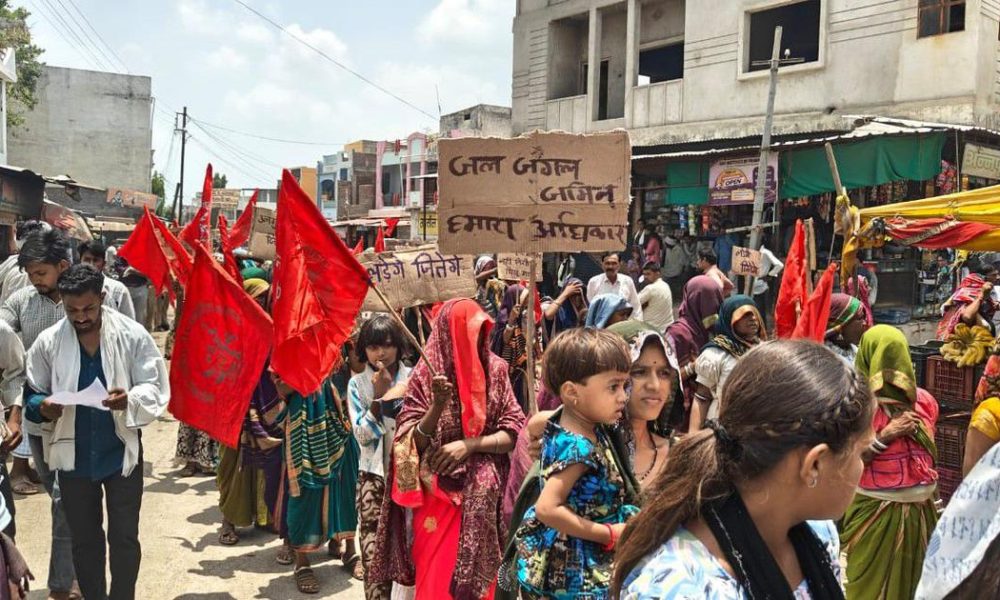
In the quiet village of Dagadkhedi in Madhya Pradesh’s Khargone district, 80-year-old Akla Chamar stands as a testament to the struggles faced by Adivasi farmers in India. For two decades, he has held on to government-issued documents that establish him as the rightful owner of 2.23 hectares of land. This property is not just a piece of earth; it represents security and livelihood for Akla and his family.
Among the essential documents Akla possesses are a land rights and loan booklet issued in 2001 by the state revenue department, along with a notarized land registry. Both documents bear the official signature of the tehsildar of Bhagwanpura and detail the cooperative bank loans he has taken against his land. However, when he attempts to verify his ownership on the MP Bhulekh land records portal, he encounters an alarming issue: his plot number, or khasra number, is missing from the digital database.
Akla’s plight is not an isolated case. Approximately 40 families belonging to the Barela and Bhil Adivasi communities in the same village are grappling with a similar conundrum. These farmers, who have cultivated their lands for generations, are finding that their legally recognized ownership is not reflected in the state’s digital land records. This situation has led to confusion and anxiety among the farmers, as the absence of their plots from the portal jeopardizes their rights and access to financial resources.
The digitalization of land records was introduced in India with the aim of streamlining land governance and protecting the rights of landowners. However, in practice, the transition to a digital format has proven challenging, particularly for marginalized communities like those in Dagadkhedi. While technology has the potential to enhance transparency and efficiency, the current reality shows significant gaps in its implementation.
Advocates for land rights warn that this situation could lead to further disenfranchisement of Adivasi farmers, who already face numerous challenges due to socio-economic factors. They stress the need for immediate action to rectify the discrepancies in the land records and ensure that the rights of these farmers are acknowledged and preserved. As India pushes towards digitization, it is crucial that no farmer is left behind, especially those who have long relied on their ancestral lands for sustenance.
Source: scroll.in







No Comment! Be the first one.