

Kharif Sowing Plummets by 22.7% Due to Delayed Monsoon in India
The sowing of Kharif crops in India has witnessed a staggering decline of 22.7% compared to the previous year, primarily attributed to a delayed southwest monsoon that has hampered agricultural...

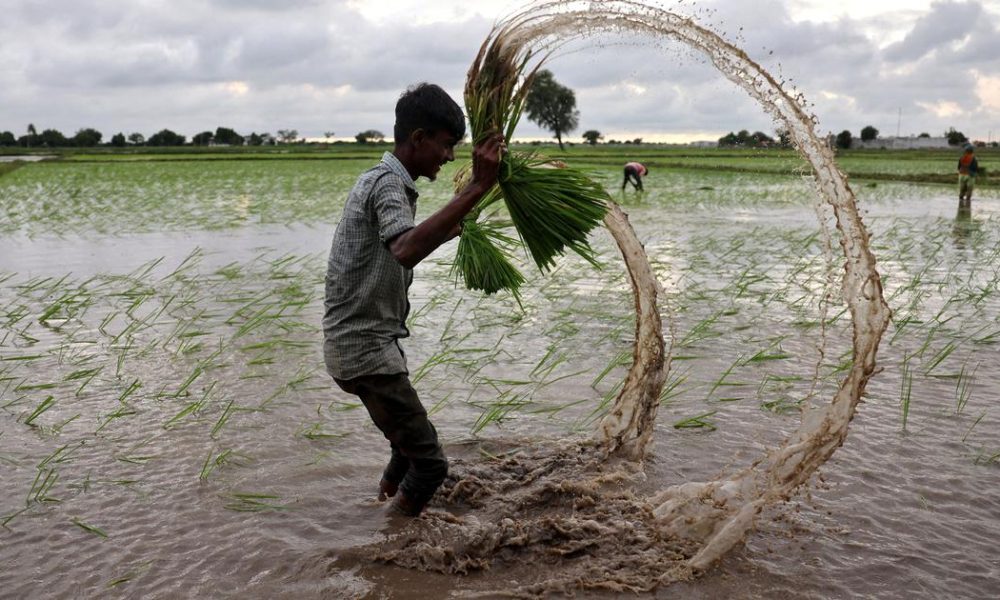
The sowing of Kharif crops in India has witnessed a staggering decline of 22.7% compared to the previous year, primarily attributed to a delayed southwest monsoon that has hampered agricultural activities across multiple states. According to data released by the Union government, as of Thursday, the area dedicated to Kharif crop cultivation stands at 182.7 lakh hectares, a significant drop from 236.4 lakh hectares recorded in 2022, as per the Ministry of Agriculture and Farmers Welfare.
The Kharif season, which spans from June to October, is crucial for farmers as it marks the period when crops are sown at the onset of the monsoon and harvested at its conclusion. This year, the adverse weather conditions have not only affected the timing of sowing but also the variety of crops being cultivated. Among the most affected are oilseeds, which experienced a dramatic 53.3% decrease in acreage, plummeting to 16.9 lakh hectares from 36.4 lakh hectares last year. This decline is particularly pronounced in soybean and groundnut cultivation.
In addition to oilseeds, cotton cultivation has also suffered, with a 34.6% reduction to 29.6 lakh hectares. Paddy sowing has decreased by 25.2%, now covering only 25.7 lakh hectares. Pulses have not fared better, as acreage for these crops has dropped by 30.5% to 14.9 lakh hectares, largely due to reduced sowing of arhar, urad, and moong varieties.
The India Meteorological Department has projected that this year’s seasonal rainfall will reach around 90% of the long-term average. However, the anticipated strengthening of El Niño conditions during the June to September period raises concerns about further disruptions to the monsoon. El Niño, characterized by the warming of ocean surface temperatures in the eastern and central Pacific, is a phenomenon that occurs intermittently and has been associated with reduced monsoon rainfall in the subcontinent.
Experts warn that the current climatic conditions could have lasting implications for food security and agricultural productivity in India, a nation where a significant portion of the population relies on agriculture for their livelihood. Farmers and policymakers alike are closely monitoring the situation in hopes of mitigating the effects of this year’s adverse weather patterns.
Source: scroll.in







No Comment! Be the first one.