

Bengaluru Airport’s Terminal-2: A Green Oasis or an Aesthetic Misfit?
Bengaluru’s Kempegowda International Airport has unveiled its newly revamped Terminal-2, which has sparked considerable debate among travelers and design enthusiasts alike. The terminal,...

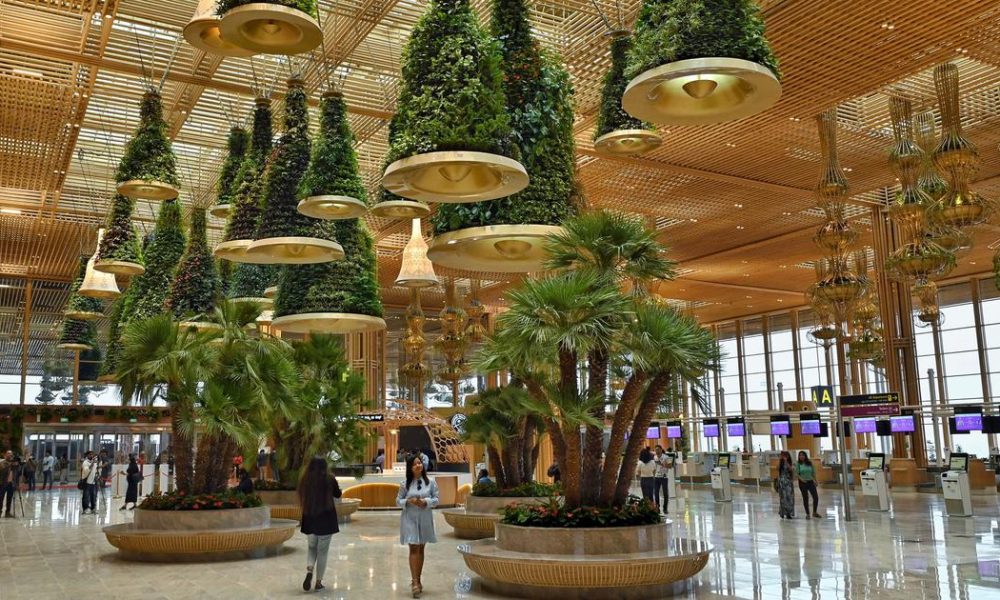
Bengaluru’s Kempegowda International Airport has unveiled its newly revamped Terminal-2, which has sparked considerable debate among travelers and design enthusiasts alike. The terminal, designed to reflect the city’s identity as the ‘Garden City of India,’ is branded as the ‘terminal in a garden.’ This ambitious project is the brainchild of the UK- and Singapore-based landscape architecture firm Grant Associates, which has infused the space with an abundance of greenery, aiming to create an immersive experience that resonates with nature.
As passengers step into the terminal, they are greeted by an impressive array of landscaping elements. The design features plants suspended from intricate bell-shaped structures alongside towering green walls that snake throughout the terminal. The architecture incorporates expansive foyers and vestibules, allowing slender palm trees and other vegetation to penetrate the indoor environment. One of the standout features is a stunning two-storey waterfall that serves as a captivating backdrop for the baggage claim area, enhancing the overall ambiance of the space.
Beyond mere aesthetics, the designers refer to their work as a form of choreography, where every element is meticulously arranged to create a harmonious flow. Some might liken the experience to walking through a museum, where curated displays of nature unfold at every turn. This carefully designed environment not only captivates visitors but also conveys deeper narratives about the relationship between humans and nature. As famous architect Balkrishna Doshi once remarked, ‘I talk to nature, and nature talks back to me.’ The terminal’s design endeavors to foster this dialogue between the curated landscapes and the users who navigate through them.
However, the terminal’s lush greenery has not been without criticism. Some observers question whether the heavy emphasis on the tropical aesthetic aligns with Bengaluru’s urban reality. As the city grapples with rapid development and infrastructural challenges, the ‘Garden City’ designation seems increasingly disconnected from the everyday experiences of its residents. Critics argue that while the terminal’s design may be visually stunning, it does not fully address the environmental and infrastructural issues that plague the city.
As Bengaluru continues to evolve, the juxtaposition of Terminal-2’s verdant aesthetic against the backdrop of urban challenges raises important questions about the future of design in Indian cities. Will this terminal serve as a model for integrating nature into urban spaces, or will it remain an isolated spectacle that overlooks the pressing realities of urban life? In the end, the true value of this green oasis may lie in its ability to inspire a meaningful dialogue about nature, beauty, and urban living in a rapidly changing India.
Source: scroll.in







No Comment! Be the first one.