

NCERT Reverts Changes to Indus Valley ‘Dancing Girl’ Image in Class 9 Textbook
The National Council of Educational Research and Training (NCERT) has announced a reversal of its earlier decision regarding the depiction of the renowned “Dancing Girl” statue from the...

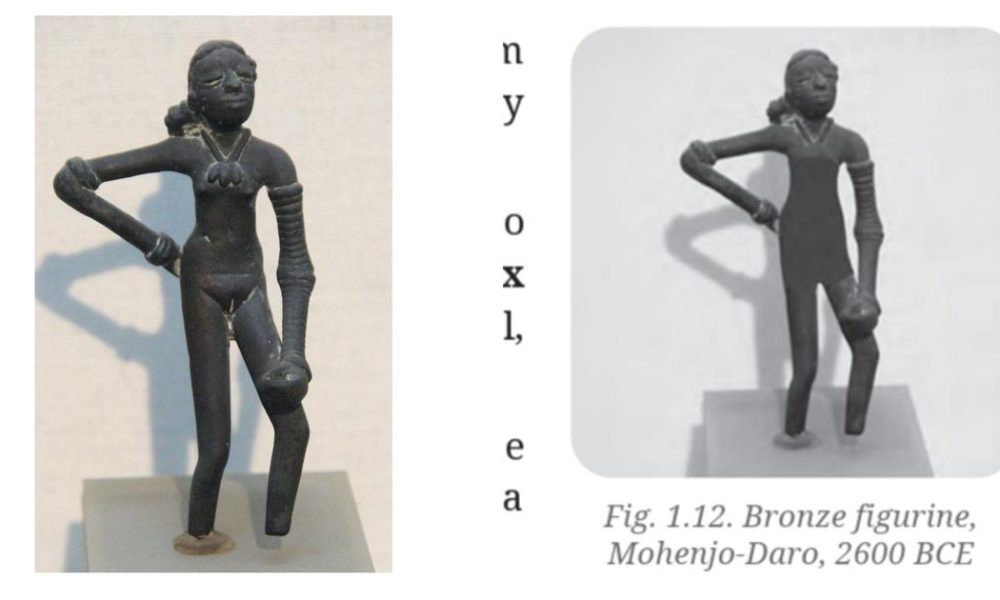
The National Council of Educational Research and Training (NCERT) has announced a reversal of its earlier decision regarding the depiction of the renowned “Dancing Girl” statue from the Indus Valley Civilization in the Class 9 arts textbook. Following widespread criticism, the original image of the bronze sculpture, which prominently features the figure’s bare torso, will be reinstated, ensuring that students receive an unaltered view of this iconic artifact.
Initially, the updated version of the textbook had replaced the original photograph with one that obscured the statue’s torso with dark shading, a move that sparked considerable debate among educators and historians. The “Dancing Girl,” a remarkable representation of a young woman adorned with jewelry and styled hair, dates back to between 2300 BC and 1750 BC, originating from the ancient city of Mohenjo-daro, located in present-day Pakistan. This artifact, a significant cultural relic, is currently housed in the National Museum in New Delhi.
The controversy gained momentum when some council members labeled the original image as inappropriate, claiming it depicted nudity. In response, experts, including a government advisor, defended the statue as a vital piece of our cultural heritage deserving of accurate representation in educational materials. Amidst the uproar, NCERT’s Director, Dinesh Saklani, confirmed that the council had been instructed to reassess the situation immediately after the changes incited public outcry.
In light of expert consultations and feedback from various stakeholders, NCERT has decided to revert to the original photograph. Saklani emphasized the importance of providing students with a complete understanding of historical artifacts, arguing that the unaltered image offers critical insights into the artistic and cultural context of the Indus Valley Civilization. He noted that the council is committed to providing an education that accurately reflects India’s rich historical tapestry.
This incident underscores ongoing debates surrounding educational content in India, highlighting the sensitive nature of how cultural heritage is presented in school curricula. The reinstatement of the original image is seen as a step towards maintaining the integrity of educational resources and fostering a more nuanced understanding of India’s ancient civilizations among students.
Source: scroll.in






No Comment! Be the first one.