

India’s Household Savings Decline: Exploring the Paradox Amidst a Rising Workforce
India is currently facing a perplexing economic situation: despite possessing a burgeoning population of working-age individuals, household savings have plummeted to their lowest levels in nearly two...

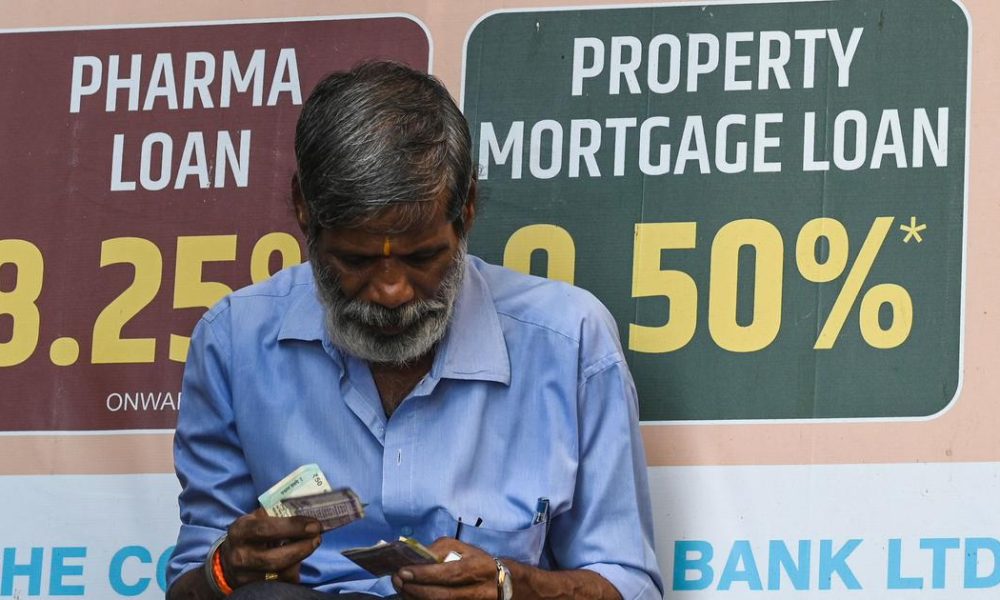
India is currently facing a perplexing economic situation: despite possessing a burgeoning population of working-age individuals, household savings have plummeted to their lowest levels in nearly two decades. This scenario challenges a long-standing economic theory that aligns a nation’s saving patterns with its demographic structure, particularly the distribution of its population across various age groups.
The Nobel Prize-winning economist Franco Modigliani proposed a life-cycle hypothesis in 1985, suggesting that individuals manage their savings by balancing borrowing in their youth, diligent saving during their prime earning years, and eventually drawing down those savings in retirement. According to Modigliani’s model, a country with a high proportion of prime-age workers should ideally exhibit a substantial saving rate. However, India’s current economic landscape appears to contradict this expectation.
Further refining this concept, economists Ronald Lee and Andrew Mason introduced the notion of the “second demographic dividend.” While the first demographic dividend represents an immediate boost in productivity from an increasing number of working-age individuals, the second dividend relies heavily on the presence of robust pension systems, accessible financial markets, and active labor markets that can effectively convert the instinct to save into tangible wealth. Unfortunately, India seems to be grappling with significant challenges in these areas.
Several factors contribute to the declining household savings in the country. First, rising living costs and inflation have compelled families to allocate more of their income towards daily expenses, leaving less available for saving. Second, a lack of widespread financial literacy means that many individuals are not equipped to make informed saving choices or investments for their future. Finally, the inadequacies in the formal financial system, including limited access to reliable pension schemes, have resulted in a lack of security for the working population, further inhibiting their ability to save.
As the government continues to promote initiatives aimed at capitalizing on the demographic dividend, it is essential to address these underlying issues that hinder household savings. Ensuring that workers have access to comprehensive financial education, formal employment opportunities, and reliable retirement plans can transform the current trend and turn India’s demographic potential into a true economic asset.
Source: scroll.in







No Comment! Be the first one.