

Understanding the Complexity of Women’s Autonomy: Sabarimala, Hijab, and Ghoonghat
The ongoing debates surrounding women’s rights and autonomy in India have taken center stage recently, particularly with the discussions around Sabarimala, hijab, and ghoonghat. These topics...

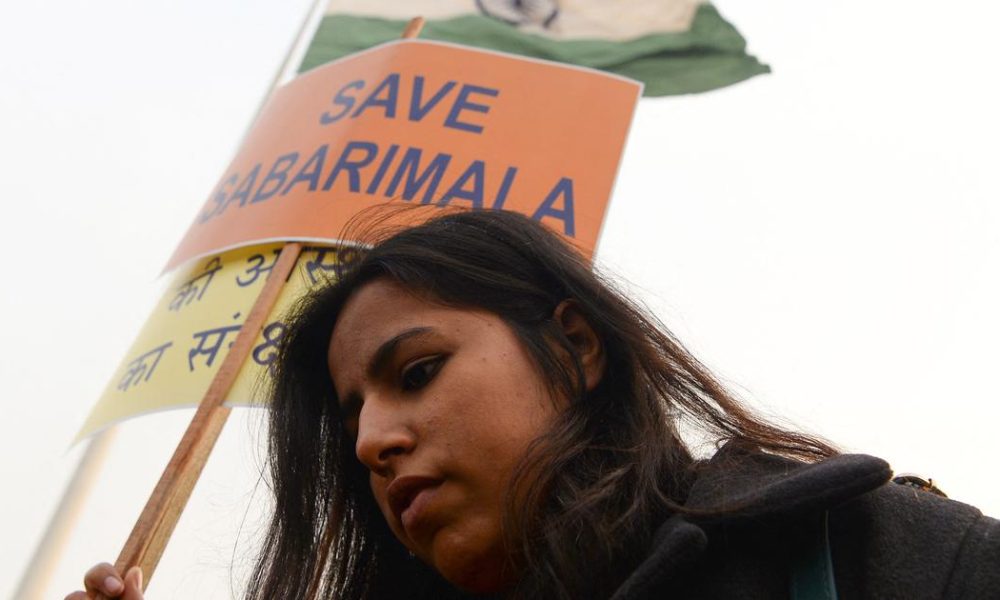
The ongoing debates surrounding women’s rights and autonomy in India have taken center stage recently, particularly with the discussions around Sabarimala, hijab, and ghoonghat. These topics have generated a flurry of opinions, with many critics arguing that drawing parallels between them can lead to misconceptions and oversimplifications of the real issues at hand.
For instance, the Supreme Court’s verdict allowing women of all ages to enter the Sabarimala temple was characterized by some detractors as a mere effort to control women’s choices, akin to the restrictions imposed by the hijab or ghoonghat. However, this interpretation overlooks the unique cultural, religious, and historical contexts of these practices. Sabarimala, a revered pilgrimage site in Kerala, has specific traditions rooted in its own belief system, while the hijab, a form of attire, represents a diverse spectrum of interpretations of modesty among Muslim women. Ghoonghat, on the other hand, has its own significance in certain Hindu communities.
Critics argue that conflating these practices into a single narrative of ‘controlling women’ fails to acknowledge the autonomy of women in choosing how they express their identity and beliefs. While the controversies may appear similar superficially, they are deeply embedded in the social fabric of Indian society, and reducing them to simplistic equivalences risks erasing the individuality and complexity of women’s experiences. The nuanced nature of these practices requires a sensitive approach, recognizing that autonomy can manifest differently across cultural contexts.
Moreover, as India grapples with rising communal tensions and political polarization, it is crucial to engage in deeper dialogues around these issues rather than rely on superficial comparisons. The discussions surrounding women’s rights in India should focus on empowering women to make their own choices—whether they choose to wear a hijab, adhere to the traditions of Sabarimala, or opt for ghoonghat. The essence of a pluralistic society lies in respecting these choices and fostering an environment where differing opinions can coexist without conflict.
As India continues to evolve, it is essential to understand that women’s autonomy is not a monolithic issue. It encompasses a broad spectrum of beliefs, practices, and choices, shaped by various factors such as religion, culture, and personal conviction. Only through respectful dialogue and an appreciation for diversity can society hope to address the complexities surrounding women’s rights in a meaningful and constructive way.
Source: scroll.in







No Comment! Be the first one.