

Supreme Court Urges Election Commission to Consider Time Stamps on Voter Slips
The Supreme Court of India recently encouraged the Election Commission to evaluate a proposal that calls for the inclusion of time stamps on Voter Verifiable Paper Audit Trail (VVPAT) slips. This...

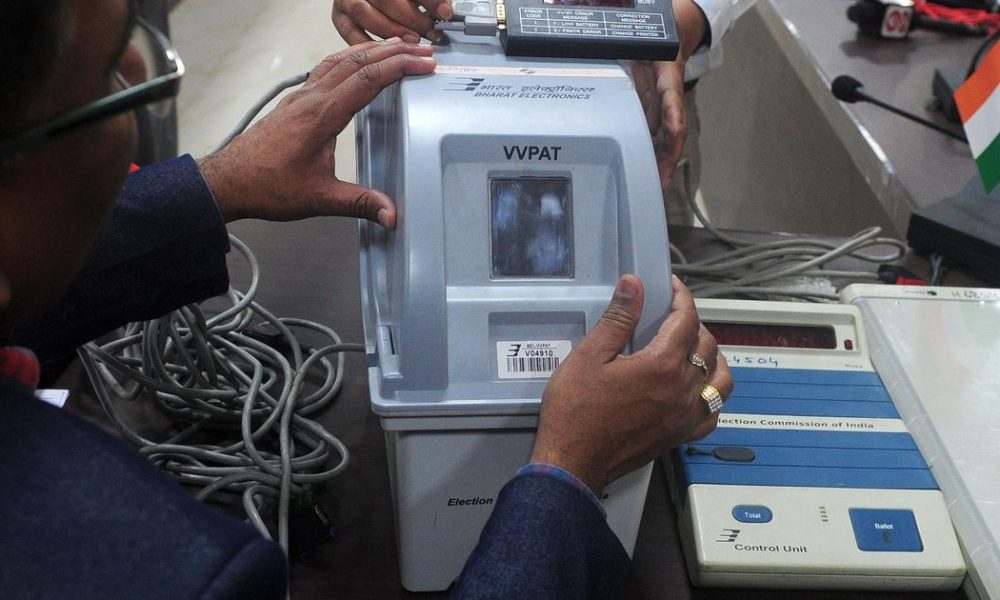
The Supreme Court of India recently encouraged the Election Commission to evaluate a proposal that calls for the inclusion of time stamps on Voter Verifiable Paper Audit Trail (VVPAT) slips. This request was brought to light following a public interest litigation submitted by a businessman, highlighting concerns regarding the integrity of electoral processes.
The petition raised by the businessman’s counsel argues that the current lack of time stamps on VVPAT slips creates a significant ‘physical audit gap’. This gap becomes particularly concerning in instances where there are discrepancies in voting patterns, especially during the final hours of polling. The counsel emphasized that without time stamps, the evidentiary strength of the paper trail diminishes, leaving room for skepticism regarding the electoral process.
VVPAT machines, which have been in use since 2013, facilitate a system that enables voters to verify their votes by producing a printed slip that displays the chosen party’s name and symbol. Voters are able to see this printout for a few seconds before it is deposited into a secure box. However, the absence of a time-stamping mechanism has been flagged as a critical oversight, particularly in light of situations where a sudden surge in voter turnout has raised doubts about the legitimacy of the election.
During the court proceedings, the petitioner cited instances where there has been a notable increase in voter participation after 5 PM, suggesting that such anomalies have led to widespread concerns about the election’s integrity. The counsel passionately argued that introducing time stamps on VVPAT slips would help address these issues and restore public confidence in the electoral process. The argument presented to the court resonated with many who share concerns about transparency in voting practices.
As the Supreme Court deliberates on this matter, the implications of such a change could be profound, potentially enhancing the robustness of India’s electoral framework. The call for time stamps aligns with broader efforts to ensure that elections remain free, fair, and transparent, thus reinforcing the democratic fabric of the nation. The Election Commission’s response to this recommendation will be closely monitored by stakeholders across the political spectrum, as the integrity of the voting process is a cornerstone of democracy in India.
Source: scroll.in







No Comment! Be the first one.