

Echoes of Climate Change: How Women’s Work Songs Reflect Environmental Challenges in Rural India
In a quiet corner of rural western India, Anusuyabai Pandekar and her daughter-in-law Mandabai find themselves seated beside a stone grindmill, an emblem of a bygone era. The mill, devoid of grain...

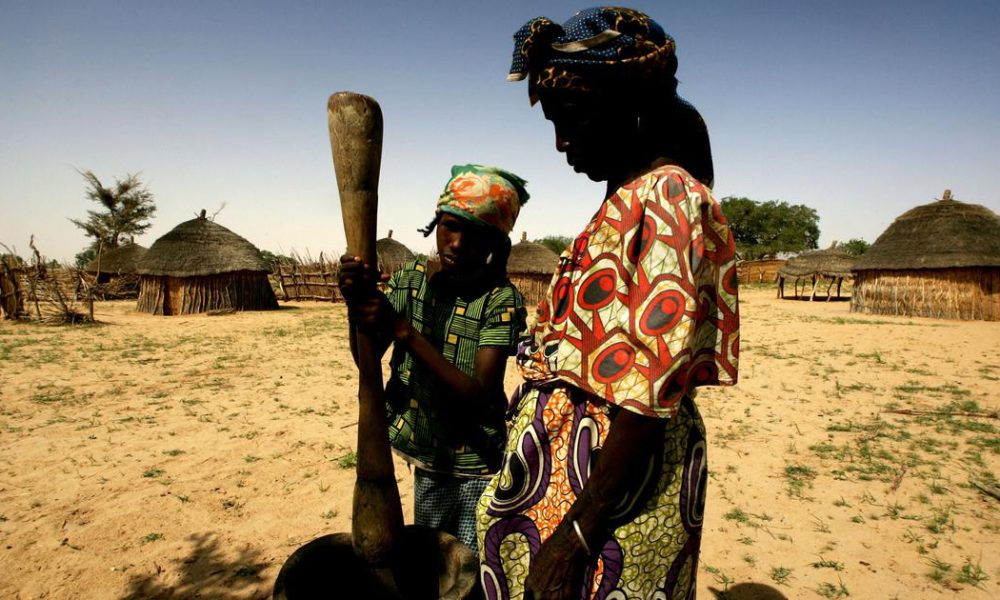
In a quiet corner of rural western India, Anusuyabai Pandekar and her daughter-in-law Mandabai find themselves seated beside a stone grindmill, an emblem of a bygone era. The mill, devoid of grain and flour, stands silent, symbolizing a shift in agricultural practices and traditions. As the two women begin to sing, their voices intertwine, evoking memories of labor that is now fading into history. The song speaks of heavy rains nourishing the soil, of women heading to fields with baskets of bhakri—a stark contrast to the current realities of drought and changing climate.
Such scenes, once a staple of rural life, are now becoming increasingly rare, as traditional methods give way to modern conveniences like electric mills. The songs that once echoed through villages, chronicling the rhythms of farming life, are left behind, mere fragments in memory and record. These melodies not only reflect daily life but stand as poignant reminders of the environmental shifts that have altered their world.
Climate change is often discussed in terms of statistics—emissions, temperature changes, and rainfall patterns. While these figures are essential for understanding the global crisis, they often fail to capture the lived experiences of individuals affected by such changes. The voices of those who work the land, particularly women, rarely make it into official discourse on environmental issues. Their songs, rich with cultural significance, illustrate a narrative that is often overlooked in favor of numerical data.
Historically, women in rural India have played a critical role in agricultural practices and food production. Their work songs, passed down through generations, not only celebrate the cycles of planting and harvesting but also express hopes and concerns about the weather and the environment. With the unpredictability of the monsoon and the increasing frequency of droughts, these songs have taken on new meanings, reflecting the anxiety and uncertainty that now pervade rural life.
As climate change continues to reshape the landscape, it is crucial to amplify these women’s voices. Their narratives provide insight into the emotional and psychological impacts of environmental change that statistics alone cannot convey. By recognizing and preserving these cultural expressions, we can begin to understand the full scope of climate change and its effects on communities.
Source: scroll.in







No Comment! Be the first one.