

Revival of Hard-Ground Swamp Deer Population in Madhya Pradesh: A Promising Conservation Success
A recent study highlights the encouraging success of translocating hard-ground swamp deer from Kanha Tiger Reserve to Satpura Tiger Reserve in Madhya Pradesh. This initiative has led to a steady...

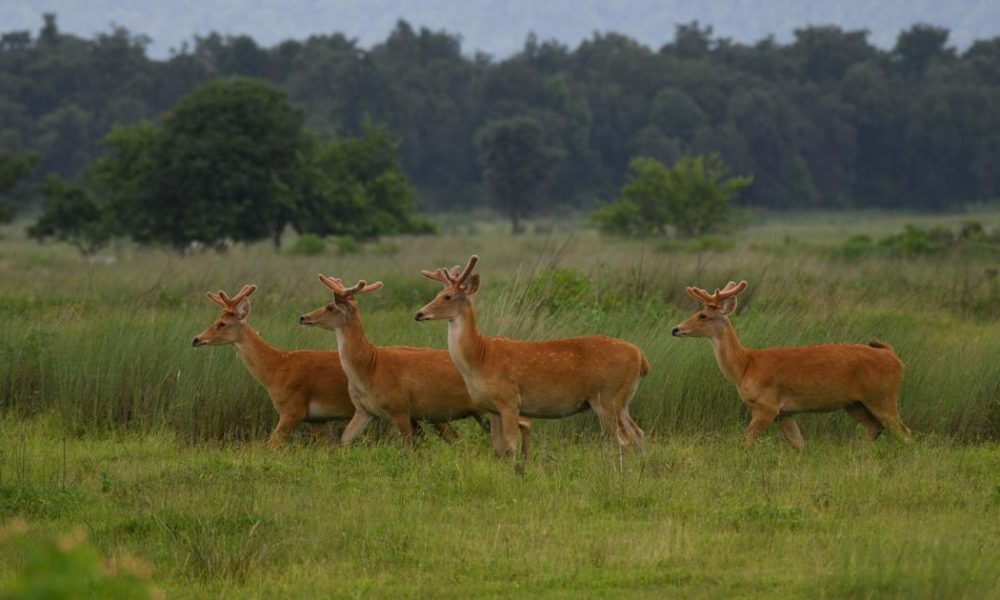
A recent study highlights the encouraging success of translocating hard-ground swamp deer from Kanha Tiger Reserve to Satpura Tiger Reserve in Madhya Pradesh. This initiative has led to a steady increase in the deer population and successful breeding efforts, which are vital for the future of this vulnerable subspecies.
The hard-ground swamp deer (Rucervus duvaucelii branderi) was once abundant across central India but is now primarily restricted to Kanha. According to the International Union for Conservation of Nature (IUCN), this subspecies is classified as vulnerable and is protected under Schedule I of the Indian Wildlife (Protection) Act of 1972. Historically, their numbers have dwindled due to habitat loss, grassland fragmentation, and hunting practices.
With a current population of approximately 1,100 individuals confined to a single location, the species faces significant risks from diseases and other environmental threats. Neha Awasthi, a leading researcher on the study and member of the IUCN Species Survival Commission’s Deer Specialist Group, emphasized the precarious situation. “Having the entire subspecies limited to Kanha has created a single point of failure,” she noted. Awasthi elaborated on the challenges faced by small, isolated populations, which are susceptible to various threats including demographic fluctuations, genetic drift, and inbreeding.
The successful establishment of a second population in Satpura is seen as a crucial step in mitigating the risk of extinction. By diversifying the habitats of hard-ground swamp deer, conservationists aim to create a more resilient population that can better withstand potential threats. This translocation project not only improves the odds of survival for this endangered species but also enhances the ecological balance in the region.
Efforts like these are increasingly vital in the face of ongoing habitat degradation and climate change challenges. The successful breeding and growth of the hard-ground swamp deer population could pave the way for similar initiatives aimed at restoring other endangered species across India. As conservationists continue to monitor these efforts, the hope is that with time, hard-ground swamp deer will once again thrive in their historical range.
Source: scroll.in







No Comment! Be the first one.