

Supreme Court Dismisses Petitions for Separate Hate Speech Law: A Deep Dive into the Debate
In a significant ruling on Wednesday, the Supreme Court of India dismissed several public interest litigations (PILs) that advocated for the establishment of a distinct hate speech law. The court...

In a significant ruling on Wednesday, the Supreme Court of India dismissed several public interest litigations (PILs) that advocated for the establishment of a distinct hate speech law. The court argued that existing provisions in criminal law already provide adequate measures for addressing offenses related to public order, dignity, and constitutional values.
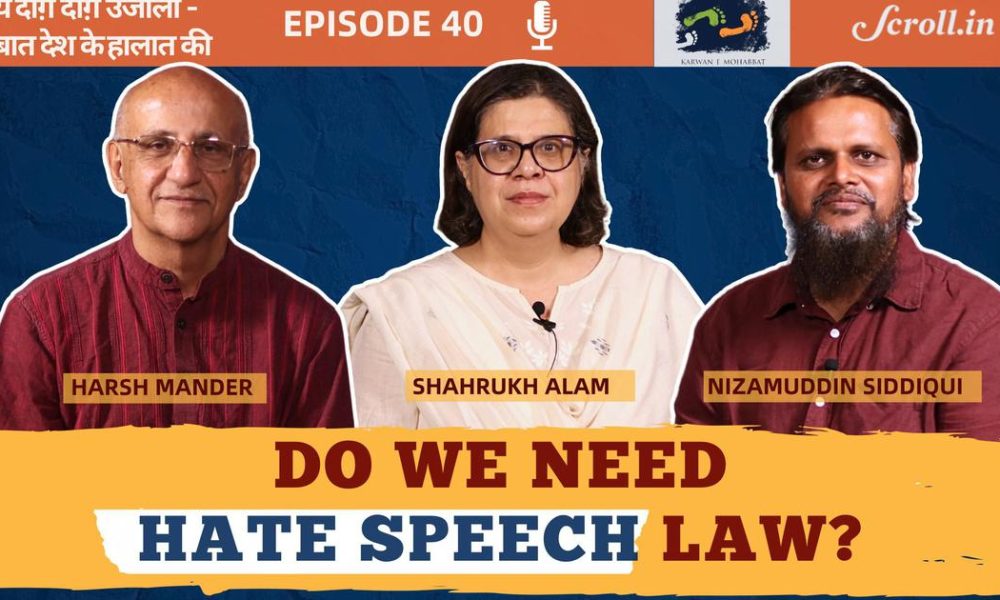
This decision has sparked renewed discussions about the need for a specialized hate speech law in the country. In a recent episode of a discussion series focusing on the state of the republic, renowned writer and peace activist Harsh Mander engaged in a thought-provoking dialogue with lawyer Shahrukh Alam and researcher Nizamuddin Ahmed Siddiqui. Their conversation delved into the complexities surrounding the regulation of hate speech, exploring both the potential benefits and drawbacks of introducing legal frameworks.
During the discussion, the panelists examined various arguments supporting the need for legal provisions to counter hate speech, emphasizing how such speech often perpetuates discrimination within society. Shahrukh Alam highlighted the challenges of defining hate speech in a legal context, suggesting that any new law would face difficulties in implementation and interpretation. Mander pointed out the risk of state overreach, where the government might misuse the authority to define and adjudicate what constitutes harmful speech.
The conversation also underscored the role of hate speech as a societal issue that transcends the courtroom, manifesting in daily life and political discourse. Siddiqui noted that hate speech is not merely a legal issue but a reflection of deeper societal prejudices, thus necessitating a more nuanced approach to its regulation. The panelists pondered whether existing laws could be strengthened rather than creating entirely new provisions to tackle this pressing issue.
As the debate continues, it raises critical questions about the balance between free speech and the necessity of protecting citizens from hate-driven rhetoric. The discussion has reignited public interest in how hate speech is articulated, disseminated, and its implications on social cohesion, prompting further examination of whether India’s current legal framework is truly sufficient in addressing these concerns.
Source: scroll.in







No Comment! Be the first one.