

The Business of Carbon Credits: Mangrove Restoration’s Dual Value Dilemma
Amid the verdant expanses of Pakistan’s Indus delta, a significant environmental initiative is taking shape — a sprawling 350,000-hectare mangrove restoration project. This initiative is not just a...

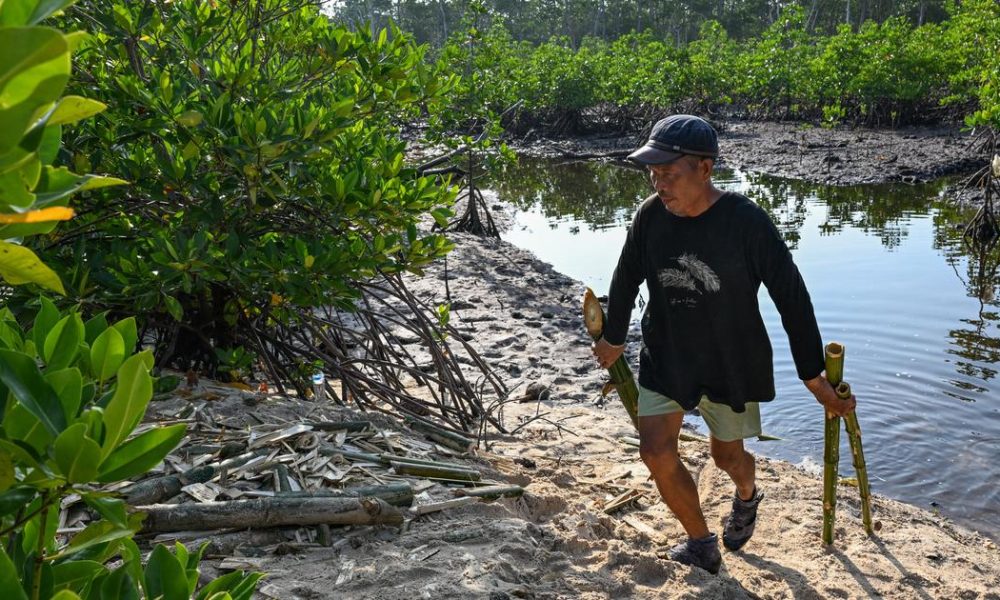
Amid the verdant expanses of Pakistan’s Indus delta, a significant environmental initiative is taking shape — a sprawling 350,000-hectare mangrove restoration project. This initiative is not just a step towards ecological preservation but also a burgeoning enterprise that seeks to generate revenue through carbon credits. These credits are a financial mechanism that allows corporations to offset their carbon emissions by investing in projects aimed at carbon sequestration, with each credit corresponding to a specific volume of carbon captured.
Restoring mangroves is pivotal for carbon absorption, as a healthy forest actively removes carbon dioxide from the atmosphere and stores it in its biomass. This transformation into a profitable venture has spawned a billion-dollar industry, appealing to companies across the globe keen on mitigating their environmental impact. However, as lucrative as this sounds, there exists a fundamental disparity in the valuation of these ecosystems.
For the thousands of local inhabitants residing in the vicinity of these mangroves, the forest offers essential services far beyond its carbon-storing capabilities. These coastal communities benefit from the mangroves’ ability to shield them from storms, providing a natural barrier that protects approximately 60 villages. Furthermore, the forest serves as a breeding ground for numerous fish species, making it a vital source of livelihood through fishing. Additionally, the mangroves yield resources like wood, honey, and thatch, which play a crucial role in the daily lives of these communities.
This duality of value — the tangible, marketable benefits enjoyed by distant, often affluent buyers, versus the more intangible, local advantages experienced by residents — highlights a significant challenge in conservation efforts. While the market for carbon credits thrives, the local communities often remain sidelined, as their intrinsic connection to the land is not adequately recognized or compensated.
This pressing issue will gain prominence at the upcoming UN Climate Summit COP31, set to take place in Antalya, Turkey, this November. Last year, during COP30, nations expressed a collective commitment to intensify financial support for communities grappling with the impacts of climate change, with calls for funding from wealthier countries to at least triple by 2035. As the dialogue evolves, it is imperative that the multifaceted value of mangroves is emphasized, ensuring that both carbon credits and local livelihoods can coexist harmoniously.
Source: scroll.in







No Comment! Be the first one.