

Controversy Erupts in Dhaka as Tagore’s Legacy Faces Cultural Backlash
In a surprising turn of events in Dhaka, Bangladesh, a group of young activists took to the streets to protest against the legacy of Rabindranath Tagore, one of Bengal’s most revered cultural...

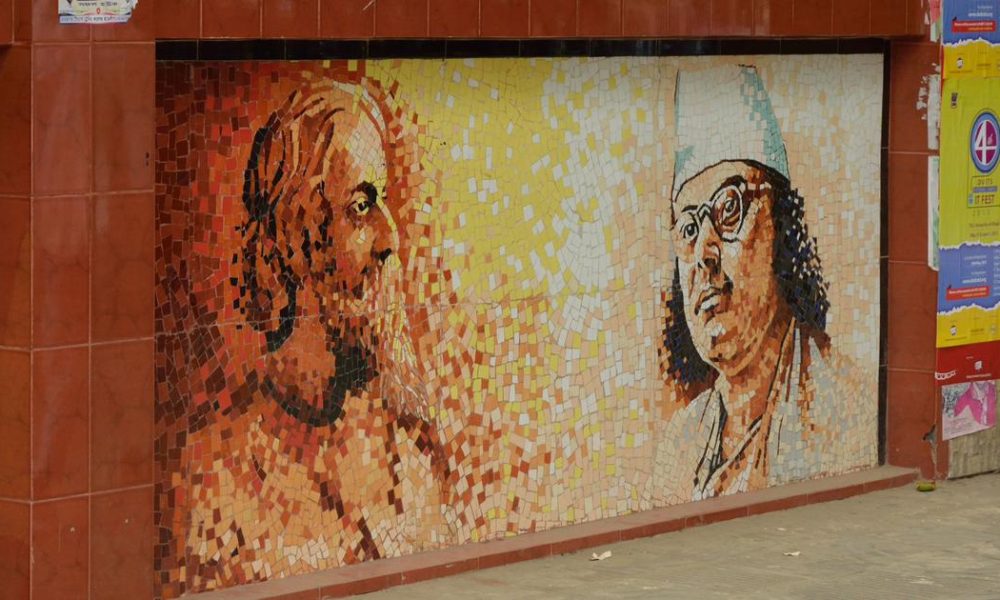
In a surprising turn of events in Dhaka, Bangladesh, a group of young activists took to the streets to protest against the legacy of Rabindranath Tagore, one of Bengal’s most revered cultural icons. On a Saturday afternoon, these individuals gathered outside the Bangladesh Shilpakala Academy, where a newly unveiled mural depicted Tagore alongside other notable Bengali figures. In an act that shocked many, one activist smeared black ink over Tagore’s portrait, prompting immediate police action.
The incident escalated quickly, resulting in the detention of four individuals, including 29-year-old ANM Ayas, an activist associated with the Rashtra Sanglap Forum. Ayas, known for her provocative methods on social media, and her fellow demonstrators now face serious charges, including conspiracy, inciting religious hatred, and fostering animosity among different groups. This act of vandalism has sparked a significant debate about cultural identity and the historical narratives that shape it.
The motivations behind the protest were articulated by one of the women involved, who claimed their actions were a direct response to perceived Indian aggression. In this context, Tagore was reinterpreted not merely as a poet from Bengal but as an emblem of Indian nationalism that they sought to dissociate from Bangladeshi identity. This reasoning, however, has been met with widespread criticism, with many arguing that it lacks a comprehensive understanding of the historical and cultural significance of Tagore.
In stark contrast to the protest, the cultural organization Udichi mobilized a gathering of musicians, singers, and activists to express their solidarity with Tagore’s legacy. Positioned beneath the same mural, a vibrant scene unfolded as a man played the harmonium and a woman in a traditional green sari sang songs that celebrated the poet’s contributions. This gathering highlighted the strong emotional and cultural ties that many in Bangladesh still feel towards Tagore, despite the recent controversy.
The incident has reignited discussions about nationalism and cultural heritage in Bangladesh, particularly in relation to historical figures like Tagore, who transcends borders and has contributed significantly to the literary and cultural fabric of both Bangladesh and India. As society grapples with its identity in an increasingly polarized environment, the legacy of Tagore remains a poignant symbol of unity and artistic expression. The ongoing dialogue surrounding this event is likely to shape the future of cultural discourse in Bangladesh.
Source: scroll.in







No Comment! Be the first one.