

Supreme Court Halts Defamation Proceedings Against Rahul Gandhi Over ‘Leader of Thieves’ Comment
The Supreme Court of India has put a temporary hold on the criminal defamation trial against Congress leader Rahul Gandhi. This decision comes after Gandhi made comments labeling Prime Minister...

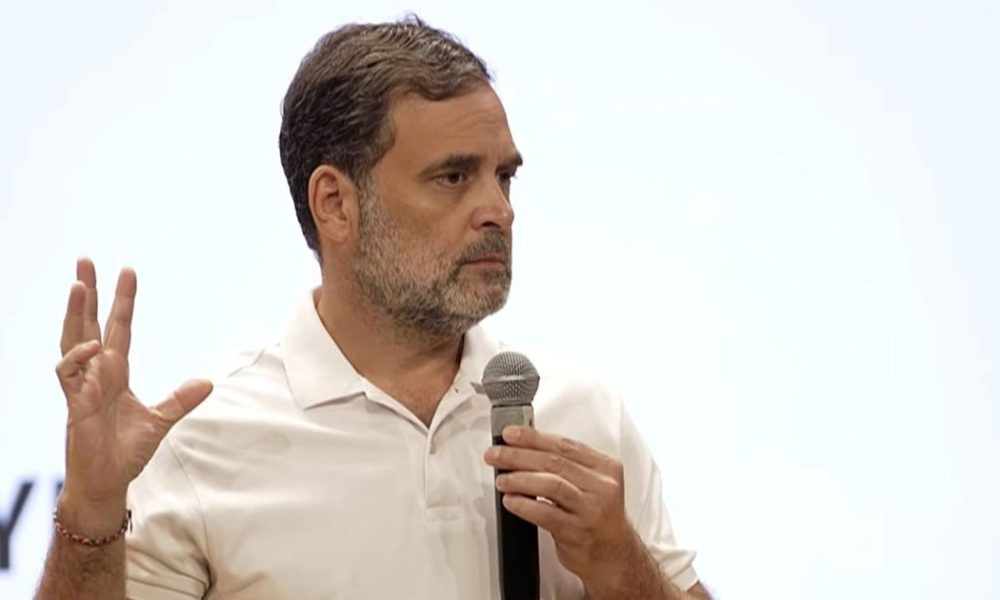
The Supreme Court of India has put a temporary hold on the criminal defamation trial against Congress leader Rahul Gandhi. This decision comes after Gandhi made comments labeling Prime Minister Narendra Modi as ‘choron ke sardar,’ which translates to ‘leader of thieves.’ The case has garnered significant media attention and political scrutiny since it highlights the ongoing tensions between the ruling Bharatiya Janata Party (BJP) and the opposition Congress party.
On Tuesday, a bench comprising Justices Vikram Nath and Aparesh Kumar Singh issued notices to both the Maharashtra government and the complainant, requesting their responses within the next four weeks. This legal battle traces back to September 2018, during a rally in Rajasthan where Gandhi criticized the Prime Minister in relation to the controversial Rafale fighter jet deal. The remarks were seen as a direct attack not only on Modi but also on the integrity of the BJP as a political party.
The complaint was filed by a BJP worker who argued that Gandhi’s statement tarnished the reputation of Modi and the party, thereby justifying the initiation of defamation proceedings. The complainant asserted that by equating Modi with a leader of thieves, Gandhi indirectly labeled BJP workers as thieves as well. This assertion raised questions about the ethical boundaries of political discourse in India.
Previously, the Bombay High Court had dismissed Gandhi’s plea to quash the defamation case, prompting him to appeal to the Supreme Court. In his defense, Gandhi maintained that his remarks did not directly name any political party or its members, but the court ruled against him, stating that the BJP, as a registered national political party, was indeed affected by such comments.
This case reflects the broader political landscape in India, where the use of strong language and personal attacks is increasingly becoming common among political leaders. As the Supreme Court’s stay on the trial provides temporary relief to Gandhi, it also opens up a larger conversation about the implications of political speech and the accountability of public figures in expressing their viewpoints.
Source: scroll.in







No Comment! Be the first one.