

Supreme Court Urges Government to Uphold Right to Protest Amid Ongoing Restrictions
In a recent hearing on a contempt petition, the Supreme Court of India directed the government to adhere to the legal framework governing protests, highlighting concerns over the treatment of...

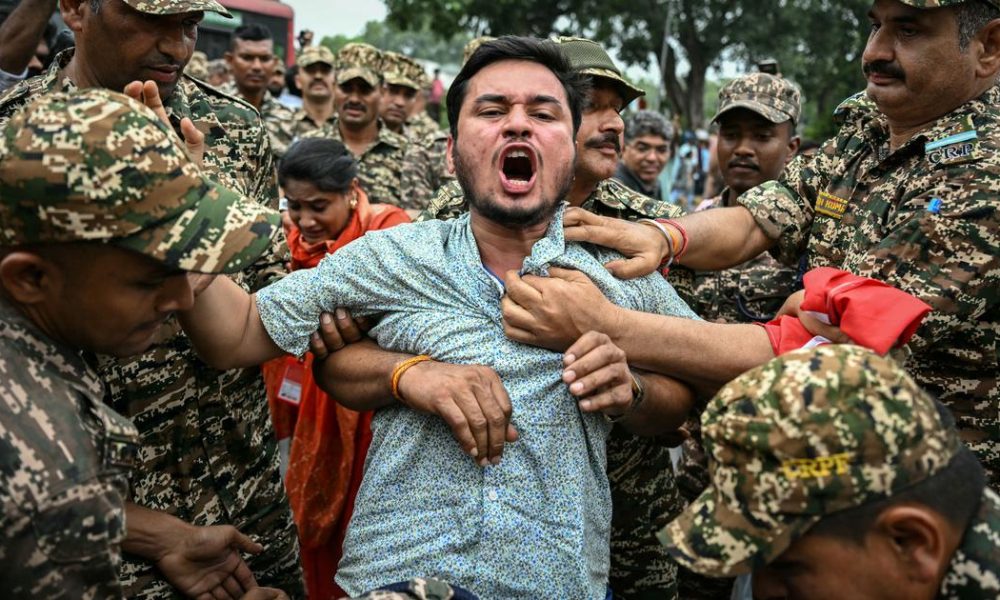
In a recent hearing on a contempt petition, the Supreme Court of India directed the government to adhere to the legal framework governing protests, highlighting concerns over the treatment of demonstrators in the national capital. The petition specifically pointed to the actions of Union Home Secretary Govind Mohan, Delhi Police Commissioner Anurag Kumar, and Delhi Metro Rail Corporation Chairperson D Thara, who were accused of violating a court order pertaining to the rights of individuals to assemble freely during protests at Jantar Mantar.
The court’s directives emphasized the necessity for the authorities to allow citizens to move freely within the constraints of traffic regulations. Additionally, it mandated a review of the barricades set up across Delhi, ensured that internet services remain uninterrupted as per legal provisions, and stipulated that no person should be detained outside the established legal framework. The Supreme Court also underscored the importance of enabling peaceful assembly in accordance with the law, particularly for lawyers, journalists, and other professionals who should not face barriers while executing their duties.
Despite the court’s instructions, significant restrictions remained in place, which raised questions about the timely enforcement of constitutional rights. The Supreme Court issued notices to the concerned officials and requested a counter-affidavit and a compliance report by October 13, effectively signaling the need for immediate action to address the ongoing situation.
This development underscores a critical gap in the protection of protest rights, which are enshrined in the Indian Constitution. The right to protest is not merely a theoretical concept but an active entitlement that must be safeguarded in real-time. If state authorities can impose limitations on movement, erect barriers in public spaces, and detain individuals, including journalists and organizers before a protest even commences, the essence of the right to protest is fundamentally undermined. The efficacy of judicial review, which often occurs only after a demonstration has concluded, raises concerns about the practical enforcement of constitutional rights during such events.
As India continues to grapple with the balance between maintaining public order and upholding democratic freedoms, the Supreme Court’s recent pronouncements may serve as a pivotal reminder of the importance of protecting civil liberties. The court’s insistence on allowing peaceful assembly and the need for accountability from government officials reflect ongoing tensions within the polity regarding dissent and civil rights.
Source: scroll.in





No Comment! Be the first one.