

The Artistic Lens: How British Painters Romanticized India for Colonial Ambitions
In the early 19th century, British artist George Chinnery departed from Calcutta, making his way to Macau amidst personal turmoil and financial burdens. Having spent over two decades in India,...

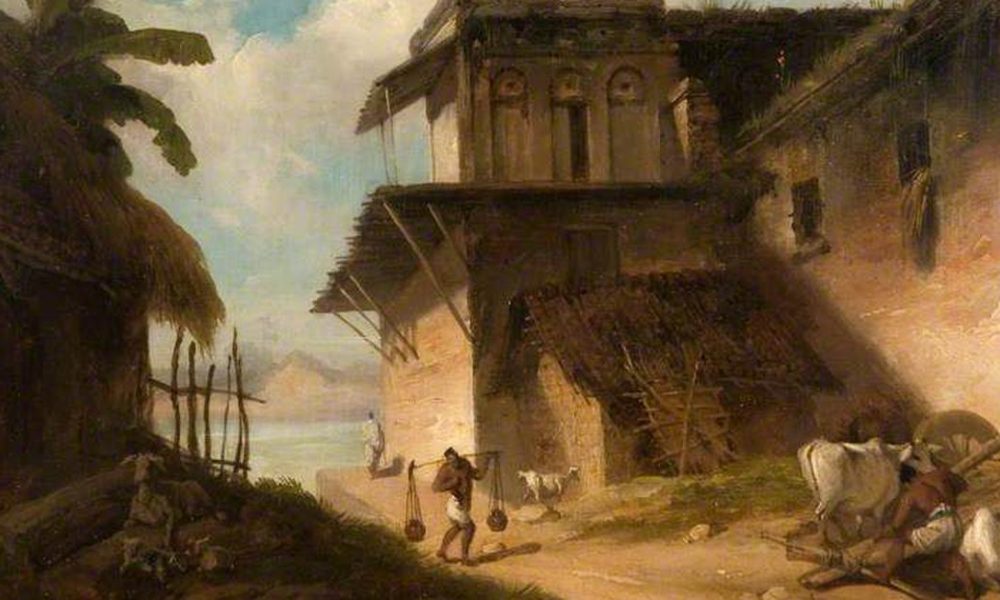
In the early 19th century, British artist George Chinnery departed from Calcutta, making his way to Macau amidst personal turmoil and financial burdens. Having spent over two decades in India, Chinnery had accumulated a staggering debt of approximately Rs 30,000 (equivalent to £232 today) and was grappling with the complexities of his personal life, including a troubled marriage. Nevertheless, Chinnery left behind a rich artistic legacy, particularly noted for his portraits and stunning landscapes that captured the essence of India.
Chinnery’s works, particularly his depictions of the serene Bengal countryside, starkly contrast the harsh realities of colonial life in India. His artwork often portrayed an idyllic vision, suggesting tranquility and beauty, which belied the oppressive nature of British colonial rule. This artistic portrayal was part of a larger trend that began as early as the 1760s, when British artists flocked to India, driven not only by economic opportunities but also by a desire to depict the unique culture and landscapes of the subcontinent to audiences back home.
These artists, motivated by a blend of ambition and curiosity, transformed India into an exotic spectacle that catered to colonial fantasies. Their paintings often rendered the land both alluring and perilous, symbolizing the duality of opportunity and danger. By navigating through various provinces and capturing the diverse landscapes, these artists not only documented their travels but also redefined the meaning and significance of these spaces in a colonial context.
The impact of these artistic interpretations extended beyond mere aesthetics; they played a critical role in shaping the perceptions of India in Britain. By portraying the subcontinent through a romanticized lens, British artists contributed to a narrative that justified colonial ambitions, presenting India as a place ready for exploitation. The exoticism ingrained in their works often overshadowed the underlying socio-political realities, framing the British presence in India as both a civilizing mission and a profitable venture.
As we reflect on this artistic legacy, it’s essential to acknowledge the complexities involved in such representations, which continue to influence contemporary views on colonialism and cultural appropriation. The legacy of artists like Chinnery serves as a reminder of the power of art in both reflecting and shaping historical narratives, urging us to critically examine the past and its implications for present-day India.
Source: scroll.in







No Comment! Be the first one.