

Kashmir’s Agricultural Shift: Paddy Fields Give Way to Apple Orchards Amidst Rising Concerns
In the tranquil village of Qaimoh in Kulgam district, Nazir Ahmad recalls a time when his land was a green expanse of paddy fields. Today, however, those fields have transformed into rows of...

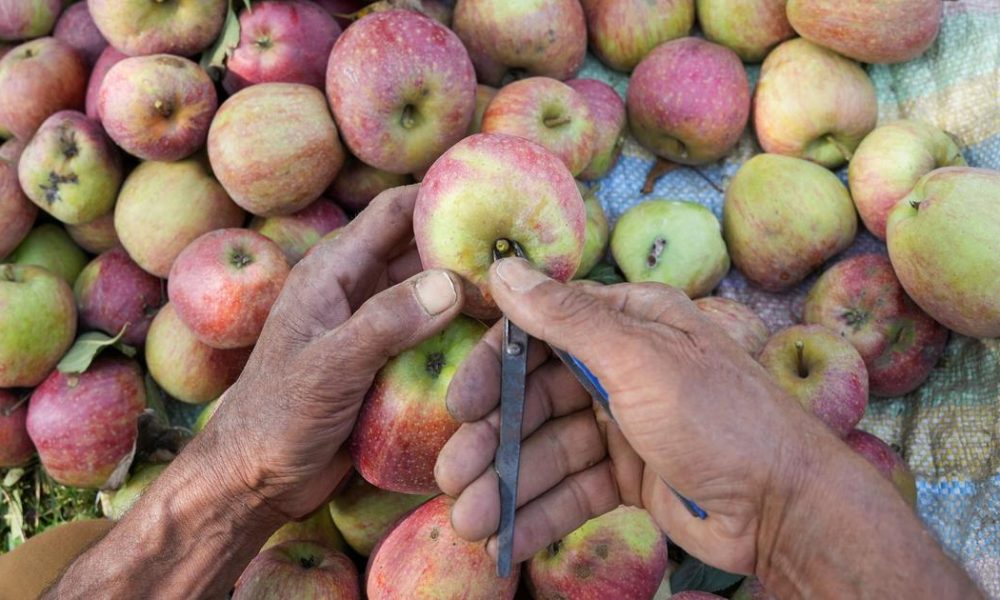
In the tranquil village of Qaimoh in Kulgam district, Nazir Ahmad recalls a time when his land was a green expanse of paddy fields. Today, however, those fields have transformed into rows of burgeoning apple saplings, marking a significant shift in agricultural practices across the Kashmir Valley. This transition, driven by the quest for higher profits amid increasing farming costs, has led to a notable decline in food crop cultivation.
Farmers in Kashmir are increasingly turning away from traditional crops like paddy, opting instead for lucrative horticultural ventures, particularly apple orchards. The allure of higher returns is compelling. While paddy cultivation historically yielded modest profits, the rise of high-density apple farming has transformed the economic landscape for many farmers. For instance, Nisar Ahmed from Kulgam, who once relied on paddy farming for an annual income of Rs 30,000 to Rs 50,000, has seen his earnings soar to around Rs 4 lakh after converting his farmland into an apple orchard.
However, this shift raises pressing concerns about food security in the region. As more farmers abandon staple crops, Kashmir is becoming increasingly reliant on other states for its essential food supplies, particularly rice. The irrigation channels that once nourished paddy fields now serve the apple plantations, illustrating a drastic alteration in agricultural water use. This dependence on external sources for basic sustenance poses a significant risk, particularly in times of agricultural crises and market fluctuations.
The changing agricultural dynamics are not merely economic; they challenge the cultural fabric of Kashmir, where food crops have historically been a staple of life. With the focus now shifting towards fruit orchards, the implications extend beyond the economy to biodiversity and local food traditions. Experts warn that while high-density apple farming may yield immediate financial benefits, it could lead to long-term sustainability issues in the region’s agricultural ecosystem.
As farmers navigate the complexities of modern agriculture and strive for profitability, the future of Kashmir’s food security remains uncertain. Balancing economic aspirations with the preservation of traditional farming practices will be crucial. Policymakers and agricultural experts must address these challenges to ensure that the Valley’s agricultural heritage is not lost in the pursuit of profit.
Source: scroll.in







No Comment! Be the first one.