

Delhi Metro Suspends Services at 11 Stations Amid Protest Demanding CEC Gyanesh Kumar’s Resignation
In a significant development in the capital, the Delhi Metro has temporarily closed entry and exit at 11 stations on Friday in anticipation of a protest scheduled to take place at Jantar Mantar. This...

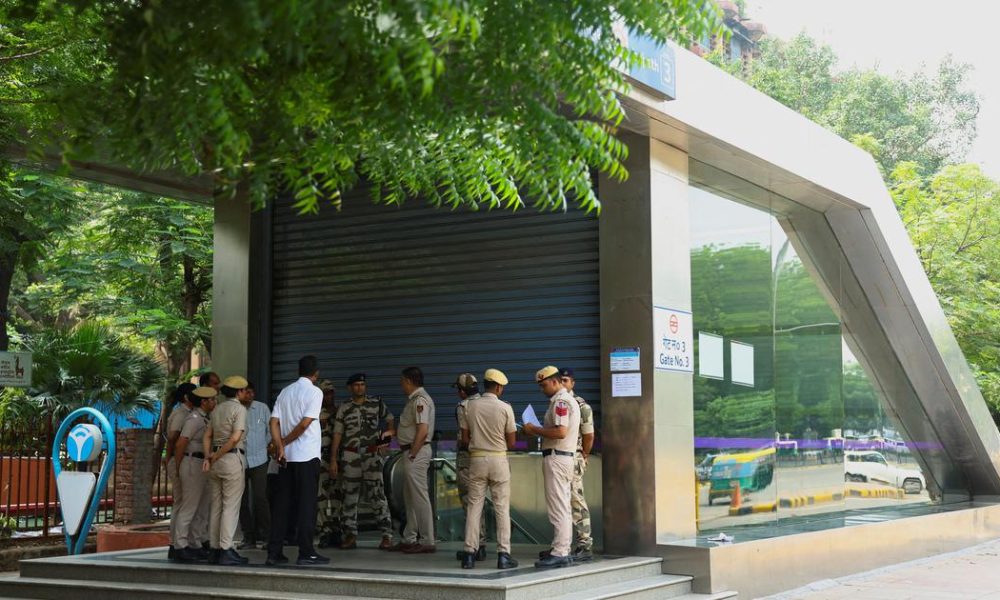
In a significant development in the capital, the Delhi Metro has temporarily closed entry and exit at 11 stations on Friday in anticipation of a protest scheduled to take place at Jantar Mantar. This demonstration, organized by the All India Students’ Association (AISA), calls for the resignation of Chief Election Commissioner Gyanesh Kumar amid accusations of irregularities in the electoral process.
The stations affected by this shutdown include notable stops such as Lok Kalyan Marg, situated near the Prime Minister’s residence, and Rajiv Chowk, a key interchange station in Connaught Place. Other stations closed include Patel Chowk and Janpath, which are in proximity to the protest site, as well as Central Secretariat, Seva Teerth, Mandi House, Ramakrishna Ashram Marg, INA, Chawri Bazaar, and New Delhi. However, interchange facilities will still remain operational at Rajiv Chowk, Mandi House, New Delhi, and Central Secretariat stations, ensuring some connectivity for commuters.
The AISA, affiliated with the Communist Party of India (Marxist–Leninist) Liberation, has voiced serious concerns regarding the Election Commission’s handling of the electoral rolls, particularly in light of a troubling investigation by The Indian Express published on September 23. The report revealed that Election Commissioners Sukhbir Singh Sandhu and Vivek Joshi had lodged formal objections on 14 occasions in a span of just 10 months, regarding certain decisions made by the Election Commission related to a special intensive revision of electoral rolls. These decisions were reportedly executed without the knowledge of the two commissioners, raising questions about transparency and governance within the electoral body.
As the protest is set to commence at 11 am, Deputy Commissioner of Police Sachin Sharma stated that necessary permissions for the gathering had not been granted. This lack of authorization indicates potential confrontations between law enforcement and demonstrators, highlighting the contentious nature of the political climate surrounding the electoral commission at this time. The public’s growing dissatisfaction with electoral integrity is underscored by this protest, reflecting broader concerns about democratic processes in India.
With the stakes high, the protests at Jantar Mantar are not just a reflection of student activism, but also resonate with a wider narrative of accountability in Indian politics. As the situation develops, the implications of these demonstrations on the future governance and electoral reforms in India remain to be seen.
Source: scroll.in






No Comment! Be the first one.