

Exploring Parental Preferences: Why Private Schools Are Favored Over Government Institutions
In rural and urban landscapes across India, a notable trend is emerging among parents regarding their children’s education. Despite similar learning outcomes reported between private and...

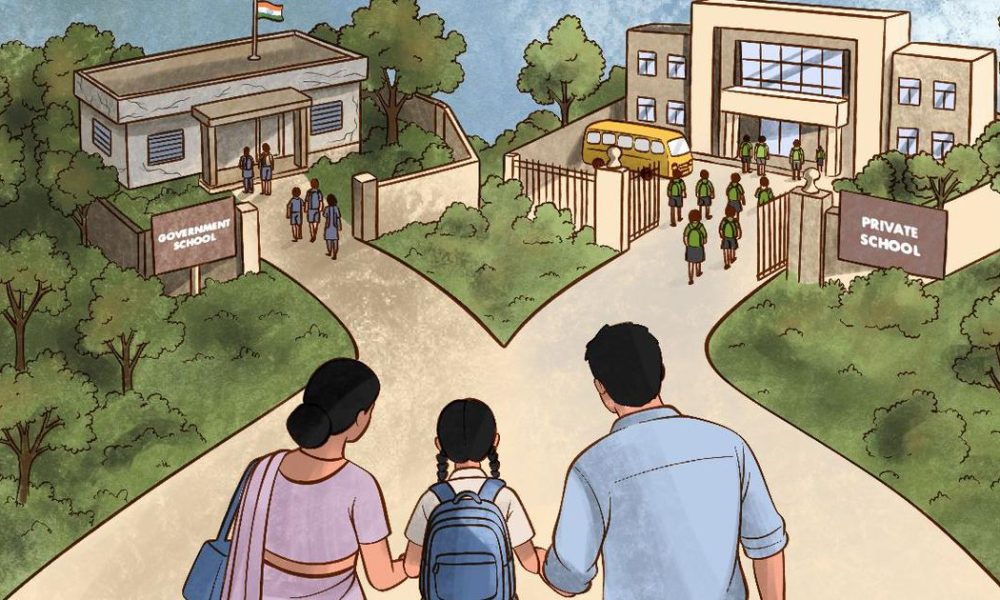
In rural and urban landscapes across India, a notable trend is emerging among parents regarding their children’s education. Despite similar learning outcomes reported between private and government schools, many parents are choosing to enroll their children in private institutions. This phenomenon raises questions about the underlying factors influencing parental decisions, particularly in low-income communities.
Take the case of Balakrishnan V, a 44-year-old auto driver from Salem district in Tamil Nadu. He has lived in the same locality, predominantly inhabited by low-income families, and is a father to four children: one son and three daughters. His eldest two children are enrolled in private schools, with his son in Class 11 attending a school that charges annual fees of approximately Rs 50,000, while his eldest daughter in Class 8 pays around Rs 20,000. The financial burden is significant, as Balakrishnan’s younger two children study in government institutions, where education is free.
Despite the strain of expenses, Balakrishnan expressed a clear preference for private schooling. He remarked, “Teachers are a lot better in private schools. They pay more attention to individual students, and that will ultimately aid the child’s future prospects.” This sentiment is echoed by many parents in similar socio-economic situations, who often view private schools as a pathway to enhanced opportunities for their children.
Balakrishnan’s experience aligns with a broader trend observed in communities where government schools are struggling with perceptions of inadequate quality. Parents frequently cite factors such as teacher accountability, smaller class sizes, and better resources in private institutions as compelling reasons for their choices. In many cases, they perceive government schools as lacking in these aspects, leading to dwindling enrollment rates.
This scenario has prompted discussions among educational policymakers and stakeholders about how to bridge the gap between government and private schooling. While government schools cater to the majority of students in India, the challenge remains in enhancing their appeal and perceived value. For families like Balakrishnan’s, the hope is that investing in private education will provide their children with a competitive edge—something they feel is crucial in today’s fast-paced world.
Source: scroll.in






No Comment! Be the first one.