

Mass Evictions in Kathmandu Displace Thousands Amid Human Rights Concerns
The ongoing demolition campaign in Nepal’s capital, Kathmandu, has led to the forced eviction of an estimated 15,000 to 20,000 individuals, raising significant human rights concerns. Initiated on...

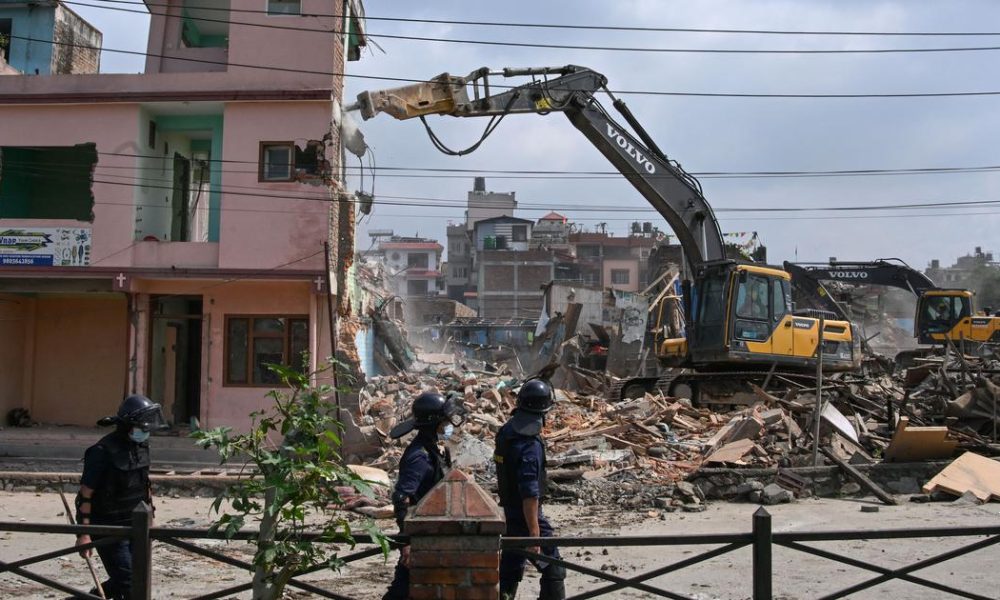
The ongoing demolition campaign in Nepal’s capital, Kathmandu, has led to the forced eviction of an estimated 15,000 to 20,000 individuals, raising significant human rights concerns. Initiated on April 25, the government’s aggressive crackdown on slum and informal settlements has extended beyond the city, affecting countless families across the Kathmandu Valley.
Statistics reveal a deepening crisis in Nepal, where over 3.5 million residents are currently landless or without proper housing. A government commission has begun accepting applications for land registration, with 1.2 million people—predominantly from marginalized communities, including the poor, Dalit, and indigenous groups—seeking relief. However, many of these vulnerable individuals have faced abrupt evictions, conducted without any prior notice, consultation, or alternative housing arrangements, which has severely undermined their faith in state authorities.
In an ironic twist, the ruling Rastriya Swatantra Party had previously promised to tackle the landlessness issue within 1,000 days of assuming office, pledging comprehensive relief measures for the landless population. Despite some families residing in Kathmandu’s informal settlements for as long as six decades, the government has resorted to demolishing homes, utilizing the full might of its law enforcement agencies, including the Nepal Police, Armed Police Force, and even the Nepal Army. Eyewitness reports indicate that residents faced harassment and intimidation, with many being threatened or detained prior to the demolitions.
Officially, reports indicate that since April 25, at least 2,687 homes have been destroyed, directly impacting approximately 15,300 individuals. Data from the District Administration Office reveals that between April 25 and May 4 alone, 2,501 families, consisting of 15,316 people—including over 3,100 schoolchildren—were forcibly evicted from their homes.
This wave of evictions has ignited protests among the affected communities, drawing attention to the government’s failure to provide adequate housing and support systems. As the situation evolves, calls for a more humane approach to urban development and housing rights are becoming increasingly urgent. Activists and rights groups are demanding that the government prioritize consultations with affected families and provide essential resources to ensure that those displaced are not left homeless.
Source: scroll.in






No Comment! Be the first one.