

Trump Announces Halt to US-Israeli Military Actions Against Iran Amid New Deal Framework
In a significant development, U.S. President Donald Trump declared on Sunday that military operations by American and Israeli forces targeting Iran would cease, following the establishment of what he...

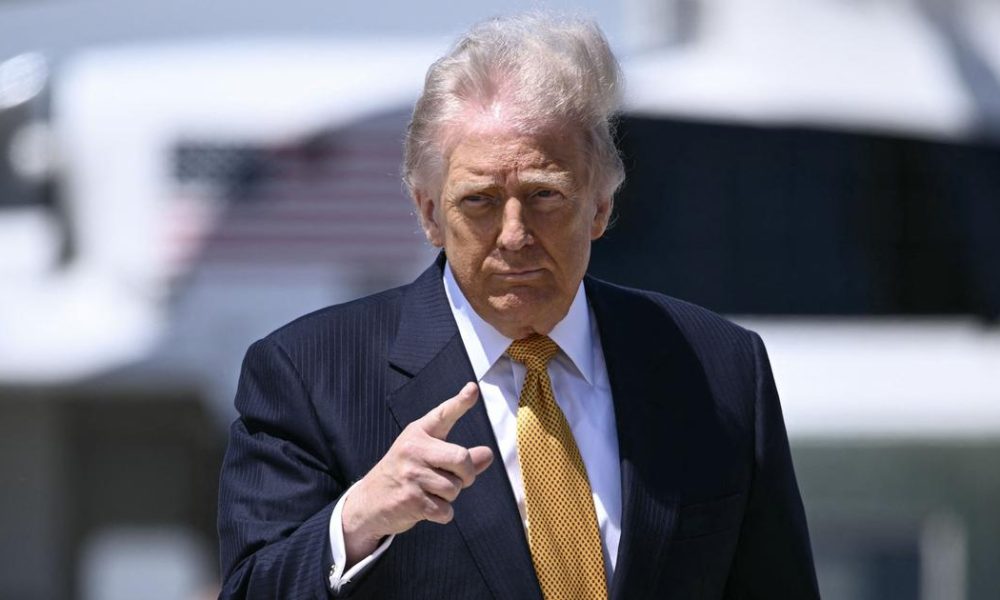
In a significant development, U.S. President Donald Trump declared on Sunday that military operations by American and Israeli forces targeting Iran would cease, following the establishment of what he termed the “perimeters of a deal.” Trump emphasized that this new agreement would lead to the immediate and total reopening of the Strait of Hormuz, a vital waterway for global oil transport, alongside measures to eliminate Iran’s nuclear threats.
This announcement marks a pivotal moment in a turbulent West Asian landscape, where tensions have escalated since the onset of conflict on February 28. Despite two prior attempts at peace negotiations, both held between Washington and Tehran, have unraveled, leaving the region in a precarious state. The first round of talks, which took place in Islamabad, Pakistan, ended in failure on April 12. Although a temporary ceasefire allowed for relative stability for nearly two months, the situation took a turn for the worse.
On June 15, both the U.S. and Iran had managed to agree on an interim deal aimed at halting hostilities and reopening the Strait of Hormuz for commercial shipping. Efforts continued with discussions held in Switzerland, aimed at solidifying a comprehensive peace agreement within a two-month timeframe. However, despite these hopeful developments, Trump announced on July 8 that the ceasefire was no longer in effect, resulting in the Strait of Hormuz becoming blocked for most international maritime traffic. This blockade has exacerbated a global energy crisis, considering that approximately 20% of the world’s oil supply traverses this critical maritime route.
As tensions simmer, the international community, including India, watches closely. The complexities of U.S.-Iranian relations have far-reaching implications, not just in the context of energy supplies but also in shaping geopolitical dynamics in the region. With countries like India reliant on stable oil prices and secure maritime routes, the reopening of the Strait of Hormuz is of paramount importance. The situation remains fluid, and stakeholders are keenly observing any further developments as talks progress.
Trump’s assertion that the U.S. is “locked and loaded” indicates a readiness to respond should negotiations deteriorate further. The rhetoric suggests a precarious balancing act between securing American interests while attempting to prevent further military escalation in a volatile region.
In conclusion, as the potential for a new agreement hangs in the balance, the implications for global energy security and regional stability are immense. The coming weeks will be crucial in determining whether a meaningful resolution can be achieved amid ongoing tensions.
Source: scroll.in






No Comment! Be the first one.