

The Pioneering Solar Engine of 1870s Bombay: A Visionary’s Struggle Against Colonial Skepticism
In the 1870s, William Adams, a British official captivated by the potential of solar energy, made significant strides in harnessing the sun’s power. Adams’ journey began in the 1860s when...

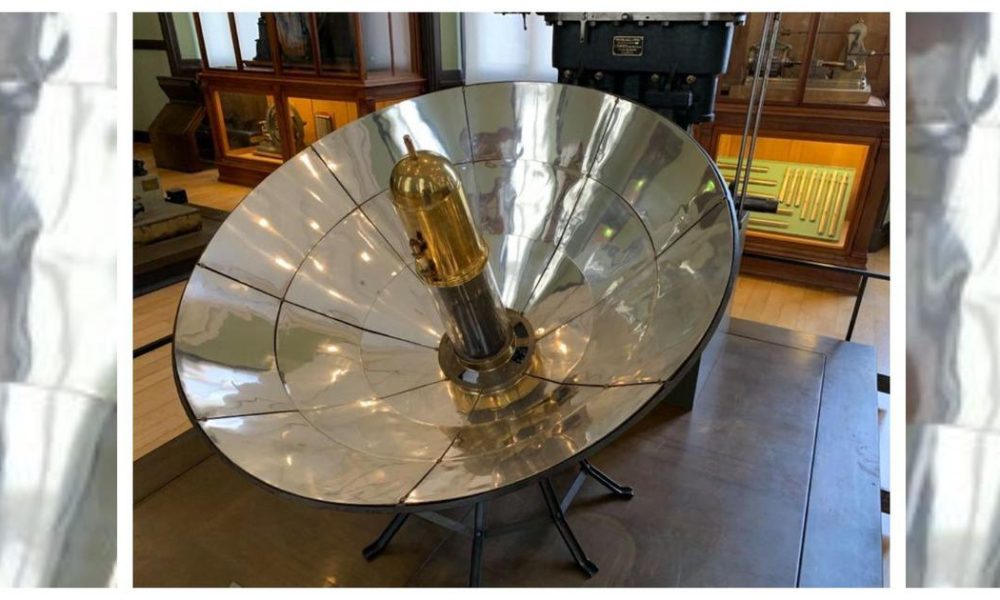
In the 1870s, William Adams, a British official captivated by the potential of solar energy, made significant strides in harnessing the sun’s power. Adams’ journey began in the 1860s when he worked as a clerk in a patent office in London, where he gained insight into early British innovations aimed at utilizing solar energy through various mechanisms, including mirrors and water.
His fascination with solar technology was further fueled by the groundbreaking work of French mathematician Augustin Mouchot. Mouchot was the creator of the first-ever solar-powered machine, which combined a solar boiler with a steam engine. The invention was well received, even by Napoleon III, who admired its potential when it was unveiled in 1866. Inspired by these developments, Adams designed and patented his own version of a solar boiler. However, to realize his vision, he required a location with ample sunlight.
When the opportunity arose for him to serve as deputy registrar in Bombay, appointed by Governor Sir Philip Edmond Wodehouse, Adams seized the chance. Arriving in Bombay in 1873, he discovered a city thriving amidst a cotton boom, characterized by a rapid proliferation of textile mills. This vibrant industrial landscape provided the perfect backdrop for his ambitious project: to create a fully operational solar steam engine tailored for industrial applications.
Despite his groundbreaking endeavors, Adams faced significant challenges due to the prevailing conservative attitudes of the colonial authorities. His innovative ideas were met with skepticism, as many officials were unable to see beyond traditional energy sources. Adams’s vision of a solar-powered future was lost on the bureaucrats who failed to recognize the potential impact of his work on energy consumption and industrial efficiency.
While the rays of the sun in Bombay were often described as relentless, Adams remained undeterred in his quest for solar energy. His contributions in the field laid the groundwork for future explorations into renewable energy, foreshadowing a time when such innovations would become vital to sustainable development in India and beyond. The story of William Adams serves as a reminder of the challenges faced by pioneers in any field, particularly in a colonial context where new ideas often clashed with established norms.
Source: scroll.in







No Comment! Be the first one.