

Farmers in Bangladesh Shift from Paddy to High-Value Crops Amid Water Crisis
The Barind Tract, covering an expansive area of 8,000 square kilometers in north-western Bangladesh, has long been recognized for its bountiful paddy fields. However, a significant transformation is...

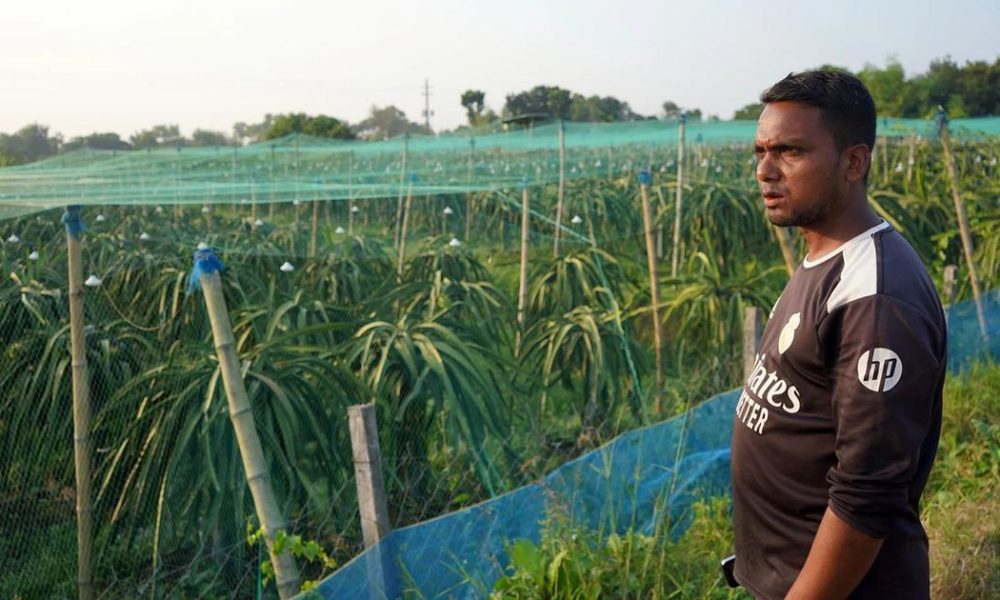
The Barind Tract, covering an expansive area of 8,000 square kilometers in north-western Bangladesh, has long been recognized for its bountiful paddy fields. However, a significant transformation is taking place as farmers in this region increasingly turn to high-value crops. In a shift that reflects both economic necessity and climate adaptation, many farmers are abandoning traditional rice cultivation in favor of fruits and vegetables that are not part of the local staple diet.
The High Barind Tract, comprising the districts of Rajshahi, Chapainawabganj, and Naogaon, is witnessing an agricultural revolution. The cultivation of crops such as dragon fruit, sweet oranges, and mangoes is becoming commonplace, while crops requiring less water, like maize, lentils, tomatoes, and chillies, are also gaining traction. This shift is largely a response to a growing water crisis, characterized by irregular rainfall patterns and a dwindling groundwater supply.
Mariam Ahmed, an agriculture officer in Godagari, a subdistrict of Rajshahi, emphasizes that farmers are adapting to the pressing water scarcity. “In recent years, we have observed a notable increase in dragon fruit production across three unions in Godagari,” she notes, highlighting the shift from traditional farming methods to more sustainable practices. Highlands and even former rice paddies are now being transformed into dragon fruit orchards, showcasing a significant change in farming priorities.
This change is being hailed as a prime example of local communities adapting to the realities of climate change. While the Barind region has historically been a stronghold for rice production, the ongoing environmental challenges have catalyzed this evolution. The introduction of these high-value crops is not only a response to immediate water stress but also an opportunity for farmers to enhance their income and economic stability.
However, this transition comes with its own set of challenges. Many farmers, especially those from economically weaker backgrounds, struggle to adapt to the new farming techniques and market demands. The shift to fruit farming often requires investment in new infrastructure and knowledge that may be out of reach for poorer farmers. Therefore, while some are reaping the benefits of this agricultural shift, others are left grappling with the pressures of change.
Source: scroll.in







No Comment! Be the first one.