

Supreme Court Revisits Own Ruling on Khalid and Imam’s Bail; Rupee Hits Historic Low
The Supreme Court of India has unexpectedly revisited its own decision from January regarding the bail applications of activists Umar Khalid and Sharjeel Imam, who are implicated in the Delhi riots...

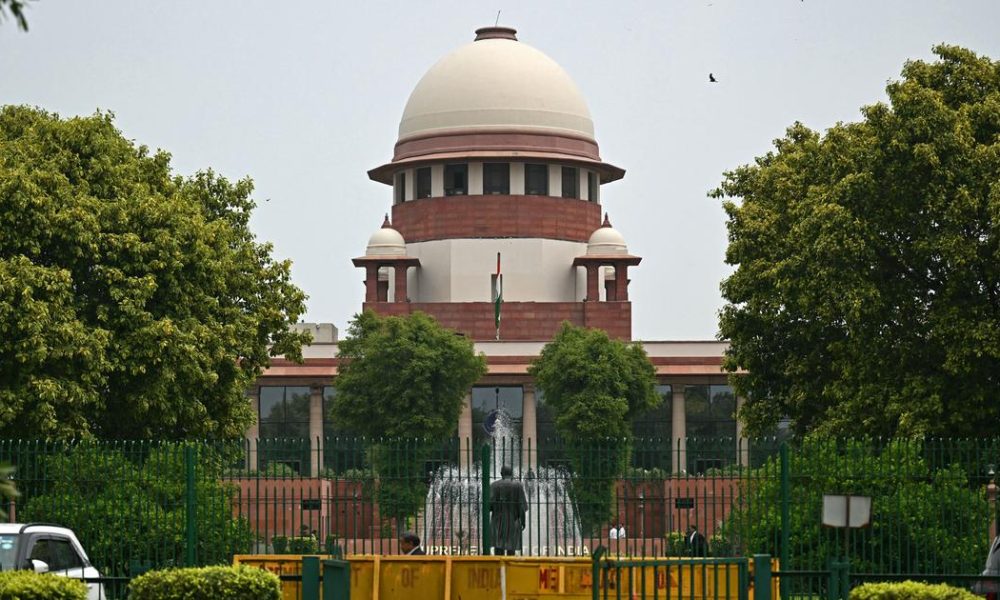
The Supreme Court of India has unexpectedly revisited its own decision from January regarding the bail applications of activists Umar Khalid and Sharjeel Imam, who are implicated in the Delhi riots conspiracy case. In a recent session, a bench comprising Justices BV Nagarathna and Ujjal Bhuyan acknowledged their previous ruling may have misapplied established legal principles. They stressed that, inherently, bail should be the standard while incarceration remains the exception, even in cases governed by the stringent Unlawful Activities Prevention Act (UAPA).
This reconsideration came during the hearing of a separate petition from an individual contesting a Jammu and Kashmir High Court order that also denied him bail in a narco-terrorism case. The judges pointed out that their earlier directive, which required Khalid and Imam to submit new bail applications only after the examination of witnesses or after a year, could infringe upon constitutional rights, particularly the right to personal liberty.
The bench highlighted that the principles established by a three-judge panel in 2021 regarding the potential excess of prolonged imprisonment over statutory restrictions on bail were not adequately applied in their previous verdict. This realization has opened a window for Khalid and Imam to seek reconsideration of their bail, emphasizing the need to reassess how the legal framework is utilized in politically sensitive cases.
In a separate but equally significant development, the Indian rupee has fallen to a historic low of 96.3 against the US dollar. This decline is attributed to soaring global oil prices and adverse economic conditions resulting from ongoing tensions in West Asia. The rupee’s depreciation of nearly 40 paise reflects the increasing pressure on the Indian economy, which is grappling with inflation and trade deficits exacerbated by international developments.
Financial analysts note that the weakening of the rupee could have far-reaching implications for India’s economy, affecting everything from import costs to overall inflation rates. As the government and the Reserve Bank of India strategize to stabilize the currency, these developments underscore the intricate relationship between domestic policies and global economic trends.
Source: scroll.in







No Comment! Be the first one.