

PM Modi Assures Fairness in Delimitation Process Amid Controversy
Prime Minister Narendra Modi recently emphasized his commitment to ensuring that the upcoming delimitation of Lok Sabha constituencies will not disadvantage any state. Addressing concerns over...

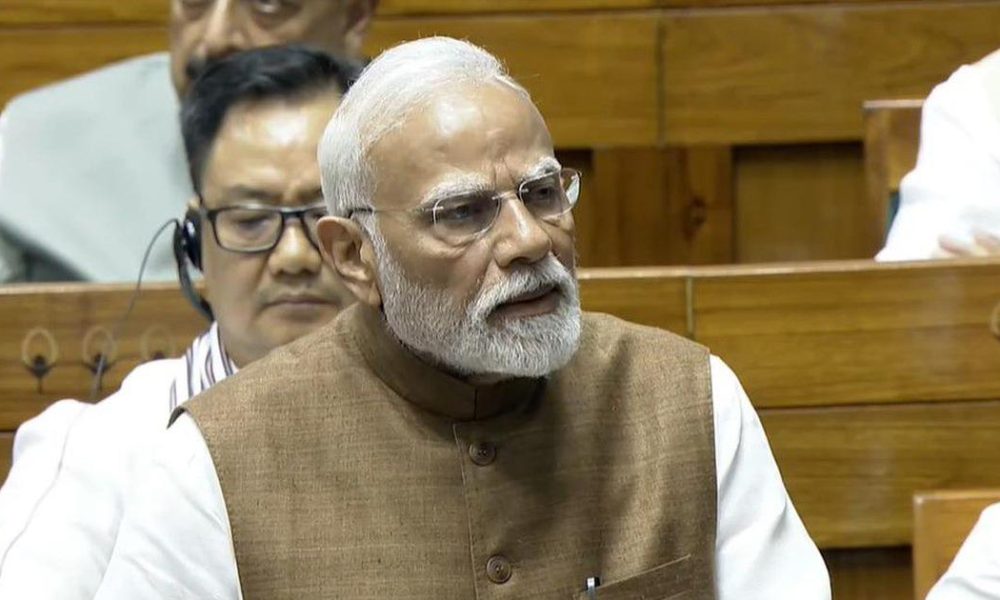
Prime Minister Narendra Modi recently emphasized his commitment to ensuring that the upcoming delimitation of Lok Sabha constituencies will not disadvantage any state. Addressing concerns over potential inequities, Modi stated, “I am willing to guarantee that no injustice will be inflicted on any state through this process.” He assured the nation that the representation for each state in the Lower House of Parliament would remain unchanged, aiming to quell fears surrounding the legislative adjustments.
The delimitation proposal, which comes as part of a broader government initiative to reorganize electoral boundaries, has sparked a heated debate in the Parliament. During the voting session on the introduction of related bills, a significant majority of 251 Members of Parliament (MPs) supported the measures, while 185 opposed. Union Law Minister Arjun Ram Meghwal highlighted that the legislation would result in a 50% increase in the total number of seats in the Lok Sabha, underscoring the government’s intent to expand representation.
However, the opposition party, Congress, has criticized the government’s approach, alleging that the delimitation is being implemented stealthily, claiming it is a move to alter political dynamics favorably for the ruling party. They argue that the use of the 2011 census data could lead to skewed representations that do not reflect current population dynamics. This development has raised eyebrows among political analysts and citizens alike, who are concerned about the implications for democratic representation.
In an unrelated but significant ruling, the Supreme Court of India has instructed the Election Commission to release a supplementary electoral roll in West Bengal. This decision comes as a response to appeals from voters whose names had been removed from the electoral rolls but were later reinstated by appellate tribunals. The Supreme Court’s directive is expected to ensure that these voters can participate in the electoral process, particularly with the first phase of polling scheduled for April 23, followed by the second phase on April 29.
This dual news of delimitation and election readiness highlights the ongoing political machinations in India as the general elections approach. As discussions continue regarding fair representation and electoral integrity, the populace remains watchful, eager to see how these developments will shape the future of Indian democracy.
Source: scroll.in







No Comment! Be the first one.