

Lok Sabha Debates Delimitation: Law Minister Assures No State Will Lose Representation
In a significant development in the Indian Parliament, Union Law Minister Arjun Ram Meghwal addressed the Lok Sabha on Thursday, stating that the proposed legislative changes introduced by the Centre...

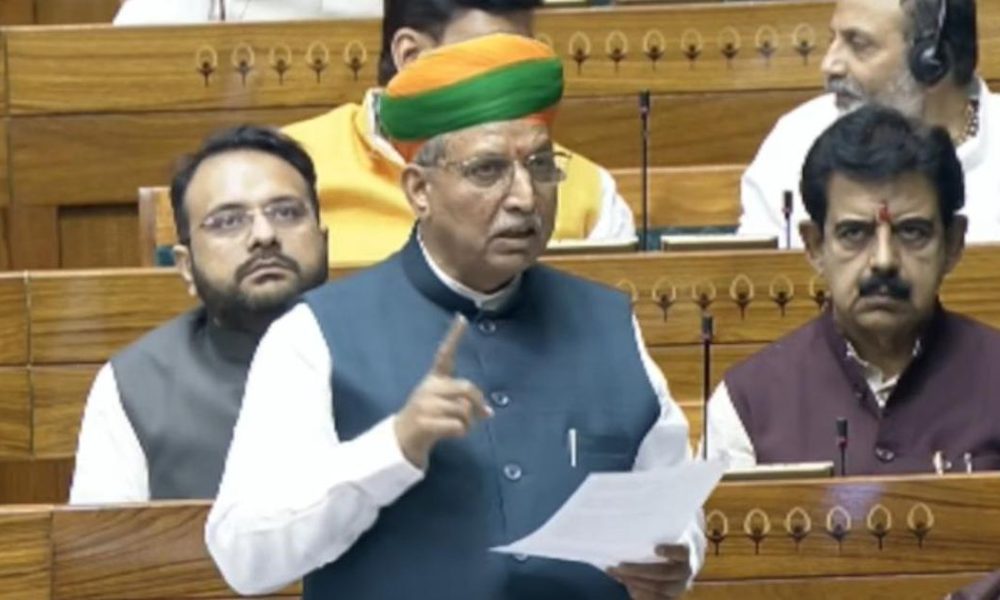
In a significant development in the Indian Parliament, Union Law Minister Arjun Ram Meghwal addressed the Lok Sabha on Thursday, stating that the proposed legislative changes introduced by the Centre would ensure an “equal, 50% increase” in the number of Lok Sabha seats, raising the total from 543 to 815. This announcement comes as the government seeks to expedite the implementation of women’s reservations in Parliament and state Assemblies.
Meghwal emphasized that among the newly proposed seats, 272 will be specifically allocated for women, making up one-third of the Lok Sabha’s total strength. He reassured members that no state would experience a reduction in their representation as a result of these changes. The government aims to operationalize the 33% quota for women in legislative bodies under the recently passed 2023 Women’s Reservation Act.
On the same day, the government introduced three pivotal bills aimed at redrawing electoral boundaries and facilitating women’s representation. Among these are the 2026 Constitution One Hundred and Thirty-First Amendment Bill and the 2026 Delimitation Bill, introduced by Meghwal, while Home Minister Amit Shah tabled the 2026 Union Territories Laws Amendment Bill. This three-day special session of Parliament is set to focus on these bills, which are expected to reshape the political landscape in India.
However, the Opposition, particularly the INDIA bloc, has voiced its concerns regarding the delimitation bill. While they support the idea of women’s reservation, they oppose the delimitation process, arguing that population-based redistricting could disproportionately benefit northern states. This contention highlights a deeper debate on representation and equity in Indian politics, particularly in the context of demographic shifts and regional disparities.
The introduction of these bills marks a crucial moment in India’s legislative journey, with the potential to redefine political representation for women and address longstanding issues related to electoral boundaries. As the discussions progress in Parliament, the implications of these proposals will likely resonate throughout the country, shaping the future of electoral politics in India.
Source: scroll.in





No Comment! Be the first one.