

Railway Authorities Intervene in Bihar Children’s Journey to Education, Claiming Trafficking Concerns
In a surprising turn of events, the Government Railway Police (GRP) and Railway Protection Force (RPF) intervened to stop a group of 163 children from Bihar who were en route to Karnataka for...

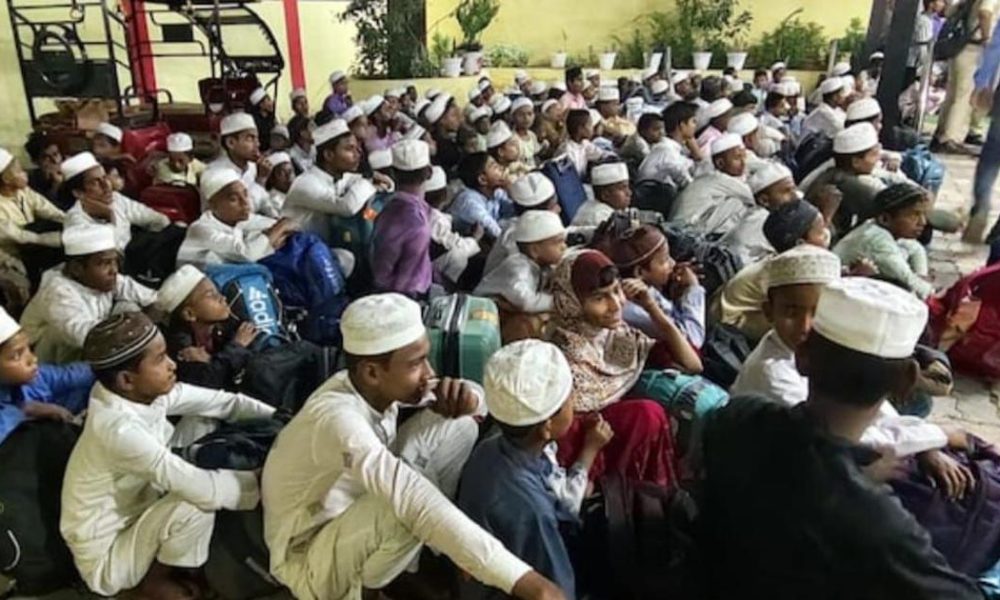
In a surprising turn of events, the Government Railway Police (GRP) and Railway Protection Force (RPF) intervened to stop a group of 163 children from Bihar who were en route to Karnataka for educational purposes, alleging concerns of human trafficking. The incident unfolded on the evening of April 11, when these children, accompanied by their teacher, were forcibly removed from the Patna Purna Express at the Katni railway station in Madhya Pradesh.
The students ranged in age, with many of them, like 13-year-old Shahnawaz and his 11-year-old brother Shahbaz, making the 1,800-kilometer journey from their home in Araria district to attend a madrasa in Bidar, Karnataka. Their father, Mohammed Sajjad, expressed his reasoning for sending his sons to the madrasa where they receive free education, meals, and educational materials—a stark contrast to what he described as the inadequate schooling system available in Bihar.
According to Sajjad, his children, along with 13 other boys from their village of Kundilpur, were traveling under the supervision of their 21-year-old teacher, Mohammad Zahir. Their planned route was to reach Maharashtra the following day before traveling onward to Bidar. However, their journey was abruptly interrupted when railway officials deemed their situation suspicious.
The railway police claimed that they were acting in the children’s best interests, suggesting that the boys were potential victims of trafficking. Consequently, Zahir was charged under Section 143 (4) of the Bharatiya Nyaya Sanhita, which pertains to child trafficking offenses. This action has stirred considerable debate regarding the delicate balance between protecting children and respecting the rights of families seeking better educational opportunities for their children.
This incident raises broader questions about children’s rights and the systems in place to safeguard them, especially in regions with limited educational resources. Many families in Bihar often resort to sending their children far away in search of better educational prospects, leading to situations where their intentions can be misunderstood. The impact of such intervention is significant, as it not only affects the immediate educational aspirations of these children but also instills a sense of fear regarding their autonomy and rights as students.
Source: scroll.in






No Comment! Be the first one.