

Exploring Balzac Through Dungeons and Dragons: A New Perspective on Originality
In an age where creativity is often linked to unrestricted freedom, the role-playing game Dungeons and Dragons (D&D) presents a compelling counterargument. The game confines players within a...

In an age where creativity is often linked to unrestricted freedom, the role-playing game Dungeons and Dragons (D&D) presents a compelling counterargument. The game confines players within a framework of limited races, classes, and backgrounds, yet it remarkably cultivates characters that exude individual uniqueness. For instance, while a half-elf paladin may be a recognizable archetype, the nuances developed during gameplay ensure that no two paladins are identical. This phenomenon highlights that true identity in D&D emerges not by breaking free from structure but rather through navigating and engaging with it.
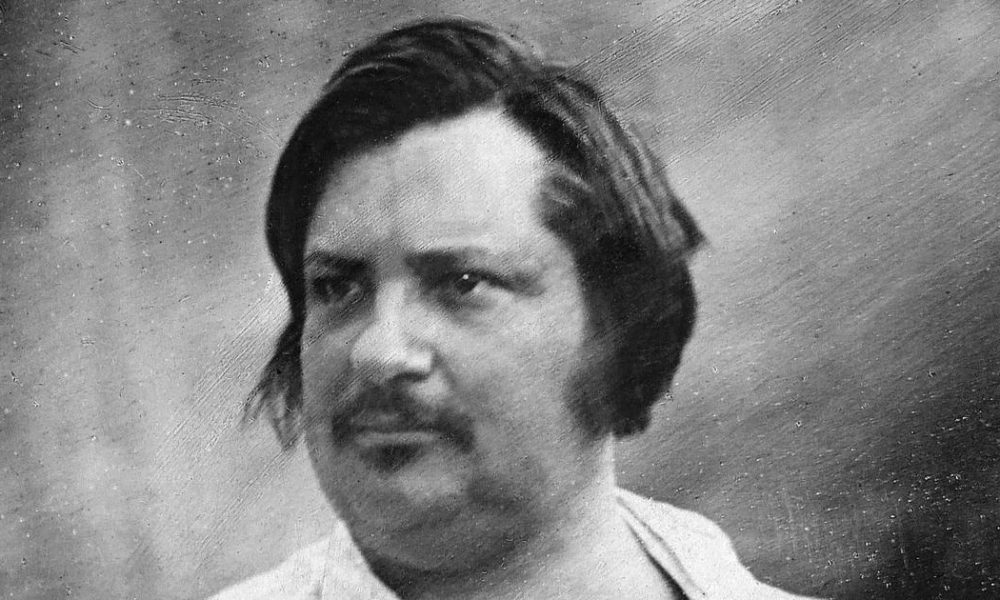
This notion finds a parallel in the works of the 19th-century French novelist Honoré de Balzac. His monumental literary series, The Human Comedy, created between 1829 and 1848, employs a similar mechanism. Balzac meticulously constructs his fictional universe using a finite array of social archetypes, which recur throughout nearly a hundred novels and short stories. Readers of Balzac’s time would have encountered a range of vivid characters, from ambitious social climbers and provincial newcomers to journalists compromising their ethics for power.
Among the memorable figures in Balzac’s narrative tapestry are characters such as Father Goriot, who embodies the plight of provincial newcomers trying to find their footing in Paris. Meanwhile, in works like Lost Illusions, Balzac portrays journalists grappling with integrity in a cutthroat society, and in The Firm of Nucingen, the dangerous allure of speculative ventures is explored. Each archetype is instantly recognizable yet blossoms into a fully realized individual through Balzac’s deft storytelling.
Interestingly, this approach to character development resonates with contemporary audiences, including those familiar with role-playing games. The duality of recognizing an archetype while simultaneously experiencing the richness of individual backstories speaks to a broader truth about storytelling across different mediums. Just as players in D&D create complex identities within defined constraints, Balzac’s characters navigate the convoluted social landscapes of their time, emerging as vibrant embodiments of human experience.
Ultimately, what D&D and Balzac both teach us is that originality doesn’t necessarily stem from limitless choices but rather from the intricate interplay of defined roles and personal expression. As Indian readers delve into Balzac’s world or embark on a D&D campaign, they might discover that the essence of unique storytelling lies in the convergence of familiar frameworks and the spark of individual creativity.
Source: scroll.in







No Comment! Be the first one.