

Government Crackdown on Support for Activist Umar Khalid Raises Concerns
In recent weeks, a series of actions taken by authorities across various Indian cities have raised eyebrows regarding the government’s stance on free expression, particularly concerning the...

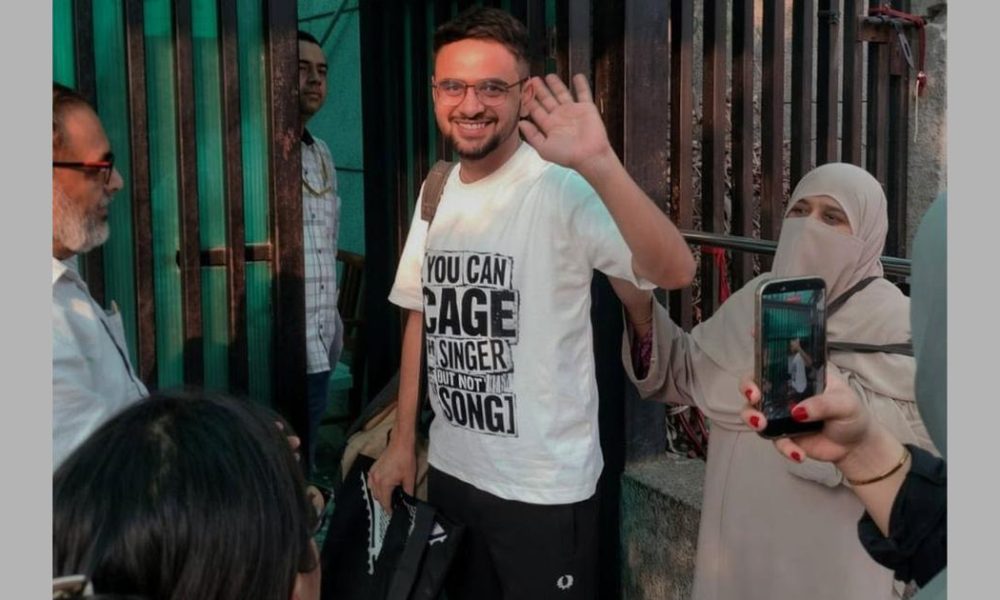
In recent weeks, a series of actions taken by authorities across various Indian cities have raised eyebrows regarding the government’s stance on free expression, particularly concerning the jailed activist Umar Khalid. Notably, incidents involving protests and discussions supporting Khalid have been met with swift and sometimes harsh responses from law enforcement, igniting debates about civil liberties in the country.
On August 7, the Mumbai police detained Abhirup Paul, a former student of the Tata Institute of Social Sciences, for allegedly shouting pro-Khalid slogans during a campus event. This was soon followed by a similar incident in Delhi, where officials at Jawaharlal Nehru University retracted permission for a discussion centered around Khalid’s book, Fractured Communities: Adivasi Histories and the Politics of Power.
Furthermore, the clampdown extended to Bengaluru, where a first information report was filed against a protester for holding a poster that read “Umar Khalid zindabad,” which translates to “Long live Umar Khalid.” These actions appear to be part of a broader pattern of silencing dissent, especially as youth activists across the nation have been vocal in their demands for the resignation of the education minister.
Adding to the controversy, Instagram has complied with the Modi government’s request to limit access to a page advocating for Khalid’s release in India. This move has provoked significant discussion about the role of social media platforms in supporting or restricting free speech. Meanwhile, two individuals in Goa were detained for expressing their support for Khalid during a separate event, raising questions about the legal basis for these arrests.
Legal experts and civil rights advocates have challenged the legitimacy of these actions. Arvind Narrain, a prominent lawyer and president of the Karnataka unit of the People’s Union for Civil Liberties, emphasized that Khalid is, at most, an accused individual, and that the Constitution’s Article 19 guarantees the right to advocate for the release of anyone accused under any law. This highlights a potential conflict between state actions and constitutional rights, emphasizing the need for a robust discussion on the limits of free expression in India.
Source: scroll.in



No Comment! Be the first one.