

Youth Protests Expose Deep Failures in India’s Education System
In a significant turn of events, India’s younger generation is taking a stand against the shortcomings of the nation’s education system, following in the footsteps of the recent...

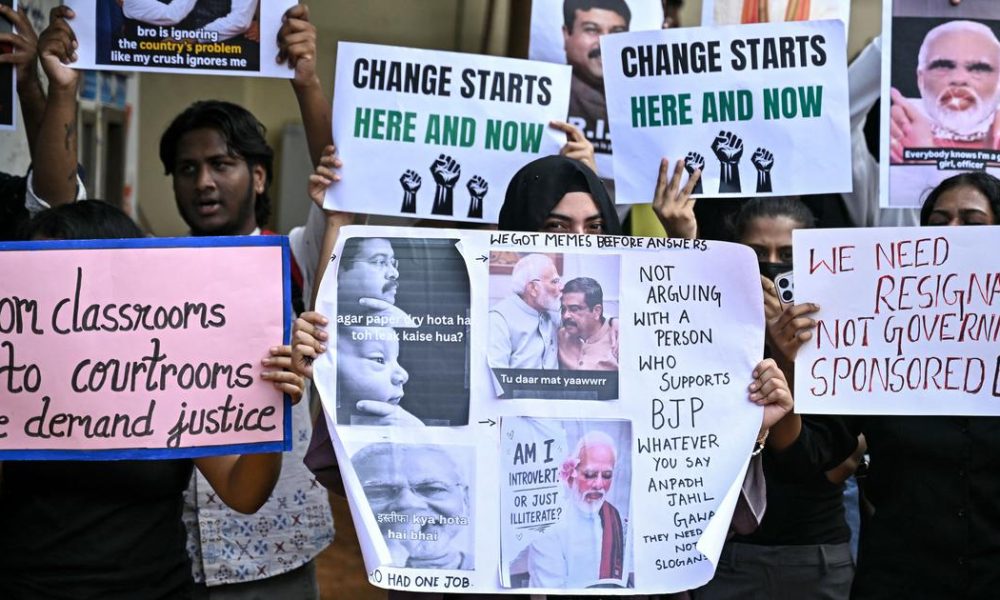
In a significant turn of events, India’s younger generation is taking a stand against the shortcomings of the nation’s education system, following in the footsteps of the recent ‘cockroach movement.’ This grassroots campaign, sparked by frustrations over public examinations and rampant unemployment, has ignited a new wave of protests among school students across various states. The ongoing demonstrations reflect a critical examination of India’s development model, raising pressing questions about the effectiveness of educational policies nearly 80 years after independence.
Last month, the so-called cockroach activists brought attention to systemic issues in the education sector, culminating in the resignation of the Union Education Minister, a demand that echoed throughout the protests. This month, schoolchildren are continuing the fight by addressing fundamental issues that they believe the Indian government has neglected for far too long. Their actions highlight a broader narrative concerning the state of education in India, which has escalated into a global concern.
In Uttar Pradesh, students have taken to the streets waving national flags, advocating for the construction of a critical road that leads to their school—an infrastructure project that has long been overdue. Their peaceful demonstrations underscore a poignant irony: nearly eight decades after gaining independence, essential provisions for education remain elusive for many underprivileged communities. Meanwhile, in Rajasthan, the principal of a government school catering to hearing and speech-impaired students faced suspension after students highlighted the lack of adequate toilets and classroom facilities. Such incidents underscore the dire need for reforms in educational infrastructure to ensure that all students receive a dignified learning environment.
In Madhya Pradesh, the plight of schoolgirls protesting against a recent bus fare hike further illustrates the mounting challenges they face. The increased transportation costs have made attending school a financial burden for many families, emphasizing the intersection of economic strain and educational access. As these students rally for their rights, they bring into focus a critical aspect of India’s development narrative—education should not only be accessible but also affordable for all.
The current wave of protests initiated by India’s youth serves as a stark reminder of the urgent need for systemic reforms in the education sector. The issues being raised are not isolated; they resonate with a global audience grappling with similar challenges. As India’s younger generations mobilize for their rights, it is imperative for policymakers and society at large to listen and respond with concrete actions that address these fundamental shortcomings.
Source: scroll.in







No Comment! Be the first one.