

DD Kosambi’s Vision for Higher Education in Science: A Legacy at TIFR
In June 1945, a pivotal moment in India’s academic history unfolded with the appointment of DD Kosambi as the Professor of Mathematics at the Tata Institute of Fundamental Research (TIFR). At...

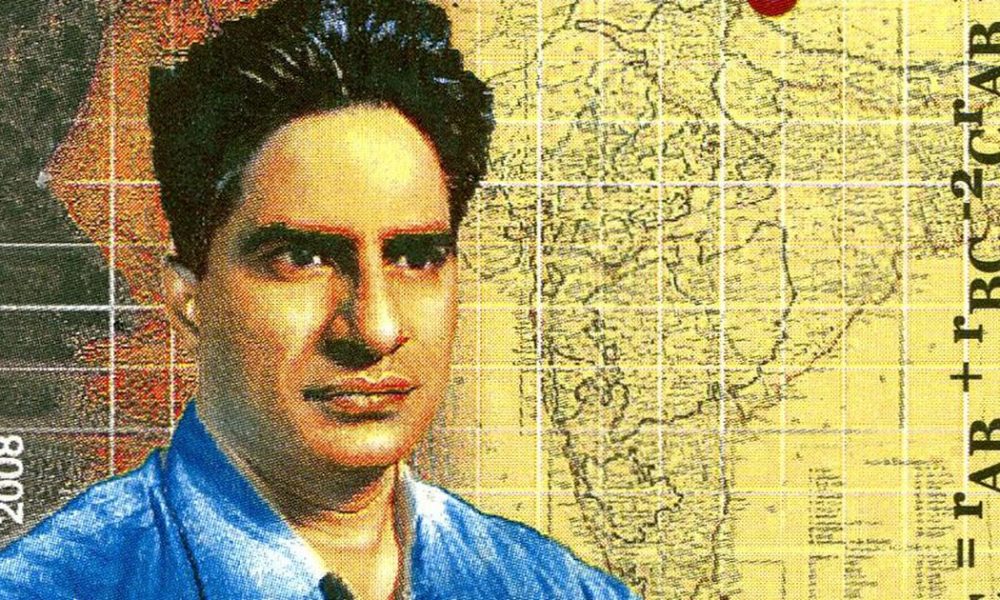
In June 1945, a pivotal moment in India’s academic history unfolded with the appointment of DD Kosambi as the Professor of Mathematics at the Tata Institute of Fundamental Research (TIFR). At 38 years old, Kosambi became the second faculty member of this nascent institution, following the notable appointment of Homi Bhabha, who was two years his junior. Both men were instrumental in shaping a research environment that would push the boundaries of physics in India.
Bhabha was already a well-regarded figure both in India and globally, hailing from a prominent Parsi family with deep ties to the Tata Group. His educational journey took him to the prestigious Cambridge University, where he earned a doctorate focused on theoretical high-energy particle physics. Bhabha’s return to India was serendipitous; a planned summer visit in 1939 extended indefinitely due to the outbreak of World War II in Europe. This twist of fate led him to the Indian Institute of Science (IISc) in Bangalore, where he quickly established himself as a significant player in the academic field.
At IISc, under the mentorship of C.V. Raman, Bhabha was appointed as a Reader in the Physics Department. Even amid the global conflict, he made remarkable strides in research by developing a cosmic ray group, showcasing his commitment to advancing scientific inquiry. These efforts laid the groundwork for the establishment of TIFR, where both he and Kosambi would further their academic ambitions.
Kosambi, on the other hand, brought a unique perspective to the institute. With a background in mathematics and a keen interest in history and culture, he envisioned a comprehensive approach to education that integrated various disciplines. Kosambi was not just a mathematician; he was also a polymath who believed in the interconnectedness of knowledge. His ideas about higher education in India were revolutionary for the time, advocating for a curriculum that encouraged critical thinking and interdisciplinary study.
The synergy between Kosambi and Bhabha at TIFR marked a significant turning point in Indian academia. Their combined efforts aimed at creating an environment that fostered scientific excellence, while also emphasizing the importance of a robust educational framework. Together, they envisioned a future where Indian scientists could thrive and contribute to the global scientific community, ultimately shaping the course of higher education in science in India.
Source: scroll.in






No Comment! Be the first one.