

Ghost Fishing Gear: A Growing Threat to Marine Life Along India’s Western Coast
As dawn breaks over the Thoppumpady fishing harbour in Kochi, the concrete docks bear witness to a troubling sight: tangled coils of blue and green nylon nets strewn across the area, their surfaces...

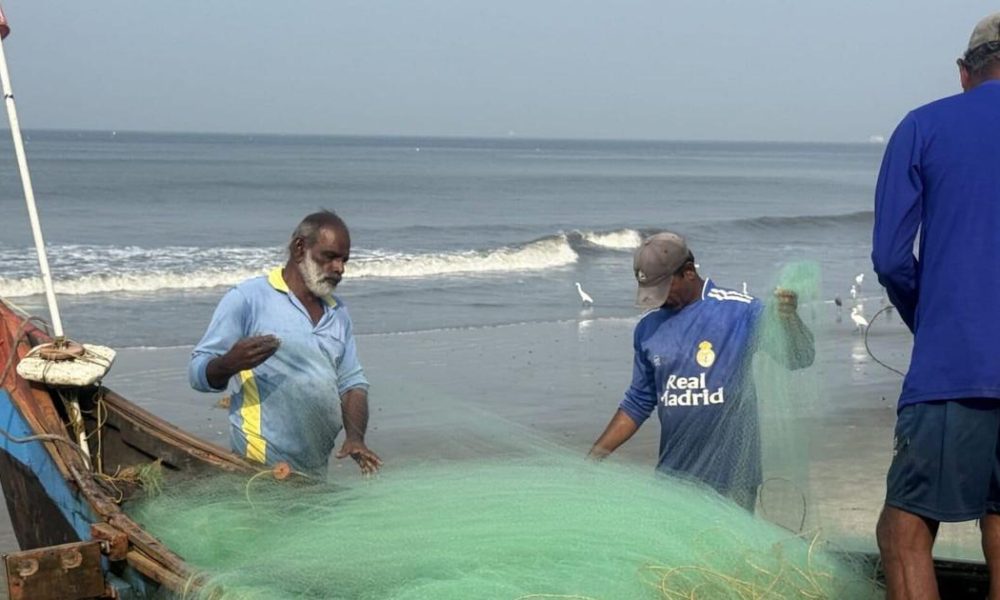
As dawn breaks over the Thoppumpady fishing harbour in Kochi, the concrete docks bear witness to a troubling sight: tangled coils of blue and green nylon nets strewn across the area, their surfaces encrusted with salt after enduring a long night at sea. Many of these nets are worn and frayed, having been patched up repeatedly, only to fall apart again. To make matters worse, those that are deemed beyond repair are often discarded at sea. Once these nets sink, they are rarely retrieved, contributing to a significant marine pollution issue.
Across the expansive coastline of western India, lost fishing gear—commonly referred to as “ghost gear”—has emerged as a major environmental concern. These nets, which may drift away whole or break into pieces, continue to ensnare fish, turtles, and other marine creatures long after they have been abandoned by fishermen. As one of the world’s largest marine fishing sectors, India supports approximately 14.5 million livelihoods across its 7,500-kilometre coastline, making the implications of this pollution particularly severe.
While comprehensive national figures on lost fishing gear are scarce, a 2022 study conducted in Kerala—home to Kochi—revealed a striking statistic: fishers reportedly lose, abandon, or discard about 21% of their fishing gear each year. This figure is alarmingly high, exceeding the global average of 1.82% reported in other regions, and underscores the extensive amount of material being released into India’s marine ecosystems.
Despite the increasing awareness and concern among researchers and conservationists regarding the impact of ghost gear, India currently lacks an organized system for tracking, retrieving, or recycling these abandoned nets. The absence of such measures not only exacerbates pollution but also poses a threat to marine biodiversity. The long-term impact of ghost gear on aquatic environments can be devastating, affecting not only wildlife but also the fishing industry itself, which may face declines in fish populations due to entanglement and habitat degradation.
As the situation evolves, it is imperative that attention is drawn to this urgent issue. Initiatives focused on responsible fishing practices, coupled with effective policies to manage lost gear, are crucial for safeguarding the health of marine ecosystems along India’s western coast. The need for collaborative efforts among fishers, government bodies, and environmentalists has never been more critical to address this growing challenge.
Source: scroll.in







No Comment! Be the first one.