

AI Behind the Board: How Chessworld AI Is Powering India’s Grassroots Chess Revolution at the National Under-11 Championship in Mangaluru
For decades, a chess tournament in India has followed the same quiet ritual: a player sits across a wooden board, records each move by hand on a paper scoresheet, and then, once the last piece is put...

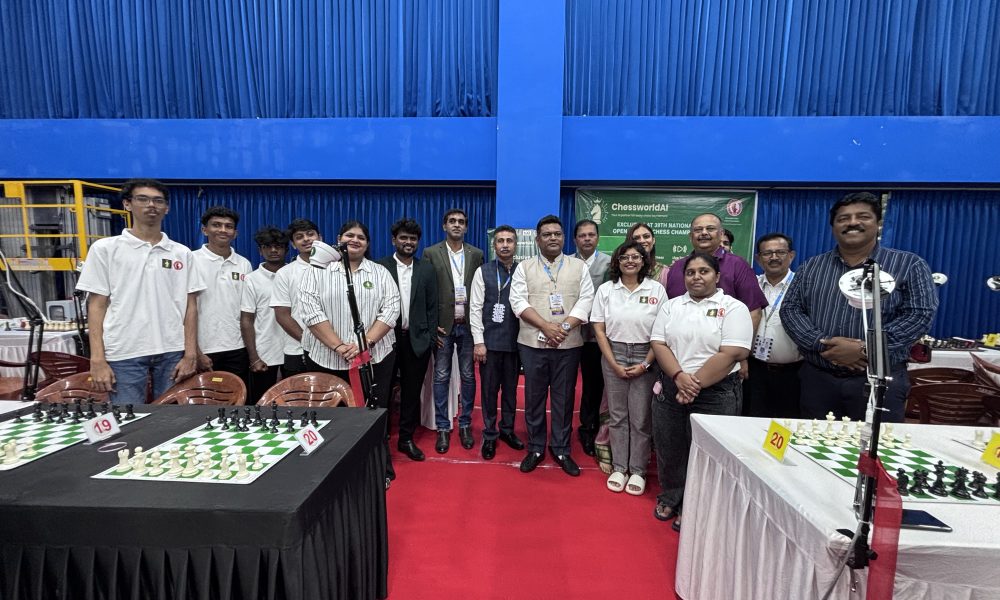
For decades, a chess tournament in India has followed the same quiet ritual: a player sits across a wooden board, records each move by hand on a paper scoresheet, and then, once the last piece is put away, that scoresheet disappears into a bag — rarely to be looked at again. This year, at the 39th National Under-11 Open & Girls Chess Championship, being held in Mangaluru, Karnataka from August 2–8, 2026, that ritual is being quietly rewritten. Bengaluru-based sports-tech startup Chessworld AI is on the ground, deploying camera-based live capture and streaming technology to digitize games as they are played — turning a week of over-the-board battles into a permanent, searchable, analyzable record.
Table Of Content
From forgotten scoresheets to a living database
Chessworld AI was founded by Damodar Mundrikeri, a competitive chess player originally from Kalaburagi, now operating out of Bengaluru. The idea for the company grew out of a problem the founding team had lived through themselves: at the grassroots level, most young players have almost no accessible history of their own games. Coaches spend hours re-entering moves by hand, and parents have no easy way to see whether their child is actually improving month to month.
That gap became the company’s founding mission, summed up in its own words: “Every game teaches something. No game should ever go unanalyzed.”
The platform started simply — partnering with tournament organizers to collect physical scoresheets and using AI-assisted processing to convert them into digital PGN game files. That single step opened the door to something bigger: opening-repertoire insights, tactical profiling, opponent-preparation reports, endgame evaluations, and personalized improvement pathways, all generated with the help of chess engines and AI analysis. According to the company, its platform has already processed more than 15,000 tournament and online games, benchmarked against a reference pool of roughly 1.5 lakh public games, and built a community of 500-plus users, most of them active tournament players.
The technology now live at the Nationals
The Mangaluru event marks one of the more visible rollouts yet of Chessworld AI’s next-generation capability: camera-based, real-time game capture directly from physical boards, paired with live-streaming. Rather than waiting for a scoresheet to be manually entered after the fact, cameras positioned over the boards allow games to be recorded, broadcast, and analyzed while play is still happening. The system was piloted earlier this year at the Karnataka State Under-7 Chess Championship before being brought to a national-level event.
At the Under-11 Nationals, the company’s ground team is handling both the technical side — camera rigs and live-streaming infrastructure — and on-site engagement with players, parents, and organizers, effectively acting as a bridge between the tournament hall and a digital archive that will outlast the event itself.
What players and parents actually get out of it
For players, the shift is significant. A child who might otherwise never revisit a tournament game now gets that game back as a digital file — one that can be run through engine analysis to spot recurring tactical blind spots, opening weaknesses, or time-trouble patterns. Over a season, that becomes a track record: a player and their coach can see whether specific mistakes are being fixed or repeating, something that’s nearly impossible to judge from memory or a stack of paper scoresheets alone.
For parents, many of whom travel with their children across states for these tournaments and have limited chess expertise themselves, the platform offers something they’ve rarely had before: a legible, data-backed window into their child’s progress. Instead of relying solely on a coach’s verbal summary or the win-loss column, parents can see measurable indicators of improvement — and, with live-streaming, can watch games in real time even when they can’t be in the tournament hall themselves.
For organizers, the live-capture and streaming layer means a national championship becomes more connected and more visible — games can be followed remotely by relatives, state associations, and the wider chess community, while the resulting data adds a layer of transparency and record-keeping to results.
A vote of confidence from Karnataka’s chess establishment
Chessworld AI’s push has drawn support from some of the state’s most recognized chess figures, including GM M.S. Thejkumar, Karnataka’s first Grandmaster, WGM Isha Sharma, Karnataka’s first Woman Grandmaster, and IM Sharan Rao, founder of the Rao Chess Centre. In 2025, the startup was also selected for the Elevate Karnataka Startup Grant, chosen from a pool of 1,780 applicants — a recognition the founder has described as validation that the problems facing grassroots players, coaches, and organizers are worth solving at scale.
Why this matters for grassroots chess in India
India’s chess boom over the last few years — fueled by a wave of young talent and the country’s growing presence at the top of world rankings — has largely been a story told at the elite level. Grassroots tournaments like the Under-11 Nationals, by contrast, have historically run on manual processes: paper scoresheets, word-of-mouth scouting, and analysis that depends entirely on how much one-on-one time a coach can give each student.
What Chessworld AI is testing in Mangaluru is a template for closing that gap. If camera-based capture and analytics can be deployed reliably at a national age-group event, the same infrastructure could plausibly reach state and district-level tournaments — the events where the next generation of Indian players is actually being shaped. The company has said it aims to digitize more than 100 tournaments across India over the coming year, expand its analytics tools, and continue strengthening its real-time capture technology.
Whether or not this particular startup becomes the standard, the direction it points to is clear: the era of the forgotten scoresheet may be numbered, and grassroots Indian chess is starting to get the same kind of data infrastructure that, until now, only elite players and events could count on.







No Comment! Be the first one.