

Exploring Romila Thapar’s New Memoir ‘Just Being’: A Bold Insight into Feminine Autonomy
Renowned historian and scholar Romila Thapar recently unveiled her memoir titled ‘Just Being’, stirring significant interest among academic circles and literary enthusiasts alike. Her...

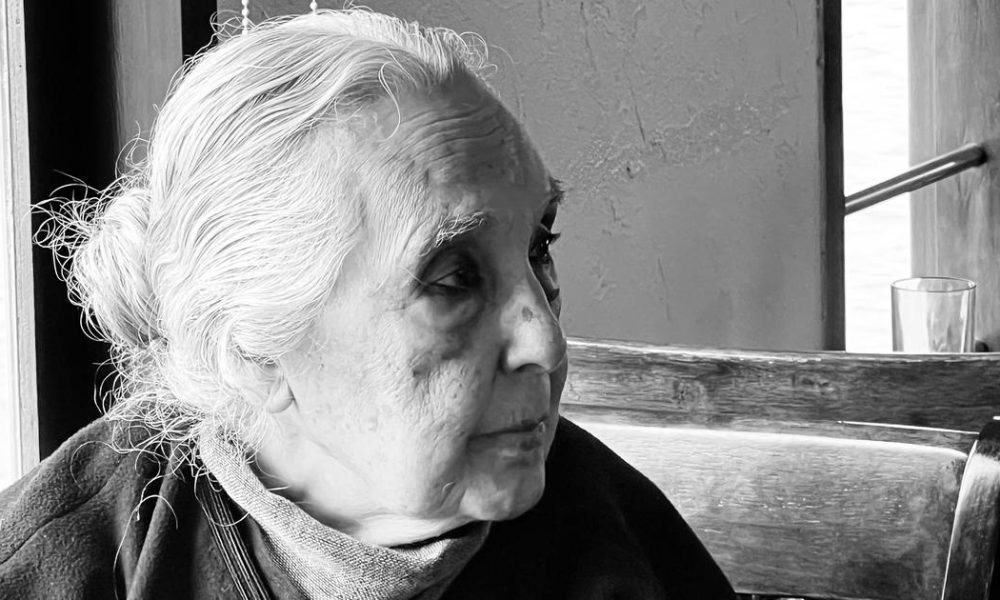
Renowned historian and scholar Romila Thapar recently unveiled her memoir titled ‘Just Being’, stirring significant interest among academic circles and literary enthusiasts alike. Her insights delve into the complexities of historical narratives, especially concerning gender roles, through a lens sharpened by years of research and teaching. Thapar’s contributions to Indian history, particularly in understanding ancient texts, have made her a pivotal figure in contemporary scholarship.
Thapar faced the audience at Miranda House, Delhi University, where she delivered a captivating lecture focused on Kalidasa’s classic play, ‘Abhijnana-Shakuntalam’. The room was filled to capacity, with eager students even vying for a glimpse of the iconic scholar. Dressed in an elegant black attire with her signature white hair styled in a bun, Thapar commanded attention, not only through her appearance but also with her profound discourse on the text.
Central to her lecture was the dichotomy between the portrayal of Shakuntala in the Mahabharata and Kalidasa’s interpretation of her character. Thapar challenged her audience to critically analyze how Shakuntala, a figure with considerable agency in the Mahabharata, is redefined within Kalidasa’s narrative as one who conforms to patriarchal expectations. This juxtaposition highlights the evolving perceptions of female characters in literature, reflecting broader societal norms and constraints imposed on women throughout history.
In her exploration, Thapar used Shakuntala’s quest for recognition by Dushyanta to illustrate deeper themes of autonomy and submission. While Kalidasa’s adaptation strips Shakuntala of her assertiveness, the character’s journey underscores the struggle against the patriarchal ethos of the time. Thapar’s keen observations call for a renewed understanding of these classical texts, urging readers to reflect on the historical context and its implications for modern gender discourses.
‘Just Being’ is not merely a memoir; it is a call to interrogate the narratives we inherit and the stories we tell. Thapar’s fearless approach to discussing sensitive issues makes her work relevant today, as contemporary society grapples with similar themes of agency and identity. This memoir promises to resonate with readers who seek to navigate the nuanced intersections of history, gender, and power.
Source: scroll.in







No Comment! Be the first one.