

Mumbai’s Coastal Road Project Threatens Livelihoods of Indigenous Fisherfolk
As construction progresses on Mumbai’s ambitious Coastal Road project, local fisherfolk are caught in the crossfire of development and livelihood. Manav Mangela, standing before the newly erected...

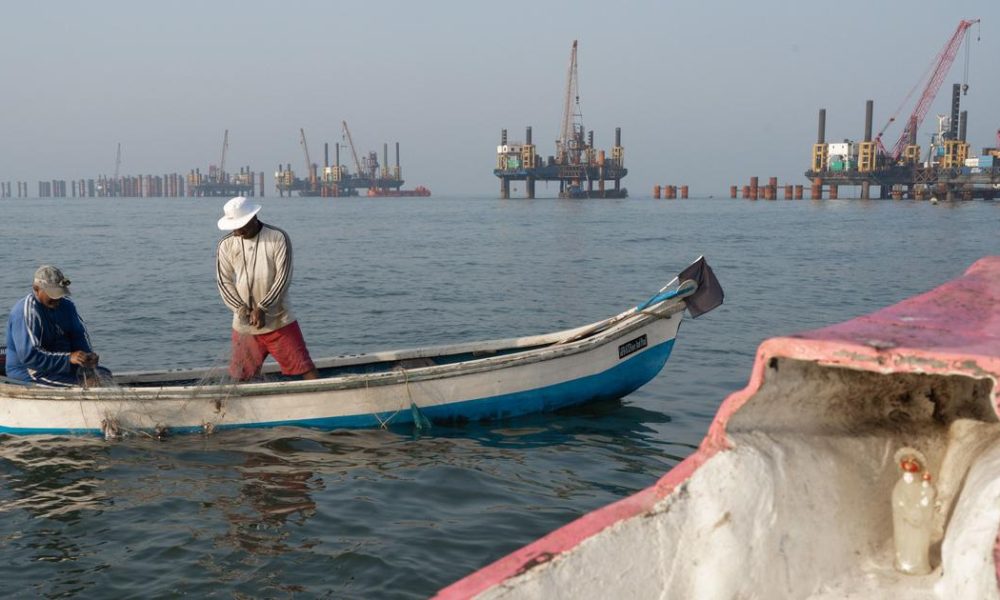
As construction progresses on Mumbai’s ambitious Coastal Road project, local fisherfolk are caught in the crossfire of development and livelihood. Manav Mangela, standing before the newly erected pillars of the Coastal Road in Mora Gaon near Juhu beach, proudly displayed the meager catch from a two-hour fishing excursion with his family. The day’s efforts yielded approximately Rs 1,500, a sum that barely sustains a family in one of India’s priciest urban areas.
For the Koli community, whom Manav represents, this is more than just a financial struggle; it signifies a profound disruption of their way of life. Historically, the Kolis have inhabited Mumbai for centuries, long before it flourished into a bustling metropolis and the financial hub of India. Today, despite the community’s resilience, only a fraction—about 20%—still rely on traditional fishing methods to make a living. The landscape they once knew has transformed dramatically, with mudflats filled in and coastal waters tainted by industrial waste and plastic pollution.
The Kolis’ challenges are exacerbated by rampant land acquisition and environmental degradation. The Coastal Road, which is projected to cost around Rs 14,977 crore (approximately $1.8 billion), is purportedly designed to enhance connectivity between South Mumbai and the western suburbs. However, critics argue that this development may come at a steep price for the indigenous communities who have lived in harmony with the coastal ecosystem for generations.
Once thriving near the estuary, the Koli villages now face the threat of losing their homes due to the encroachment of urbanization. The ongoing construction has intensified fears that the Coastal Road project will further diminish access to their traditional fishing grounds, pushing them into economic uncertainty. With only a small portion of the population engaged in fishing, the survival of this community hangs in the balance.
As the project moves forward, the plight of the Kolis serves as a stark reminder of the often-overlooked human cost of urban infrastructure projects. While the Coastal Road aims to bring efficiency and speed for vehicle owners, it raises critical questions about the environmental and social impact on vulnerable communities that have called this coastline home for centuries. The future is uncertain for these fisherfolk, who now find themselves at a crossroads between tradition and modernity, livelihood and development.
Source: scroll.in






No Comment! Be the first one.