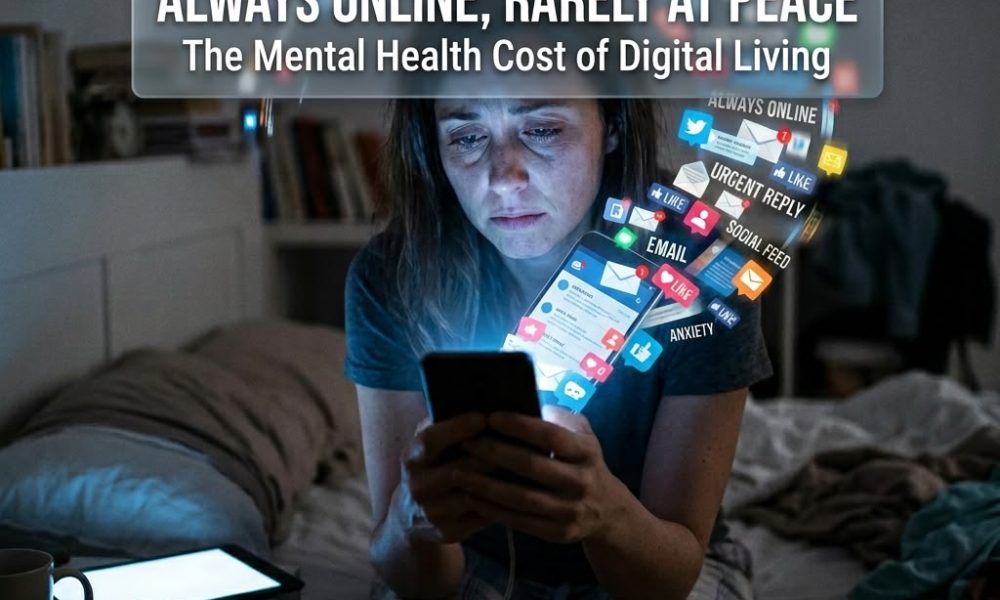
Always Online, Rarely at Peace: The Mental Health Cost of Digital Living
Always Online, Rarely at Peace: The Mental Health Cost of Digital Living It begins almost instinctively. Before getting out of bed, millions of people reach for their smartphones. A quick glance at...
Always Online, Rarely at Peace: The Mental Health Cost of Digital Living
It begins almost instinctively.
Before getting out of bed, millions of people reach for their smartphones. A quick glance at notifications turns into checking messages, scrolling through social media feeds, reading the latest news headlines, and responding to emails. By the time the day officially starts, many have already spent significant time connected to the digital world.
The pattern repeats throughout the day. Notifications demand attention. Messages expect immediate replies. Social media platforms offer an endless stream of content. Work follows employees beyond office walls. Even moments meant for rest are often interrupted by the glow of a screen.
Technology has undoubtedly transformed modern life, making communication faster, information more accessible, and daily tasks more convenient. Yet as society becomes increasingly connected, mental health experts are raising an important question:
What is the psychological cost of always being online?
Across India and around the world, growing evidence suggests that constant digital engagement may be contributing to rising levels of stress, anxiety, burnout, loneliness, and emotional exhaustion.
The New Reality of Constant Connectivity
For much of human history, people experienced natural periods of disconnection. Work ended when they left the workplace. News arrived at specific times of the day. Social interactions occurred in person.
Today, those boundaries have largely disappeared.
Smartphones have become extensions of ourselves, accompanying us from morning until late at night. The average person interacts with their device dozens—sometimes hundreds—of times daily. Emails, instant messages, social media updates, news alerts, video content, online shopping, digital banking, and entertainment are all accessible from a single screen.
While this level of convenience offers undeniable benefits, it also creates a culture of constant availability.
Many people feel pressure to remain reachable at all times, responding quickly to messages, checking updates frequently, and staying informed about everything happening around them. The result is a mental environment where true downtime becomes increasingly rare.
The Rise of Notification Anxiety
One of the most common psychological effects of digital living is what experts describe as “notification anxiety.”
The phenomenon occurs when individuals feel compelled to check their phones repeatedly, anticipating messages, updates, likes, comments, or other forms of digital interaction.
A vibration, a sound, or even the possibility of a notification can trigger an immediate response. Some people report checking their devices even when no notification has arrived.
Over time, this habit trains the brain to remain in a state of heightened alertness.
Instead of experiencing periods of calm focus, attention becomes fragmented. Concentration suffers as people constantly switch between tasks, conversations, and streams of information.
The brain is never fully at rest.
Social Media and the Comparison Trap
Perhaps no aspect of digital life has generated more debate than social media.
Originally designed to connect people across distances, social media platforms have become central to modern communication. They allow users to share experiences, stay informed, build communities, and maintain relationships.
However, these same platforms can also create powerful psychological pressures.
Social media often presents carefully curated versions of reality. Users typically share achievements, celebrations, vacations, milestones, and moments of success. What remains unseen are the ordinary struggles, disappointments, and challenges that everyone experiences.
As a result, people may begin comparing their everyday lives to the highlight reels of others.
A friend receives a promotion.
Someone posts photos from an exotic vacation.
Another shares pictures of a seemingly perfect relationship.
Repeated exposure to such content can create unrealistic expectations about success, happiness, beauty, and achievement.
Mental health professionals warn that excessive comparison can contribute to feelings of inadequacy, low self-esteem, dissatisfaction, and anxiety—particularly among adolescents and young adults who are still developing their sense of identity.
Connected Yet Lonely
One of the most surprising paradoxes of the digital age is the rise of loneliness.
Never before have people been able to communicate so easily and instantly. Yet many individuals report feeling more isolated than ever.
Digital interactions provide convenience, but they do not always deliver the emotional depth of face-to-face relationships. A text message cannot fully replace a meaningful conversation. A “like” on a post is not the same as genuine emotional support.
Many people maintain hundreds—or even thousands—of online connections while struggling to develop deeper personal relationships in real life.
Experts suggest that while technology can strengthen existing relationships, relying solely on digital communication may leave important emotional needs unmet.
Human beings are social by nature, and meaningful connection often requires presence, attention, and shared experiences that cannot always be replicated through a screen.
The Workplace That Never Sleeps
Technology has fundamentally changed how people work.
Remote work and hybrid employment models have created greater flexibility and new opportunities. Employees can collaborate across cities, states, and even countries with ease.
However, this flexibility often comes with an unintended consequence: the expectation of constant availability.
Work emails arrive late at night.
Messages appear on weekends.
Virtual meetings fill calendars throughout the day.
Many employees find themselves responding to work-related communication long after official working hours have ended.
Over time, this “always-on” culture can lead to burnout, emotional exhaustion, and reduced work-life balance.
Without clear boundaries between professional and personal life, opportunities for rest and recovery become increasingly limited.
The Hidden Impact on Sleep
Sleep is another area significantly affected by digital living.
For many people, screen time extends right up until bedtime. Smartphones, tablets, and laptops often become the last thing they see before sleeping and the first thing they see upon waking.
Research has shown that excessive screen exposure can interfere with healthy sleep patterns in several ways.
The blue light emitted by screens can disrupt the body’s natural production of melatonin, the hormone responsible for regulating sleep. At the same time, engaging content—whether social media, videos, news, or games—keeps the brain mentally stimulated when it should be preparing for rest.
Poor sleep quality can have far-reaching consequences, including increased stress, reduced concentration, mood disturbances, weakened immunity, and higher risks of anxiety and depression.
In many cases, improving sleep habits begins with creating healthier boundaries around technology use.
Young Minds in a Digital World
Children and teenagers face unique challenges in today’s digital environment.
Unlike previous generations, they have never experienced a world without smartphones, social media, and constant internet access.
Technology provides valuable educational opportunities and social connections. Students can access learning resources, collaborate with peers, and develop important digital skills.
At the same time, excessive screen time has been associated with reduced physical activity, attention difficulties, cyberbullying exposure, academic distractions, and emotional distress.
Young people are also particularly vulnerable to social comparison and online validation. The pursuit of likes, followers, and online approval can influence self-worth and emotional well-being during critical stages of development.
Parents, educators, and mental health professionals increasingly emphasize the importance of balanced technology use and digital literacy for younger generations.
Technology Is Not the Enemy
Despite growing concerns, experts consistently emphasize that technology itself is not inherently harmful.
In fact, digital tools have transformed lives in positive ways.
Telemedicine and online counseling services have expanded access to mental healthcare. Educational platforms have democratized learning. Communication technologies help families stay connected across great distances. Information is more accessible than at any point in human history.
The challenge is not technology.
The challenge is how people use it.
When digital tools serve human needs, they can enhance quality of life. When they begin to dominate attention, disrupt relationships, and erode well-being, problems emerge.
Building Healthier Digital Habits
Mental health professionals recommend practical strategies for maintaining a healthier relationship with technology.
These include:
* Turning off non-essential notifications.
* Creating screen-free periods during the day.
* Avoiding smartphone use before bedtime.
* Establishing boundaries around work communication.
* Spending more time outdoors and engaging in physical activity.
* Prioritizing face-to-face conversations and social interactions.
* Taking regular breaks from social media platforms.
* Practicing mindfulness and intentional technology use.
Many organizations are also beginning to recognize the importance of digital wellness initiatives that encourage employees to disconnect and maintain healthier work-life balance.
Small changes can often produce significant improvements in mental well-being.
Finding Peace in a Connected World
The digital revolution has brought extraordinary benefits to society. It has changed how people communicate, learn, work, shop, and access healthcare. Few would willingly give up the convenience and opportunities that technology provides.
Yet as screens become increasingly central to daily life, so too must conversations about mental health.
The challenge of the digital age is not to reject technology but to use it thoughtfully and intentionally. Constant connectivity should not come at the expense of emotional well-being, meaningful relationships, or personal peace.
In a world where notifications never stop and information never sleeps, one of the most valuable skills may be knowing when to disconnect.
Because sometimes, true connection begins the moment we step away from the screen.
And in an age of endless digital noise, finding moments of silence may be one of the most important investments we can make in our mental health.
No Comment! Be the first one.