

The Forgotten Treasures of Hyderabad: Stories Hidden in Plain Sight
The Forgotten Treasures of Hyderabad: Stories Hidden in Plain Sight When people speak of Hyderabad, images of the majestic Charminar, the sprawling Golconda Fort, and the shimmering waters of Hussain...

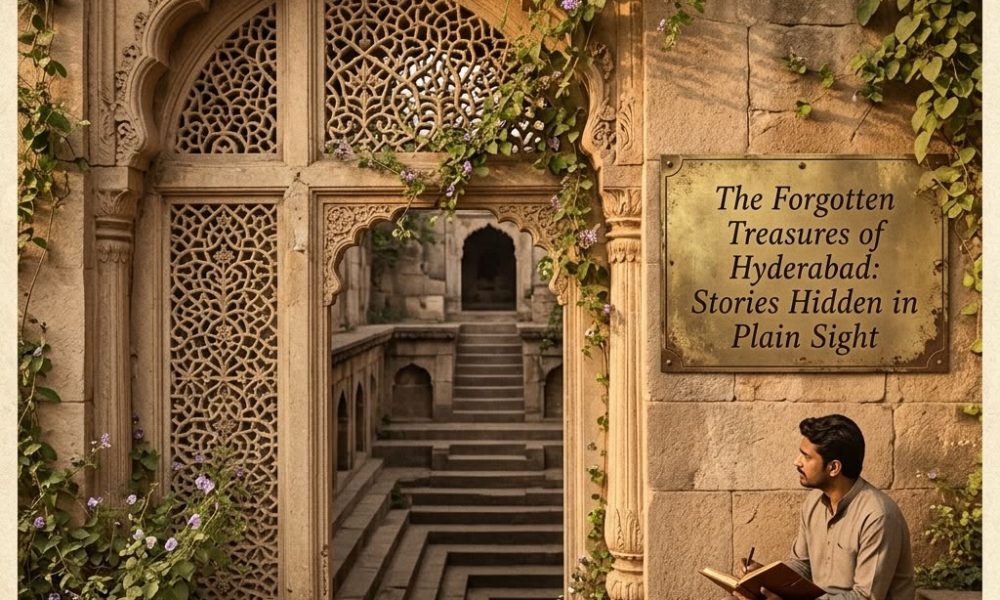
The Forgotten Treasures of Hyderabad: Stories Hidden in Plain Sight
When people speak of Hyderabad, images of the majestic Charminar, the sprawling Golconda Fort, and the shimmering waters of Hussain Sagar usually come to mind. These landmarks have become synonymous with the city’s identity, drawing tourists from across India and around the world.
But Hyderabad has another side—one that often escapes the spotlight.
Beyond the famous monuments and crowded tourist routes lies a treasure trove of forgotten heritage sites, hidden architectural wonders, and fascinating stories that have quietly survived the passage of time. They stand tucked away in old neighborhoods, concealed behind busy markets, or overshadowed by modern development. Many Hyderabadis walk past them every day without realizing the history that rests just a few steps away.
These hidden landmarks may not feature prominently in travel brochures, but together they tell a richer and more intimate story of the city.
Where Stone Tells Stories
Nestled in the heart of the old city are the remarkable Paigah Tombs, one of Hyderabad’s most underrated architectural masterpieces.
Built as the resting place of the powerful Paigah family—nobles who held immense influence during the era of the Nizams—the tombs showcase breathtaking craftsmanship. Delicate stone latticework, intricate geometric patterns, and a unique blend of Mughal, Persian, Rajput, and Deccani styles make the site unlike any other monument in India.
Walking through the quiet complex feels like stepping into a forgotten chapter of history. Despite their beauty and cultural significance, the tombs remain surprisingly absent from most tourist itineraries.
For those who visit, however, the experience is unforgettable.
The Frenchman Who Became a Hyderabadi Legend
Perched atop a hill overlooking the city stands another hidden gem—Raymond’s Tomb.
The monument honors Monsieur Michel Joachim Raymond, a French military officer who arrived in Hyderabad during the late eighteenth century and eventually became one of the Nizam’s most trusted advisors.
Known affectionately among locals as “Musa Ram,” Raymond earned immense respect for modernizing Hyderabad’s military and forging strong bonds with the people. Even centuries after his death, stories about his loyalty and leadership continue to be remembered.
Today, the quiet hilltop monument offers visitors not only panoramic views of Hyderabad but also a glimpse into an extraordinary story of friendship between cultures that shaped the city’s past.
The Stepwells That Sustained a City
Long before pipelines, reservoirs, and modern water systems existed, Hyderabad relied on an ingenious network of stepwells.
These structures were far more than water storage facilities. They served as community gathering places, social hubs, and lifelines during dry seasons. Designed with remarkable engineering precision, many stepwells captured and conserved rainwater efficiently for centuries.
Unfortunately, rapid urbanization has pushed many of these historic structures into obscurity. Some have been abandoned, while others remain hidden beneath layers of development and neglect.
Yet they stand as powerful reminders that sustainable water management is not a modern concept—it was practiced by our ancestors long before environmental conservation became a global concern.
A Silent Witness to History
Amid the hustle and bustle of modern Hyderabad stands the grand British Residency, a structure that once symbolized British influence in the princely state.
Today, the building forms part of an educational institution, and thousands of students pass through its premises every year. Few realize that these walls once witnessed diplomatic negotiations, political intrigue, and dramatic moments that shaped the relationship between Hyderabad and the British Empire.
Its elegant architecture and historical significance make it one of the city’s most important yet often overlooked landmarks.
The Residency is not merely a building—it is a silent witness to centuries of change.
The Living Heritage of Old Neighborhoods
Sometimes, Hyderabad’s hidden treasures are not grand monuments at all.
They are found in the narrow lanes of historic neighborhoods where time seems to move a little slower.
Wander through the city’s old markets and residential quarters, and you will discover beautifully carved wooden balconies, decorative arches, ornate doorways, and traditional homes that reflect generations of craftsmanship. Every street corner tells a story of merchants, artisans, traders, and families who contributed to Hyderabad’s unique cultural identity.
These neighborhoods preserve something that cannot be recreated—a living connection to the city’s soul.
Racing Against Time
While Hyderabad continues to grow into a modern metropolis, many of its lesser-known heritage sites face an uncertain future.
Rapid urban expansion, environmental damage, and a lack of public awareness have placed several historic structures at risk. Conservationists and heritage experts have repeatedly emphasized the need to protect these monuments before they disappear forever.
Restoration projects undertaken by government agencies and heritage organizations have provided hope, but preserving history requires more than official efforts. Public awareness and community participation are equally important.
After all, heritage survives only when people value it.
Looking Beyond the Tourist Trail
Many experts believe Hyderabad’s future as a heritage destination lies in encouraging visitors to explore beyond its famous landmarks.
Heritage tourism focused on lesser-known sites could not only generate economic opportunities but also help preserve vulnerable monuments through increased awareness and engagement. More importantly, it would offer visitors a deeper understanding of Hyderabad’s layered history—a history shaped not only by kings and rulers but also by soldiers, architects, traders, craftsmen, and ordinary citizens.
Every forgotten monument has a story worth telling.
Hidden in Plain Sight
As glass towers rise and new infrastructure transforms the city skyline, Hyderabad’s forgotten treasures continue to stand quietly in the background.
They may not command the attention of Charminar or Golconda Fort, but they hold something equally valuable—the memories of a city that evolved through centuries of cultural exchange, innovation, and resilience.
Perhaps the greatest beauty of these hidden landmarks lies in their ability to surprise us. They remind us that history is not always found in guidebooks or popular tourist destinations. Sometimes, it waits patiently in a quiet corner, behind an old gate, or at the end of a forgotten lane.
In a city celebrated for its glorious past, Hyderabad’s hidden treasures prove that some of the most fascinating stories are still waiting to be discovered—hidden in plain sight.







No Comment! Be the first one.