

Exploring the Roots of Homophobia: Casteism and Racism in India’s Queer History
In a groundbreaking examination of Indian queer literature, a recent book posits that the intertwined histories of casteism and racism have entrenched homophobia within the nation. One significant...

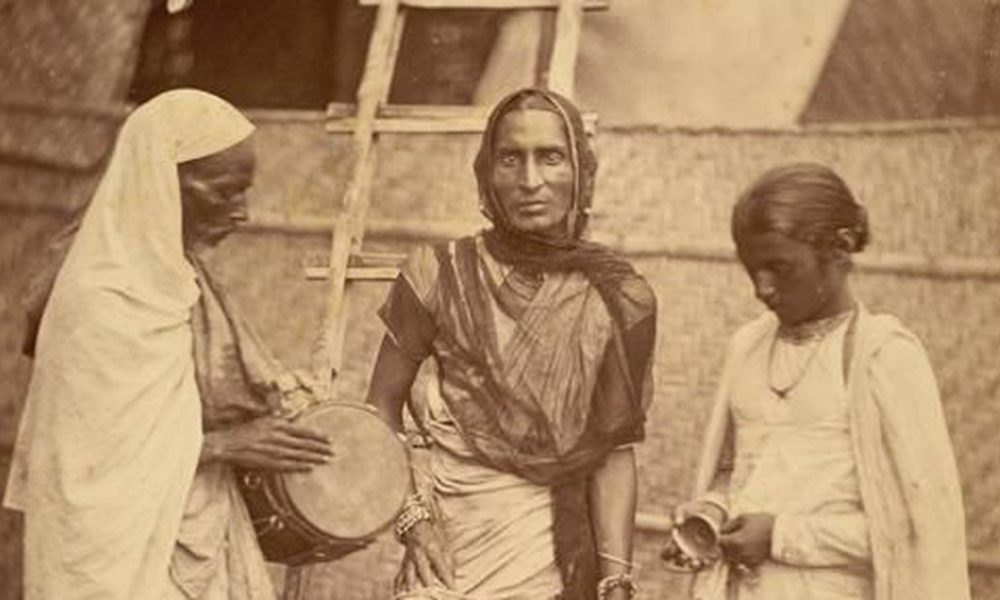
In a groundbreaking examination of Indian queer literature, a recent book posits that the intertwined histories of casteism and racism have entrenched homophobia within the nation. One significant case that illustrates this complex relationship dates back to 1884, when the Allahabad High Court witnessed an unusual trial involving an individual named Khairati, who was accused of being a ‘eunuch’ for allegedly dancing and singing in women’s attire during a visit to their hometown.
The police had been surveilling Khairati for months, and the case attracted significant attention. The British colonial authorities subjected Khairati to scrutiny, with surgeons and magistrates examining their anatomy as part of the evidence collection. The judgement was notably delivered by Justice Straight, who infamously cited, ‘He is shown to have the characteristic mark of a habitual catamite…’ suggesting that Khairati’s body and actions were inherently deviant, revealing the deep-seated prejudices of the period.
Despite the sensationalism surrounding the trial, the case ultimately collapsed due to procedural errors; the indictment failed to specify critical details like the timing and location of the alleged criminal acts. Nonetheless, Justice Straight commended the police for taking a stand against what he termed ‘disgusting practices’, marking a significant moment in the legal history of queer identity in India.
This trial is often viewed as the first instance where Section 377 of the Indian Penal Code inflicted harm on an individual, highlighting how societal norms dictated by caste and colonial rule shaped perceptions of sexuality. The narrative suggests that the law was not merely a tool of governance but rather a means of enforcing moral hierarchies, thus perpetuating discrimination against those who deviated from heteronormative standards.
Over the next century and a half, these prejudices would evolve but remain deeply entrenched, illustrating how colonial legacies of control and discrimination laid the groundwork for modern-day attitudes towards the LGBTQ+ community in India. The book serves as a vital reminder that the fight for queer rights cannot be divorced from the broader struggles against casteism and racism, urging readers to reflect on the interconnectedness of these social issues.
Source: scroll.in







No Comment! Be the first one.