

Concerns Rise Over District Reorganization in Ladakh Amid Fears of Marginalization
In a recent administrative move, five new districts have been established in the Union Territory of Ladakh, expanding its total from two to seven. This decision, formally announced on April 27,...

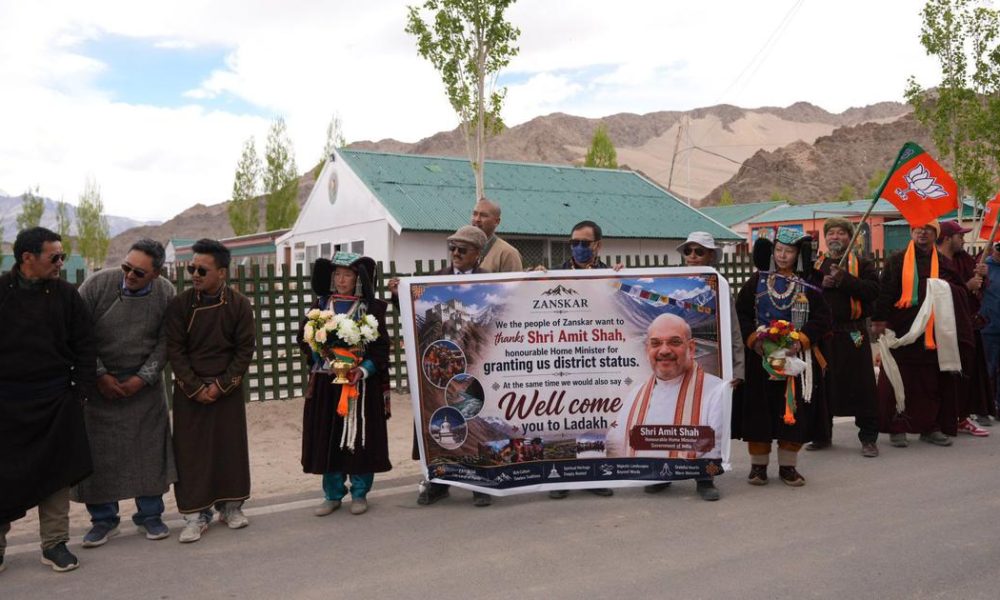
In a recent administrative move, five new districts have been established in the Union Territory of Ladakh, expanding its total from two to seven. This decision, formally announced on April 27, coincided with a visit from Union Home Minister Amit Shah to the region. However, the creation of these districts has sparked apprehension among the Muslim-majority population regarding potential marginalization and gerrymandering.
Ladakh, known for its stark landscapes and low population density, has a total population of approximately 274,000 as per the 2011 census. Among its residents, around 46% identify as Muslim, while Buddhists comprise about 39%, and Hindus represent just over 12%. The majority of Muslims reside in the Kargil district, whereas the Buddhist population is predominantly found in Leh.
Sajjad Kargili, a prominent activist from Kargil, expressed concerns that the newly drawn district boundaries do not accurately reflect the demographic realities of the region. He pointed out that out of the seven districts, only two will be Muslim-majority, raising fears that the interests of the Muslim community may be overlooked in the governance of these new administrative units.
The apprehensions surrounding this administrative change highlight a broader narrative of identity and representation in Ladakh. Following the reorganization of Jammu and Kashmir in 2019, which led to Ladakh becoming a separate Union Territory, the region has witnessed heightened discussions around its political landscape and how decisions made by the central government affect its diverse population.
Critics argue that without careful consideration of the region’s demographic complexities, the new districts may reinforce existing divisions and exacerbate feelings of exclusion among certain communities. As the local population grapples with these changes, the future of governance in Ladakh remains a pressing concern, emphasizing the need for inclusive dialogue and representation.
Source: scroll.in





No Comment! Be the first one.