

From Canvas to Stage: Kerala’s ‘Da Vinci Porul’ Challenges Dan Brown’s Narratives
In an artistic endeavor that spans over two decades, ‘Da Vinci Porul’ emerged as a unique kathakali play, challenging popular interpretations of Leonardo da Vinci’s iconic mural,...

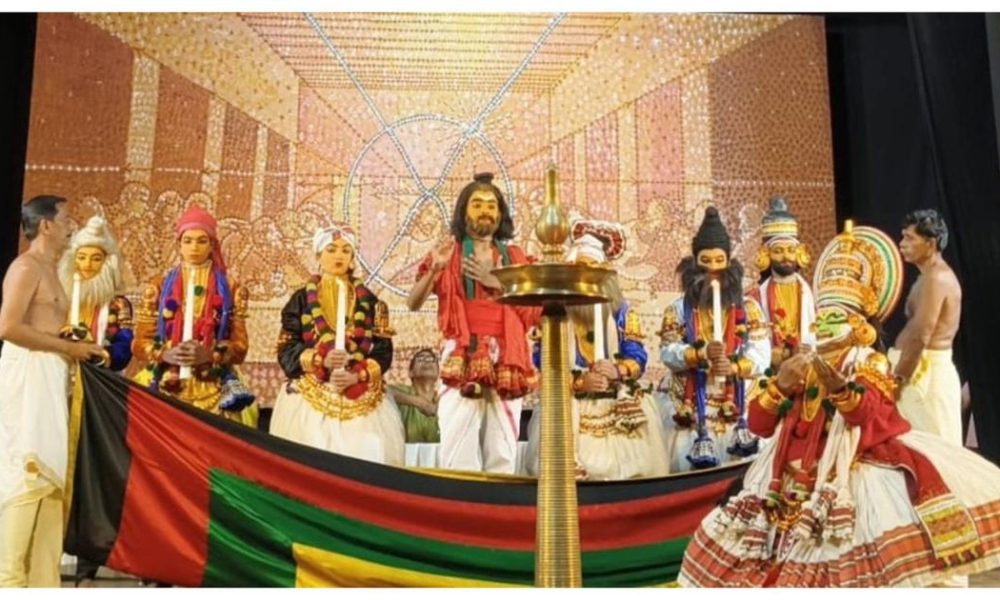
In an artistic endeavor that spans over two decades, ‘Da Vinci Porul’ emerged as a unique kathakali play, challenging popular interpretations of Leonardo da Vinci’s iconic mural, The Last Supper. This innovative production was staged at the Thrissur Regional Theatre on April 1, showcasing the intricate relationship between art, literature, and cultural expression in India.
The genesis of ‘Da Vinci Porul,’ which translates to ‘Decoding Da Vinci,’ lies in the creative mind of Francis Antony Kodankandath, a retired government official. In 2003-2004, Antony crafted a series of twelve paintings that responded to Dan Brown’s bestselling novel, The Da Vinci Code. The work particularly contested Brown’s portrayal of Mary Magdalene as the wife of Jesus, aiming to provide a fresh perspective rooted in historical and artistic analysis.
Utilizing the traditional art form of kathakali, which typically dramatizes Hindu mythological tales, the play presents Antony’s geometric interpretations of The Last Supper. At 66 years old, Antony explained, “Da Vinci’s use of mirror images and a pointed finger in his artwork is well-documented. I adopted similar techniques to illustrate how Jesus’s outstretched arms, forming an ‘X’ and intersecting with a circle, signify both the Holy Grail and Holy Bread.” This innovative approach not only bridges literature and fine arts but also invites audiences to engage in a deeper dialogue about the historical narratives surrounding da Vinci’s masterpiece.
As the curtains drew to a close, the stage transformed to reveal a visually stunning depiction of Jesus Christ and angels, blessing the audience and culminating the narrative arc of the play. This concluding scene resonated with viewers, encapsulating the spiritual and artistic themes woven throughout the performance. By integrating traditional kathakali elements with contemporary interpretations, ‘Da Vinci Porul’ stands as a testament to the versatility of Indian performing arts, embracing both heritage and modern storytelling.
The reception of ‘Da Vinci Porul’ reflects a growing interest in re-examining historical figures and narratives through a local lens. It emphasizes the importance of dialogue in interpreting art and culture, especially in a nation as diverse and rich in traditions as India. Antony’s work not only serves as a counter-narrative to Western interpretations but also enriches the cultural tapestry of Kerala’s artistic community, inviting further exploration of the intersections between mythology, history, and contemporary art.
Source: scroll.in







No Comment! Be the first one.