

Peace Talks in Islamabad Between US and Iran Conclude Without Agreement, Says JD Vance
In a significant development, peace negotiations between the United States and Iran in Islamabad, Pakistan, have concluded without reaching a definitive agreement to end the ongoing conflict, as...

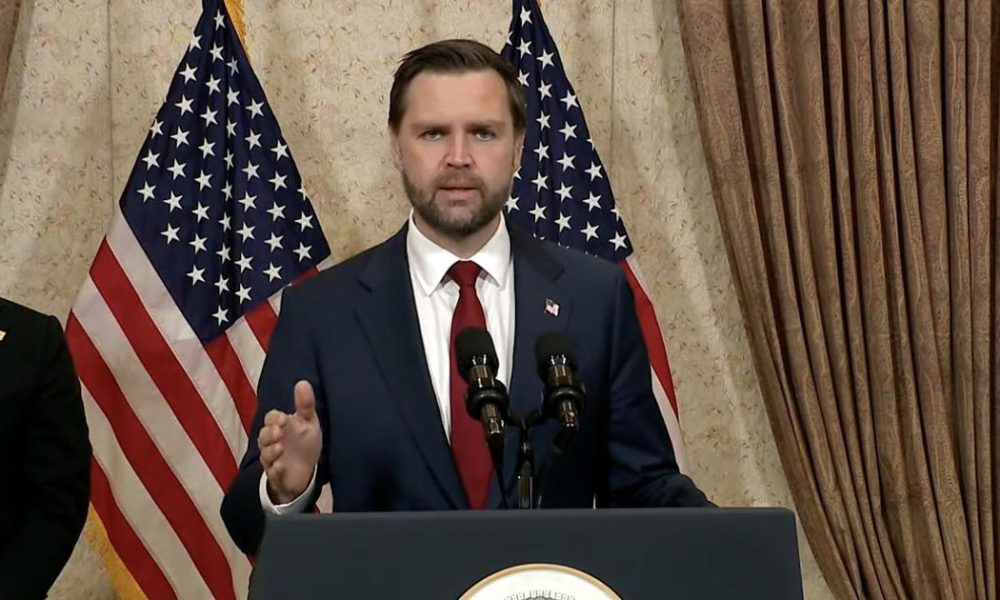
In a significant development, peace negotiations between the United States and Iran in Islamabad, Pakistan, have concluded without reaching a definitive agreement to end the ongoing conflict, as announced by US Vice President JD Vance on Sunday. The discussions lasted an exhaustive 21 hours, yet both parties walked away without consensus on critical terms.
During a brief press conference, Vance noted, “They have chosen not to accept our terms,” highlighting the challenges faced during the talks. He further elaborated that the US presented what they termed as their “final and best offer,” leaving the ball in Iran’s court to respond. This stalemate arises just days after Washington and Tehran had agreed to a temporary two-week ceasefire, aimed at fostering a more conducive environment for negotiations.
Notably, while Israel was not a participant in the peace talks, its military actions in the region have continued unabated, with strikes observed in Lebanon even after the ceasefire took effect. This ongoing tension underscores the complex landscape of geopolitical relations in West Asia, where multiple nations exert influence over the outcomes of such negotiations.
Vance’s remarks suggested that the US had approached the discussions with a flexible and accommodating stance, yet it became clear that the Iranian delegation was not prepared to accept the American terms. He mentioned that President Donald Trump had urged the team to engage in the talks in good faith, emphasizing the need for an affirmative commitment from Iran moving forward.
The failure of this round of negotiations marks a critical juncture in US-Iran relations, particularly as both nations continue to grapple with a myriad of pressing issues, including regional stability and security. This outcome has implications not only for the bilateral relationship between Washington and Tehran but also for the broader geopolitical dynamics in the region, affecting neighboring countries like India, which closely monitors developments in West Asia.
Source: scroll.in







No Comment! Be the first one.