

Unpacking Privilege: A New Book Explores the Dominance of the Agarwal Community in Contemporary India
A newly released book delves into the complex dynamics of the Agarwal community, a prominent mercantile caste in India, shedding light on how they continue to maintain their social and economic...

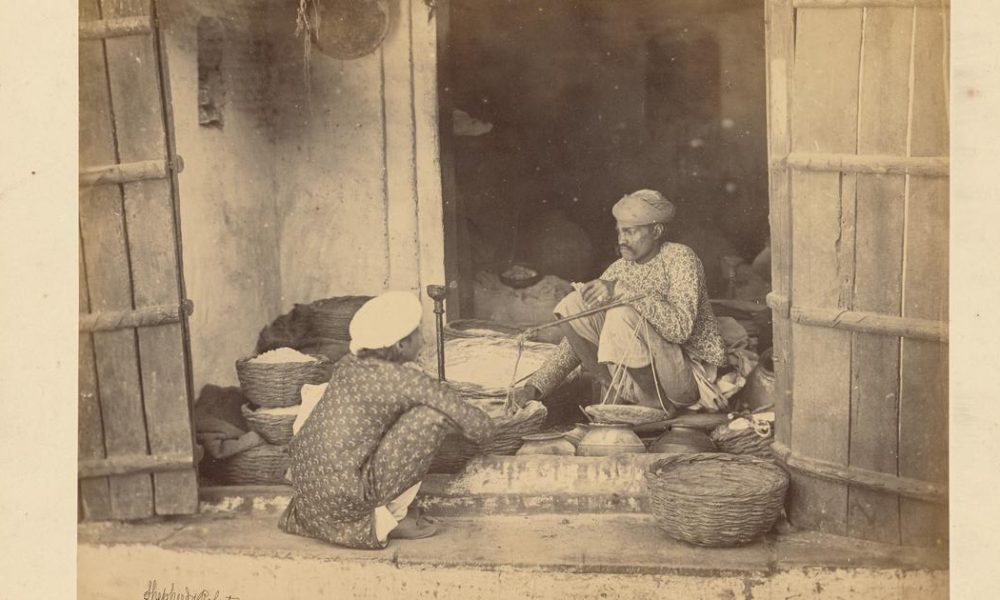
A newly released book delves into the complex dynamics of the Agarwal community, a prominent mercantile caste in India, shedding light on how they continue to maintain their social and economic dominance in the modern era. This investigation reveals the intricacies of an elite system that is not only exclusionary but also increasingly violent, as it is propelled by an ethnic democracy that favors affluent upper-caste Hindus.
The term ‘ethnic democracy’ signifies a societal structure where citizenship is stratified, granting more privileges to the majority while relegating minority groups to a lower status. This phenomenon has been particularly visible in the political landscape of India, especially with the rise of the Bharatiya Janata Party (BJP), which has often been labeled as a representative of the Brahmin-Bania class. The BJP’s ascendance to power in 2014, followed by a second term in 2019, has further entrenched the influence of business elites within the political framework, marking a significant shift from previous trends.
Reflecting on historical shifts, scholars Christophe Jaffrelot and Narender Kumar previously noted a ‘plebeianisation’ of Indian politics, wherein the representation of lower castes in legislative assemblies was on the rise. However, in a surprising turn of events, research by Jaffrelot and Gilles Vernier indicates a resurgence of upper-caste political elites in the so-called Hindu belt, alongside some non-dominant Other Backward Classes (OBCs). This resurgence has often come at the cost of reduced representation for women and religious minorities, raising questions about the inclusivity of the current political climate.
Elites, as defined by sociologist Pierre Bourdieu, are individuals or groups that possess disproportionate control over resources and opportunities. In the context of the Agarwal community, this control translates into significant economic advantages and social privileges that perpetuate their status in society. This elite structure not only influences political representation but also affects cultural narratives, creating an echo chamber that reinforces their privileged position.
The book serves as a crucial examination of these themes, inviting readers to consider how caste dynamics, political power, and social structures interact in contemporary India. As the country grapples with the implications of an increasingly stratified society, the insights provided by this exploration into the Agarwal community illuminate broader patterns of exclusion and privilege that resonate across various layers of Indian society.
Source: scroll.in



No Comment! Be the first one.