

Rahul Gandhi Defends Arrested CJP Leaders; Opposition Voices Concerns Over Government Actions
The recent arrest of leaders from the Cockroach Janta Party (CJP) has drawn sharp criticism from various quarters, particularly from the Opposition. Ashutosh Ranka, Saurav Das, and Ajinkya Shinde...

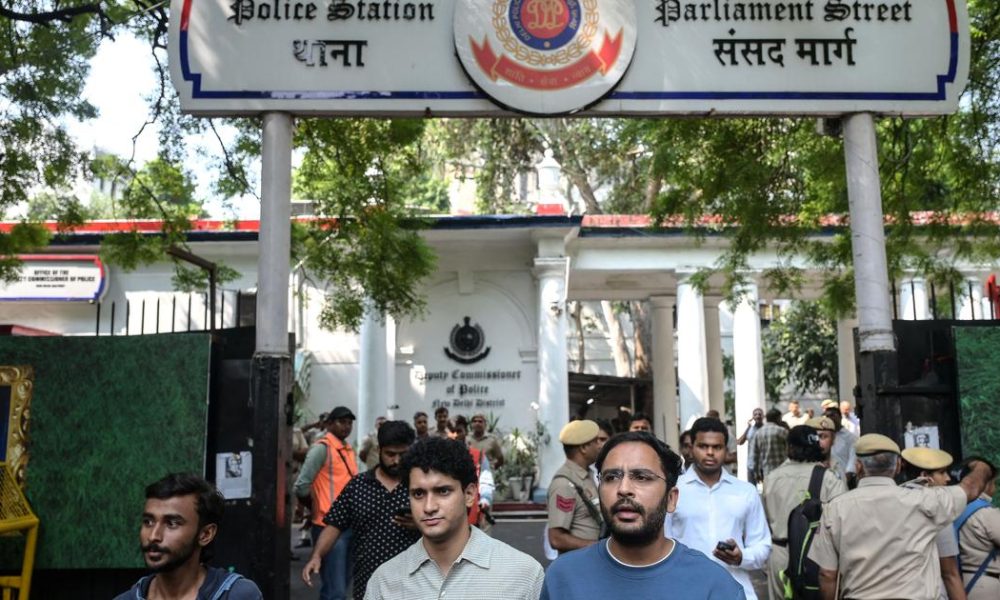
The recent arrest of leaders from the Cockroach Janta Party (CJP) has drawn sharp criticism from various quarters, particularly from the Opposition. Ashutosh Ranka, Saurav Das, and Ajinkya Shinde were detained for allegedly trespassing at Jantar Mantar during a peaceful protest. Rahul Gandhi, the Leader of the Opposition in the Lok Sabha, weighed in on the matter, asserting that ‘waving the tricolour’ during a non-violent demonstration should not be criminalized. Gandhi described the act of imprisoning young individuals for such gestures as an ‘act of cowardice.’
Following their arrest, Ranka and Das were placed in judicial custody for five days by a magistrate, while Shinde was granted release on a personal bond. Abhishek Banerjee, a member of the Trinamool Congress, echoed these sentiments, criticizing the Union government for what he termed the ‘unjust arrest of Indians for simply displaying the national flag in their homeland.’ He condemned the characterization of the peaceful protest as a ‘breach of peace,’ calling it an alarming trend.
Adding to the discourse, legal experts have questioned the legitimacy of the police’s actions, particularly since many of the arrests occurred far from Jantar Mantar, raising concerns over the legality of such measures. Legal analyst Anant Gupta has been vocal about the implications of these arrests, which he argues may infringe upon citizens’ rights to peaceful assembly.
In a separate yet significant development, the Indian government announced its plans to divest a 60.7% stake in IDBI Bank, valued at approximately Rs 52,878 crore, to Fairfax Financial Holdings Limited, a Canadian financial entity. The Ministry of Finance touted this move as the largest foreign direct investment in India’s financial sector to date. This divestment is a strategic response to the substantial capital infusions previously made by the Union government and Life Insurance Corporation, aimed at stabilizing the bank’s financial footing.
As the political landscape evolves, the Opposition continues to voice its concerns over the government’s approach to dissent and financial reforms. The events surrounding the CJP leaders and the IDBI Bank divestment illustrate the complex interplay between governance, civil rights, and economic strategy in contemporary India.
Source: scroll.in






No Comment! Be the first one.